The Colony, Texas
Plumbers in The Colony, TX
Leak, clog, or no hot water in The Colony? We'll match you with a licensed, insured local plumber who works this side of Denton County.
Get a free quote in The Colony
Matched with a licensed local pro — fast.
Searching for a plumber in The Colony, TX? Dallas Best Plumber is a free referral service, not a plumbing company. You tell us what is wrong and where in the city you are, and we match you with a licensed, insured local plumber who calls you back with a free, no-obligation quote.
The Colony is in Denton County, between Lewisville Lake and the Dallas North Tollway corridor, and its water supply is genuinely unusual - the city draws on three different sources plus its own groundwater wells. That has real consequences for plumbing, because water chemistry drives water heater life, fixture wear and whether a softener makes sense in your house.
The city's housing is slab-on-grade over expansive North Texas clay, with a mix of build eras from its earliest subdivisions through recent construction in the Austin Ranch area. The plumbers we match you with handle both ends of that range, which matters because a 1980s home and a 2018 home fail in completely different ways.
Plumbing services we match in The Colony
- Emergency Plumbing in The Colony
- Water Heater Repair in The Colony
- Drain Cleaning in The Colony
- Slab Leak & Leak Detection in The Colony
- Sewer Line Repair in The Colony
- Gas Line Repair in The Colony
- Toilet & Faucet Repair in The Colony
- Leak Detection in The Colony
- Commercial Plumbing in The Colony
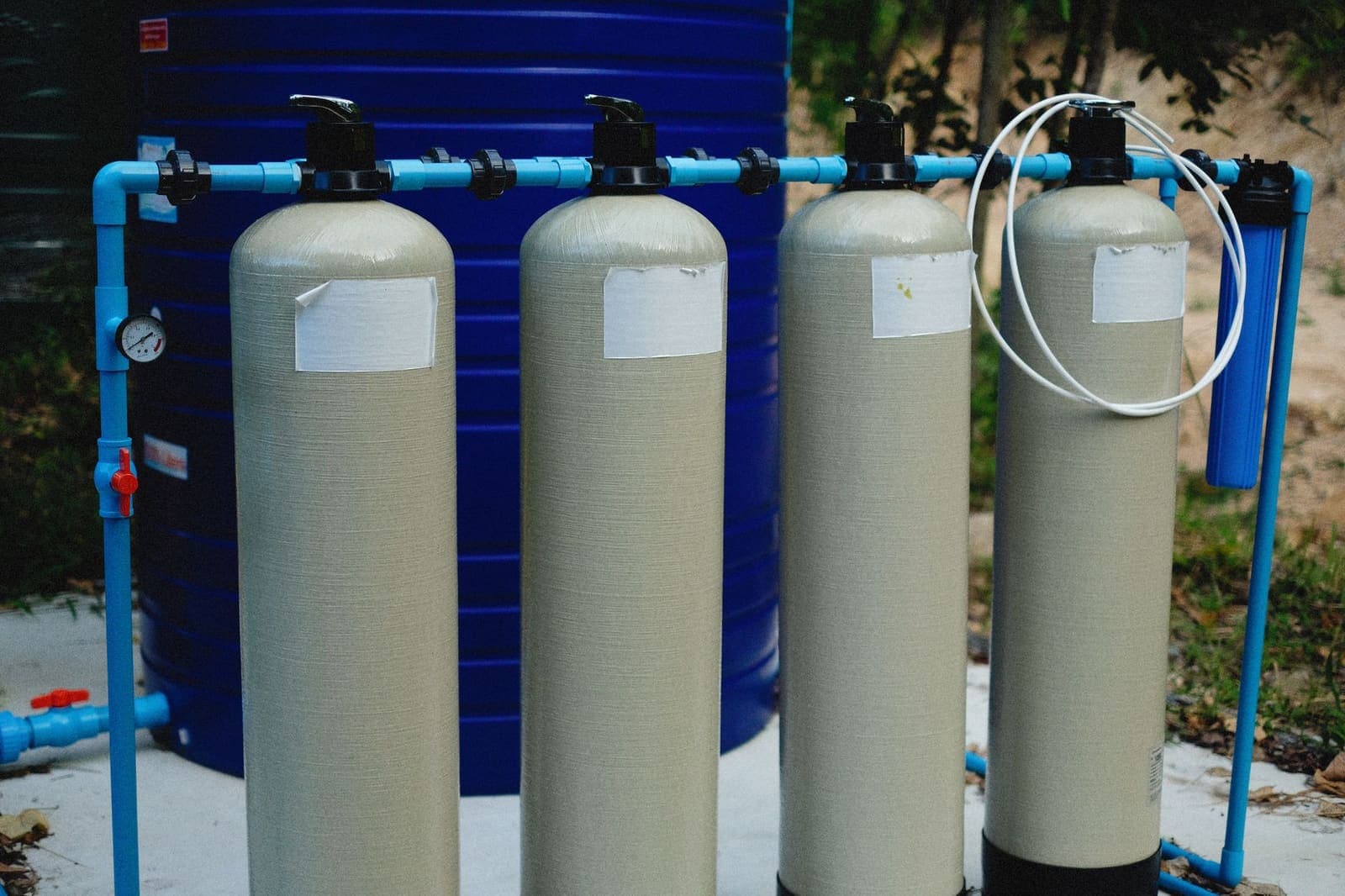
- Water Filtration & Softeners in The Colony
- Water Heater Installation in The Colony
- Water Line Repair in The Colony
- Hydro Jetting in The Colony
- Water Softener Installation in The Colony
- Affordable Plumbing Help in The Colony
Three water sources and the city's own wells
Most suburbs in the metroplex buy finished water from one wholesaler. The Colony's own water quality report describes a three-way supply: the city purchases up to 7 million gallons per day of treated surface water from Dallas Water Utilities, whose reservoirs include Lewisville, Ray Roberts, Ray Hubbard, Tawakoni, Fork and Grapevine plus the Elm Fork of the Trinity River; it purchases up to 4 million gallons per day from the City of Plano, whose water comes from the North Texas Municipal Water District and its Lavon, Jim Chapman and Texoma sources, serving a small area of Austin Ranch; and it operates five of its own wells producing up to 9 million gallons per day, four drawing on the Trinity Sands Aquifer and one on the Paluxy Aquifer. The city operates the distribution system inside its limits regardless of which supplier provides the water.
Why a homeowner should care: surface water and groundwater have different mineral profiles, so hardness and taste can vary by neighborhood and by season as the city blends supplies to meet demand. What does not vary is that North Texas water of any of these origins is hard enough to scale a water heater. Groundwater from the Trinity Sands and Paluxy formations in particular tends to carry a significant mineral load.
In practice that means a tank water heater in The Colony accumulates scale at the bottom, where it insulates the burner or element and forces the unit to run longer for less hot water - you hear it as popping or rumbling and feel it as a shorter shower. A whole-house softener is a reasonable conversation to have with a licensed plumber here, and flushing the heater on a schedule helps regardless.
Slab foundations on Denton County clay
The Colony's housing is slab-on-grade over the expansive clay that runs through this part of Denton County. The soil swells after a wet spring and shrinks hard through a triple-digit August, and the slab flexes with it. Water supply lines run inside or beneath that concrete, so the movement abrades copper against the slab and can shear older joints.
That is the mechanism behind a slab leak, and the older a slab is the more cycles it has been through. The signs are the same in a 1985 home and a 2015 home: a warm patch on the floor, a water bill that climbs with no change in use, running water audible with every fixture closed, or a strip of slab edge that never seems to dry. Electronic leak detection lets a licensed plumber locate the point before any concrete is opened.
- Warm or persistently damp spot on a slab floor
- Water bill rising with no change in household use
- Running water audible with all fixtures off
- New cracks in tile or drywall after a very wet or very dry season
A mixed-age city means two different repair lists
In The Colony's older subdivisions, the issues are age-driven: copper supply lines inside a slab that has been moving for decades, water heaters on their second or third replacement, galvanized or cast-iron components in the oldest homes, and sewer laterals where mature tree roots have found a cracked joint.
In the newer construction toward Austin Ranch and along the tollway corridor, the issues are early-life instead: PEX crimp and fitting failures, line that was left exposed to sunlight during the build, under-slab connections that were not properly supported, and original water heaters and pressure-reducing valves just now coming due. A plumber needs to know which house they are walking into, which is why it helps to state the home's approximate age in your request.
Pressure, expansion tanks and freeze exposure
Most homes here have a pressure-reducing valve on the incoming main and, where there is a closed system, a thermal expansion tank on the water heater. Both wear out. A failed PRV spikes incoming pressure, which makes pipes bang when a valve shuts, keeps faucets dripping no matter how many cartridges you replace, and pushes the heater's relief valve into weeping onto the floor. Sustained high pressure wears out every connector in the house, so it is worth gauging if those symptoms show up together.
On freeze exposure: North Texas hard freezes are infrequent but severe. In two-story homes the vulnerable runs are attic lines above the second floor and pipes in uninsulated garage walls; in older single-story homes it is supply lines in exterior walls. Outdoors it is hose bibs, irrigation and the above-ground backflow assembly. Before a freeze, drip a faucet on the coldest exterior wall, open under-sink cabinets on outside walls, drain and disconnect hoses, cover the bibs, and make sure you know where the main shut-off is.
Permits and licensing in The Colony
In Texas, most plumbing work performed for hire must be done by a state-licensed plumber, and only a Responsible Master Plumber is authorized to pull plumbing permits. Water heater replacement, repiping, sewer and drain line repair and gas line work are permitted and inspected in The Colony so the installation is checked against code.
Every plumber we match you with is licensed and insured. When you send your request, include the age of the home and anything you already know about the problem - that is what makes a free quote useful rather than approximate. We do not set prices, guarantee arrival windows, or perform the work ourselves.
Common The Colony plumbing problems
Scale from a mineral-heavy blended supply
The Colony blends treated surface water from Dallas Water Utilities and the City of Plano with groundwater from its own Trinity Sands and Paluxy Aquifer wells. All of it is hard enough to scale a water heater, and groundwater in particular carries a significant mineral load. Rumbling, shorter hot showers, or rusty hot water all justify a look.
Water Heater Repair & ReplacementSlab leaks in older subdivisions
In The Colony's older neighborhoods, copper supply lines sit inside concrete that has been flexing with Denton County clay for decades. A warm floor spot, a water bill that climbs for no reason, or running water audible with everything off all point to a slab leak, and leak detection finds it before concrete comes up.
Slab Leak Repair & Leak DetectionRoot intrusion in older sewer laterals
Mature trees along the city's older streets send roots toward moisture seeping from any cracked lateral joint, and they keep growing until the line clogs. Several slow drains at once, a gurgling toilet, or repeated backups at the lowest drain mean the main line rather than one fixture.
Sewer Line RepairBurst pipes in a hard freeze
Attic lines above second floors, pipes in uninsulated garage walls, hose bibs and above-ground irrigation assemblies are what split when temperatures drop into the teens. Shut off your main valve first, then get matched - we connect homeowners in The Colony with a licensed local plumber for emergency plumbing.
Emergency PlumbingFrequently asked questions
Where does The Colony's water come from?
From three places, according to the city's own water quality report: up to 7 million gallons per day of treated surface water purchased from Dallas Water Utilities, up to 4 million gallons per day purchased from the City of Plano serving a small area of Austin Ranch, and up to 9 million gallons per day from five city-operated wells - four on the Trinity Sands Aquifer and one on the Paluxy Aquifer. The city runs the distribution system inside its limits regardless of the supplier.
Why does the water seem different in different parts of the city?
Because The Colony blends supplies. Treated surface water from Dallas Water Utilities, water purchased from Plano for the Austin Ranch area, and groundwater from the city's own wells have different mineral profiles, so hardness and taste can vary somewhat by neighborhood and by season as the city shifts between sources to meet demand.
Is a water softener worth it in The Colony?
It is a reasonable question to ask a licensed plumber here, because the city's supply includes groundwater from the Trinity Sands and Paluxy formations, which tends to carry a significant mineral load. A softener protects the water heater, keeps scale off fixtures and glass, and can extend appliance life. It is not required - flushing the heater on a schedule helps on its own - but it comes up more often here than in cities on a single surface-water supply.
Do you cover both the older neighborhoods and Austin Ranch?
Yes. We match homeowners across the city. It helps to say roughly how old the home is in your request, because the older subdivisions bring age-driven problems - slab leaks in decades-old copper, root-blocked laterals - while newer construction brings early-life ones like PEX fitting failures and first-replacement water heaters.
Do I need a permit to replace a water heater in The Colony?
In most cases, yes. Water heater replacement, repiping, sewer and drain line work and gas line work are permitted and inspected, and in Texas only a Responsible Master Plumber can pull a plumbing permit. The licensed plumber you are matched with pulls it as part of the job. We are a referral service and do not set prices or do the work.
Nearby
Other DFW areas we serve
- Dallas, TX
- Plano, TX
- Irving, TX
- Garland, TX
- Richardson, TX
- Carrollton, TX
- Mesquite, TX
- McKinney, TX
- Frisco, TX
- Rockwall, TX
- Allen, TX
- Lewisville, TX
- Rowlett, TX
- Grand Prairie, TX
- Flower Mound, TX
- Forney, TX
- Wylie, TX
- Little Elm, TX
- Duncanville, TX
- Coppell, TX
- Cedar Hill, TX
- DeSoto, TX
- Prosper, TX
- Addison, TX
- Farmers Branch, TX
Need a plumber in The Colony?
Tell us what's happening and we'll match you with a licensed, insured local plumber. Free quote, no pressure.
Get a Free Quote