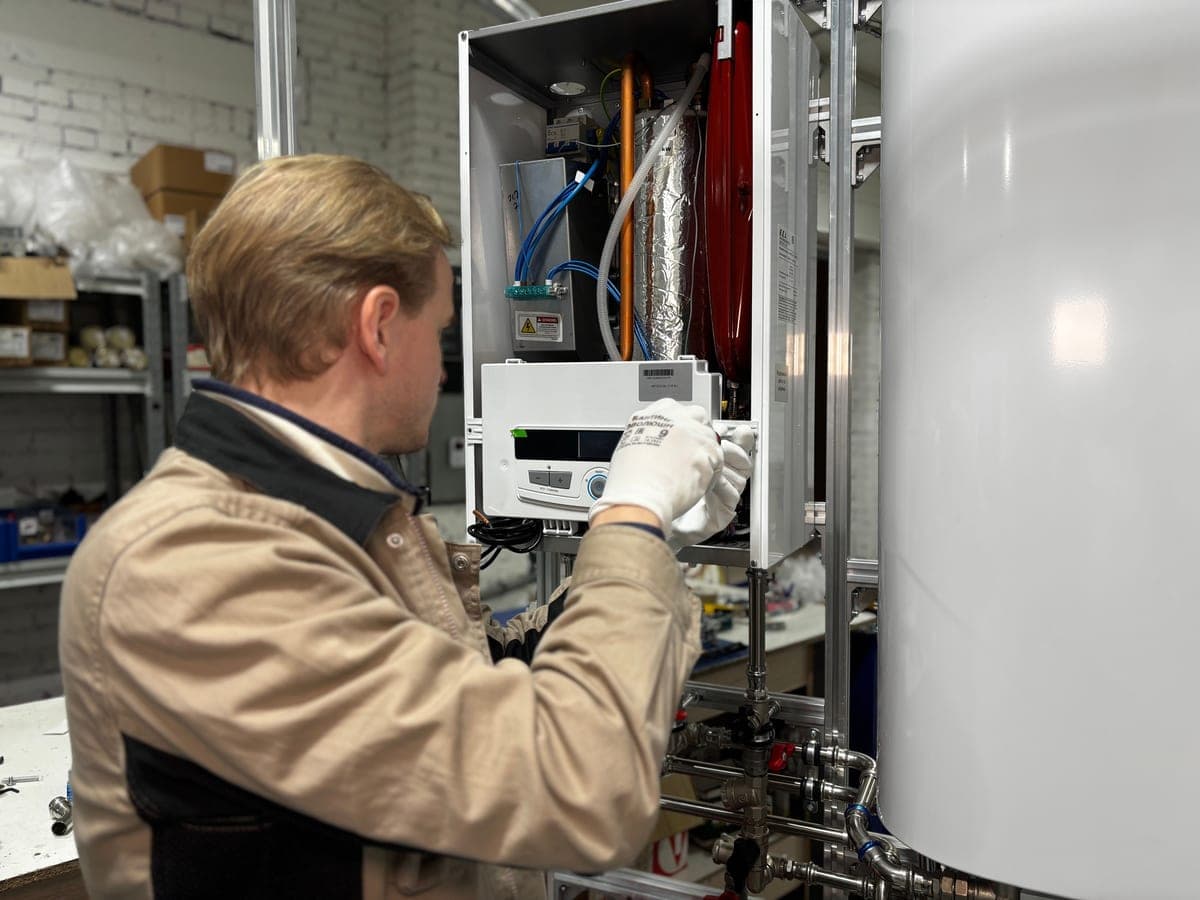
No hot water usually traces to one part: on a gas heater, a pilot light that has gone out or a failed thermocouple or gas valve; on an electric heater, a tripped breaker, a failed heating element, or a bad thermostat. Start by confirming power or a lit pilot, then work through the checklist below.
Start Here: Quick Checks for Any Water Heater
Before you open any panels, rule out the simple stuff. A surprising number of no-hot-water calls come down to a tripped breaker, an accidentally bumped thermostat setting, or a pilot that blew out. Figure out whether your unit is gas or electric first: a gas heater has a burner, a gas line, and a flue at the top, while an electric heater has a thick electrical cable and no gas line.
- Confirm the water heater is actually the problem, not a single fixture. If only one faucet is cold, the issue is that fixture, not the heater.
- Check the temperature setting, since someone may have turned the dial down. Aim for about 120 degrees Fahrenheit.
- Make sure you have not simply run out of a tank's worth of hot water after back-to-back showers; wait 30 to 60 minutes for recovery and retest.
- Look for water around the base. If the unit is also leaking, see our guide on a leaking water heater before going further.
Gas Water Heater: Pilot, Thermocouple, and Gas Valve
On a gas unit, no hot water almost always means the burner is not firing. The usual suspects, in order, are the pilot light, the thermocouple, and the gas supply.
- Check the pilot light. Remove the access cover near the bottom and look for a small flame. If it is out, follow the relight instructions printed on the tank label exactly.
- If the pilot will not stay lit, suspect the thermocouple, the thin metal sensor whose tip sits in the pilot flame. When it fails, it tells the gas valve to shut off for safety, so the pilot dies seconds after you release the knob.
- Confirm gas is flowing. Check that the gas shutoff valve on the supply line is open and that other gas appliances (stove, furnace) are working. If nothing gas-powered works, call your gas utility.
- If you ever smell gas, stop. Leave the home and call your gas utility from outside before doing anything else. Do not flip switches or relight anything.
- If the pilot lights and holds but you still get no hot water, the gas control valve or burner assembly may have failed, which is a job for a licensed plumber.
Electric Water Heater: Breaker, Elements, and Thermostat
An electric water heater has no flame; it heats with two elements controlled by upper and lower thermostats. No hot water usually means lost power or a burned-out element.
- Check the breaker. Water heaters run on a dedicated 240-volt double breaker. If it has tripped, switch it fully off and back on. If it trips again immediately, stop, because that points to a short or a failed element and needs a pro.
- Press the reset button. There is a red high-temperature cutoff (ECO) reset behind the upper access panel. If it has tripped, press it once. Repeated tripping means an underlying fault.
- Suspect a heating element. If you get lukewarm water or hot water that runs out fast, one of the two elements has likely burned out, a common failure in DFW because hard-water scale coats and overheats elements.
- Consider the thermostats. A failed upper or lower thermostat can leave you with no hot water or the wrong temperature.
- Testing elements and thermostats safely requires shutting off the 240-volt breaker and using a multimeter. If you are not comfortable working inside a live-capable electrical panel, this is the point to get matched with a licensed plumber.
No Hot Water vs Not Enough Hot Water
The two problems point in different directions, so it helps to be precise about which one you have.
- No hot water at all usually means the heater is not firing or heating: a dead pilot, no power, a failed gas valve, or both electric elements out.
- Hot water that runs out too fast often means a broken lower heating element (electric) or a dip tube problem, so only the top of the tank heats.
- Lukewarm water that never gets hot can be a bad thermostat, a single failed element, or a heater that is simply undersized for the household.
- Rusty or smelly hot water points to a corroding tank or a spent anode rod rather than a heating fault, and can precede a leak.
- Across DFW, hard-water sediment is a repeat offender: it insulates elements and burners, so the unit works harder and fails sooner. Annual flushing helps.
Is a Landlord Required to Provide Hot Water in Texas?
If you rent, hot water is not just a comfort issue; it is a habitability issue. Under Texas Property Code Section 92.052, a landlord must make a diligent effort to repair a condition that materially affects the physical health or safety of an ordinary tenant, and hot water generally falls in that category. The same statute specifically requires landlords to provide equipment to supply hot water of at least 120 degrees Fahrenheit.
The tenant's obligations matter too: you generally must be current on rent and give the landlord written notice of the problem before the repair duty and remedies kick in. Keep a dated copy of your notice.
This is general information, not legal advice. If your landlord will not act, the Texas Attorney General and local tenant resources outline the notice-and-remedy steps in more detail. If you own your home, none of this applies; you just need the heater fixed.
When to Get Matched With a Licensed DFW Plumber
Relighting a pilot or resetting a breaker is fair game for a homeowner. Replacing a thermocouple, gas valve, heating element, or thermostat, or diagnosing why a breaker keeps tripping, is where a licensed pro pays for itself, both for safety and to avoid guessing at parts.
Dallas Best Plumber is a free referral service. Tell us what your heater is doing through the quote form and we match you with a licensed, insured local plumber who serves your ZIP. The matched pro calls you back with a free, no-obligation quote to repair or, if the unit is old and failing, replace it. For planning only, water heater repairs in the DFW market typically run about $150 to $650, a typical market range, not a quote.
If your heater is also leaking or you smell gas, treat it as urgent, keep the gas or power off, and get matched right away.
Still stuck? Get matched with a licensed local pro
We'll connect you with a licensed, insured plumber in the Dallas-Fort Worth area for a free, no-obligation quote.
Related guides
- Tankless vs Tank Water Heater: How To ChooseTwo different products solving the same problem. Here is the honest comparison, including the hard-water catch.
- Why Is My Water Heater Leaking (and What to Do)?From the top or the bottom, here is what a leak means and the first moves to make.
- Water Heater Replacement Cost in Dallas-Fort Worth (2026)Typical 2026 DFW ranges by tank size and tankless, plus the repair-vs-replace call.
- Gas vs Electric Water HeaterFor most homeowners the choice is already made by what is in the wall. Here is how to tell, and when switching is worth the extra work.
- What Size Water Heater Do I Need?Tank size is the number on the sticker. First hour rating is the number that decides whether anyone runs out of hot water.
- Water Heater Repair CostMost water heater repairs are a part, not a tank. Here is what independent cost publishers report for each one, and when the repair stops making sense.
- Why Is My Water Heater Making Noise?Popping and rumbling is almost always sediment. Screeching is a valve. Here is how to tell them apart before you spend anything.
Frequently asked questions
Why do I suddenly have no hot water?
The most common causes are a pilot light that went out or a failed thermocouple on a gas heater, and a tripped breaker or burned-out heating element on an electric heater. Start by confirming power or a lit pilot, check the temperature setting, and make sure you have not just run the tank empty.
Why does my hot water run out so fast?
On an electric heater, a burned-out lower heating element is the usual cause: only the top of the tank heats, so you get a short burst of hot water. A broken dip tube or an undersized tank can do the same. A licensed plumber can test the elements and confirm.
Is a landlord required to provide hot water in Texas?
Generally yes. Texas Property Code Section 92.052 requires landlords to make a diligent effort to repair conditions affecting a tenant's health or safety and to supply equipment for hot water of at least 120 degrees. The tenant usually must be current on rent and give written notice first. This is general information, not legal advice.
Can I fix no hot water myself?
Some steps are DIY-friendly: relighting a gas pilot, resetting the breaker or the high-temperature cutoff, and adjusting the temperature dial. Replacing a thermocouple, gas valve, heating element, or thermostat involves gas or 240-volt wiring and is safer left to a licensed plumber.
How much does water heater repair cost in DFW?
For planning only, water heater repairs in the Dallas-Fort Worth market typically run about $150 to $650 depending on the part, and a full tank replacement typically runs about $1,300 to $2,400 installed. These are typical market ranges, not a quote; your matched pro provides the actual price.