Dallas & the DFW metroplex
Water Line Repair in Dallas & DFW
A leaking water line can run for weeks before anyone sees it. Get matched with a licensed local plumber who can find it and tell you whether to repair or replace.
Get a free quote
Matched with a licensed local pro — fast.
A water line leak is the one plumbing failure that bills you before it shows you anything. The pipe that carries water from your meter to your house runs underground, usually a few feet down, and when it starts to leak the water goes into the soil. There is no puddle on a floor and no dripping sound in a wall - just a water bill that climbs, pressure that drops a little, and eventually a patch of yard that stays soft and green through a North Texas August.
Dallas Best Plumber is a free referral service, not a plumbing company. Tell us what you are seeing - the bill, the wet spot, the pressure - and we match you with a licensed, insured local plumber who does water line repair and replacement across Dallas and the surrounding suburbs and calls you back with a free, no-obligation quote.
This page covers which part of the line is yours and which belongs to the utility, how to confirm a leak with your own water meter before anyone digs, what the pipe under your yard is likely made of given when your house was built, when a spot repair is enough and when the line needs replacing, and how trenchless replacement avoids tearing up a driveway.
Which part of the water line is actually yours
This is the first question to settle, because it decides who pays. The water utility owns and maintains the main in the street and the service connection up to and including your meter. From the meter to your house, the pipe is the property owner's responsibility - it is on your property, it is yours to repair, and a leak on that side of the meter is being measured and billed to you the entire time it runs. That private section is what people mean by a water service line or a yard line.
The practical consequence is that the location of the leak relative to the meter changes the whole conversation. Water bubbling up in the street or standing around the meter box itself is a call to your city's water department, not to a plumber. Water surfacing between the meter and the house, or a bill that climbs while the meter keeps spinning with everything in the house shut off, is yours - and that is the job a licensed plumber quotes.
Report anything you see at the meter box or in the street to your city regardless. Utilities across the metroplex want to know about main breaks and meter leaks, and a plumber cannot work on the utility's side of the meter anyway. If you are not sure which side the leak is on, the meter test in the next section usually tells you.
- Street main and the meter itself - the city water utility
- From the meter to the house - the property owner, and the water is billed to you
- Irrigation downstream of its own backflow assembly - the property owner
- Water standing at the meter box or in the street - report it to the city
Confirming a leak with your own meter, before anyone digs
You can get most of the way to a diagnosis yourself in about twenty minutes, and it costs nothing. Turn off every fixture and appliance that uses water, including ice makers and irrigation controllers. Then find your meter in its box near the street, lift the lid, and look at the face. Most meters have a small leak indicator - a triangle, a star or a little dial - that spins whenever water is moving through. With the whole house shut off, it should be perfectly still. If it is turning, water is passing the meter and going somewhere.
The second half of the test narrows it down. Close the main shut-off valve at the house, which is usually where the line enters - in the garage, in a utility area, or on an exterior wall - and look at the meter again. If the indicator stops, the leak is downstream of that valve, which means inside the house or under the slab. If it keeps turning with the house valve closed, the leak is in the buried line between the meter and that valve. That is a water line leak, and that is this page.
A few corroborating signs are worth noting before you call: a water bill that stepped up and stayed up rather than spiking once, pressure that has slowly dropped at every fixture, a patch of lawn that is greener or softer than the rest and stays that way, water surfacing along a driveway or sidewalk seam, or a hissing sound at the main when everything is off. Write down what you have seen and how long it has been going on - it makes the quote more useful.
- Shut off every water-using fixture and appliance, including ice makers and irrigation
- Open the meter box and watch the small leak indicator on the meter face
- If it is moving with everything off, water is being used somewhere
- Close the main shut-off at the house and watch the indicator again
- Indicator stops - the leak is inside the house or under the slab
- Indicator keeps moving - the leak is in the buried line between meter and house
What your water line is made of, and how each material fails
The age of the house is the best single predictor of what is buried in the yard and how it is failing. In pre-1960 housing - parts of east and south Dallas, the older core of Garland, Irving, Farmers Branch and Duncanville - the original service line was often galvanized steel. Galvanized corrodes from the inside out, and the rust gradually narrows the bore, which is the usual explanation for a house whose pressure has been getting steadily weaker for twenty years. Eventually it perforates, and once a galvanized line starts leaking it tends to keep finding new spots.
From roughly the 1950s through the 1980s, copper was common for service lines. Copper is a good material with two specific weaknesses underground in North Texas: it abrades where it bears against anything as the expansive clay of the Blackland Prairie swells and shrinks through our wet springs and dry summers, and it develops pinhole leaks where the surrounding soil chemistry works against it. A single copper pinhole can be repaired; a line that has produced three of them is telling you something about the rest of its length.
Houses plumbed in the late 1970s and 1980s may have polybutylene - the gray plastic pipe that was widely installed for a period and later became known for failing at its fittings and joints. Richardson's building boom means a share of its homes carry it, and it turns up in that era's housing across the region. Newer construction - most of Frisco, Prosper, Allen, Little Elm, west Plano and McKinney - typically uses PEX inside and polyethylene or PEX for the buried service line, which does not corrode and tolerates soil movement well. Those lines fail at connections, at points of mechanical damage, or where something was driven through them.
- Galvanized steel, pre-1960: rusts inward, pressure drops for years, then perforates
- Copper, 1950s-1980s: pinholes and abrasion as the clay moves
- Polybutylene, late 1970s-1980s: fails at fittings and joints
- Polyethylene or PEX, post-1995: fails at connections or from mechanical damage
- Any material: damage from digging, fence posts, tree roots or heavy equipment
Spot repair or replace the whole line?
Once the leak is located, this is the decision that sets the cost, and it should be made on evidence rather than habit. A spot repair makes sense when the line is in otherwise sound condition and the failure has an identifiable cause - a line that was nicked by a shovel, a single pinhole in an otherwise healthy copper run, a fitting that failed where the pipe passes under a walkway. One excavation, one repair, and the system is back to where it was.
Replacement becomes the better answer when the material itself is the problem. A galvanized line that has started perforating, a polybutylene line failing at fittings, or a copper line that has leaked repeatedly along its length is not going to be fixed by addressing the latest spot - you are paying for an excavation each time, and the next leak is somewhere you have not dug yet. A licensed plumber who has just excavated and looked at a section of your line is in the best position to tell you which situation you are in, and you should ask them to describe what they saw.
Two practical factors weigh in. The first is how much of the leak is costing you while you decide - a line leaking under pressure into the soil runs continuously and shows up on every bill. The second is what the line runs under. A service line that crosses a driveway, a patio or mature landscaping changes the economics of both options, and it is the reason trenchless methods exist.
Trenchless replacement, and when it is possible
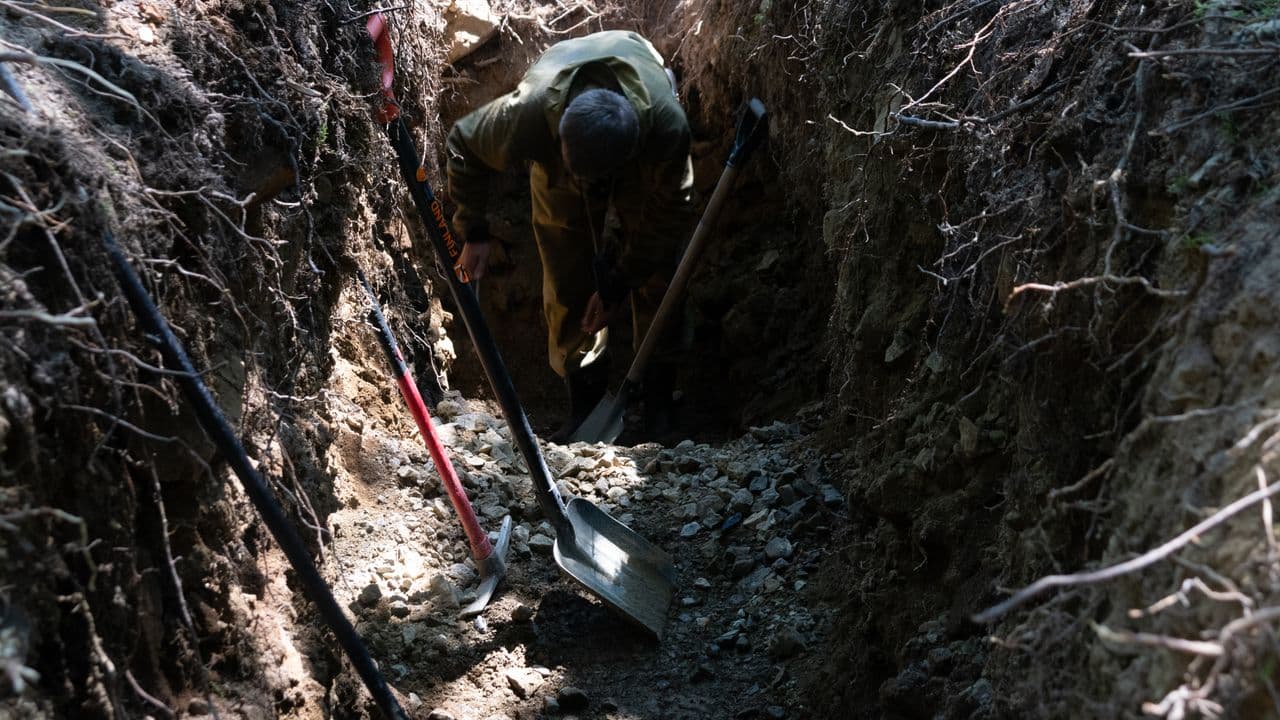
Replacing a water service line does not necessarily mean a trench across your front yard. Two trenchless approaches are in common use. Directional boring drills a new path from a small pit near the meter to another near the house and pulls new pipe through it, leaving the surface between them intact. Pipe bursting uses the existing line as a guide, fracturing the old pipe outward while pulling the new one into the same path. Both need an access pit at each end rather than an open trench along the whole run.
The appeal is obvious when the line passes under a concrete driveway, a flagstone patio, a mature oak or an established lawn - restoring those is frequently a larger part of the project than the plumbing. Trenchless is not universally applicable, though. It depends on what the line runs through, how much room there is at each end for the equipment, whether other utilities share that corridor, and in the case of pipe bursting whether the old line is intact enough to guide the new one.
Whichever method is used, one step is not optional: locating the other buried utilities before anything is dug or bored. Calling 811 before digging is the national one-call system for having gas, electric, telecom and water lines marked, and it is free. Any licensed plumber doing this work will handle the locate request as part of the job - and it is a reasonable question to ask when you are comparing quotes.
- Open trench: simplest and often cheapest where the run is open lawn
- Directional boring: a new path bored between two small pits, surface left intact
- Pipe bursting: new pipe pulled along the old line's path
- Trenchless depends on access, depth, other utilities and the old pipe's condition
- Utility locates through 811 before any excavation or boring - always
Water line, slab leak, or sewer line - telling them apart
These three get confused constantly, and they are different repairs with different costs. A water line leak is on the pressurized supply between your meter and your house. It runs continuously because it is under pressure, it registers on the meter, and it surfaces in the yard rather than inside the house.
A slab leak is also on the pressurized supply, but the failure is in the section of pipe running inside or beneath the concrete slab under your house. It shows up as a warm patch on a floor if it is on the hot side, a climbing bill, the sound of running water with everything off, or damp flooring. Electronic leak detection locates it before any concrete is opened. Our slab leak repair and leak detection pages cover that work.
A sewer line problem is on the drain side, which is not pressurized - so it does not register on your water meter and it does not raise your bill. It announces itself through drainage instead: several fixtures slowing at once, a gurgling toilet, a backup at the lowest drain in the house, or a sewage smell. In Garland and the older parts of Dallas, Irving and Farmers Branch, root intrusion into cast-iron and clay laterals is the usual cause. That is our sewer line repair page. If your bill has not changed but your drains have, you are on the wrong page - and that is good news for your bill.
Permits, licensing and what drives the cost
In Texas, plumbing work done for hire must be performed by a state-licensed plumber, and only a Responsible Master Plumber may pull a plumbing permit. Cities across the metroplex permit and inspect yard-line and water service replacement, and that inspection is there for your protection - it is the independent check that the line was installed at the right depth, with the right material, and connected correctly. Confirm the quote you accept includes the permit.
We do not set prices, and the plumber you are matched with gives you the quote. What drives it is mostly geometry and ground. The length of the run from the meter to the house is the starting point. After that: how deep the line sits, what the route crosses - open lawn against a driveway, patio, sidewalk, mature trees or an irrigation system - whether the job is a single excavation for a spot repair or a full replacement, whether open trench or a trenchless method suits the site, the material and diameter of the new line, and the restoration afterward.
One number you control is how long it runs before it is fixed. A pressurized line leaking into the soil does not get better, it saturates the ground near your foundation, and every day of it is metered and billed. If the meter test above points at the buried line, that is the point to get a licensed plumber looking at it.
When it's an emergency
Water surfacing hard in the yard, pressure dropping away to nothing, or water running toward the foundation or into a crawl space is urgent. Close the main shut-off at the house if the house itself is affected, report anything at the meter box or in the street to your city, and get matched.
See emergency plumbing helpWhere we match water line repair pros
We connect homeowners with licensed local plumbers across the Dallas-Fort Worth metroplex, including:
- Dallas, TX
- Plano, TX
- Irving, TX
- Garland, TX
- Richardson, TX
- Carrollton, TX
- Mesquite, TX
- McKinney, TX
- Frisco, TX
- Rockwall, TX
- Allen, TX
- Lewisville, TX
- Rowlett, TX
- Grand Prairie, TX
- Flower Mound, TX
- Forney, TX
- Wylie, TX
- Little Elm, TX
- The Colony, TX
- Duncanville, TX
- Coppell, TX
- Cedar Hill, TX
- DeSoto, TX
- Prosper, TX
- Addison, TX
- Farmers Branch, TX
Helpful guides
Related services
- Slab Leak Repair & Leak DetectionWarm spot on the floor or a spiking water bill? Get matched with a licensed local pro for accurate leak detection and slab leak repair - free quote, no pressure.
- Leak DetectionA bill that keeps climbing, a meter that never stops, a damp spot with no source - get matched with a licensed local pro who finds the leak before anything gets opened up.
- Sewer Line RepairMultiple drains backing up or roots in the line? Get matched with a licensed local sewer pro for camera inspection and trenchless options - free, no-obligation quote.
Frequently asked questions
Who is responsible for the water line from the meter to my house?
You are. The water utility owns the main in the street and the service connection up to and including the meter; from the meter to the house the line is on your property and is the property owner's responsibility to repair. That also means a leak on your side is being measured and billed to you for as long as it runs. Water standing at the meter box or in the street is the city's - report that to your water department rather than calling a plumber.
How do I know if my water line is leaking?
Use your meter. Shut off every fixture and appliance that uses water, including ice makers and irrigation, then watch the small leak indicator on the meter face - it should be completely still. If it is turning, close the main shut-off at the house and look again. If it stops, the leak is inside the house or under the slab. If it keeps turning, the leak is in the buried line between the meter and the house. Supporting signs: a bill that stepped up and stayed up, slowly falling pressure, and a patch of yard that stays soft and green.
Can a water line be repaired, or does the whole line need replacing?
Both happen, and the right answer depends on why it failed. A spot repair is appropriate when the line is otherwise sound and the cause is identifiable - a shovel strike, a single copper pinhole, one failed fitting. Replacement is the better value when the material itself is at the end of its life: galvanized steel that has begun perforating, polybutylene failing at its fittings, or copper that has leaked repeatedly. Ask the plumber who excavated to describe the condition of the pipe they saw.
Do you have to dig up my yard to replace a water line?
Not always. Directional boring pulls a new line through a path bored between two small access pits, and pipe bursting pulls new pipe along the old line's route - both leave the surface between the pits largely intact, which matters a lot when the run crosses a driveway, a patio or mature landscaping. Whether either is suitable depends on access at both ends, depth, other buried utilities and the condition of the existing line. An open trench is sometimes still the simplest and least expensive choice across open lawn.
Is a water line leak the same as a slab leak?
No, although both are on the pressurized supply side. A water line leak is in the buried service line between your meter and your house, and it usually surfaces in the yard. A slab leak is in the supply pipe running inside or beneath the concrete slab under the house, and it shows up as a warm floor spot, damp flooring, or running water heard with everything off. Both register on the water meter. A sewer problem is different again - it is on the unpressurized drain side, so it does not affect your water bill at all.
Does water line repair need a permit in Dallas?
Cities across the metroplex permit and inspect water service and yard-line replacement, so assume yes and confirm with the plumber quoting your job. In Texas the work must be done by a state-licensed plumber, and only a Responsible Master Plumber may pull the permit. The inspection is the independent confirmation that the new line is at the right depth, in the right material and correctly connected - worth having on a buried line you will not see again for decades.
Why did my water bill jump with no change in how we use water?
A step change in the bill that then stays high is the signature of a continuous leak, and a pressurized line leaking underground is the most common cause that produces no visible symptom indoors. Run the meter test above before anything else - it takes twenty minutes and it tells you whether water is passing the meter with the house shut off, and whether the leak is on the buried line or inside. Other candidates worth ruling out: a running toilet, an irrigation leak, and a stuck irrigation valve.
Need water line repair in Dallas or DFW?
Tell us what's happening and we'll match you with a licensed, insured local plumber. Free quote, no pressure.
Get a Free Quote