Dallas & the DFW metroplex
Leak Detection in Dallas & DFW
A bill that keeps climbing, a meter that never stops, a damp spot with no source - get matched with a licensed local pro who finds the leak before anything gets opened up.
Get a free quote
Matched with a licensed local pro — fast.
Leak detection is the work of finding a leak you cannot see. Not the dripping faucet or the puddle under the sink - those announce themselves. This is the leak behind drywall, under a slab, beneath a driveway, in an irrigation line, or on the service line between the meter and the house, where the only evidence is a water bill that keeps climbing, a meter that will not stop turning, or a stain whose source is somewhere else entirely.
Dallas Best Plumber is a free referral service, not a plumbing company. Tell us what you are seeing - the bill, the sound, the damp patch, the reading on the meter - and we match you with a licensed, insured local plumber who does leak detection in Dallas and the surrounding suburbs and calls you back with a free, no-obligation quote.
This page covers how to confirm you actually have a leak before you pay anyone to look for one, the places hidden leaks hide in DFW homes, the tools a professional uses to locate them without demolition, and what happens after the leak is found. If the leak turns out to be under your foundation, our slab leak repair page covers that repair in detail; this page is about everything that happens before the repair starts.
Confirm the leak yourself with your water meter
Before anyone comes out, you can establish whether water is moving when it should not be. It takes ten minutes and it is the single most useful thing you can tell a plumber.
- Turn off every fixture and appliance that uses water, including the ice maker and the irrigation controller. Do not use water for the duration of the test.
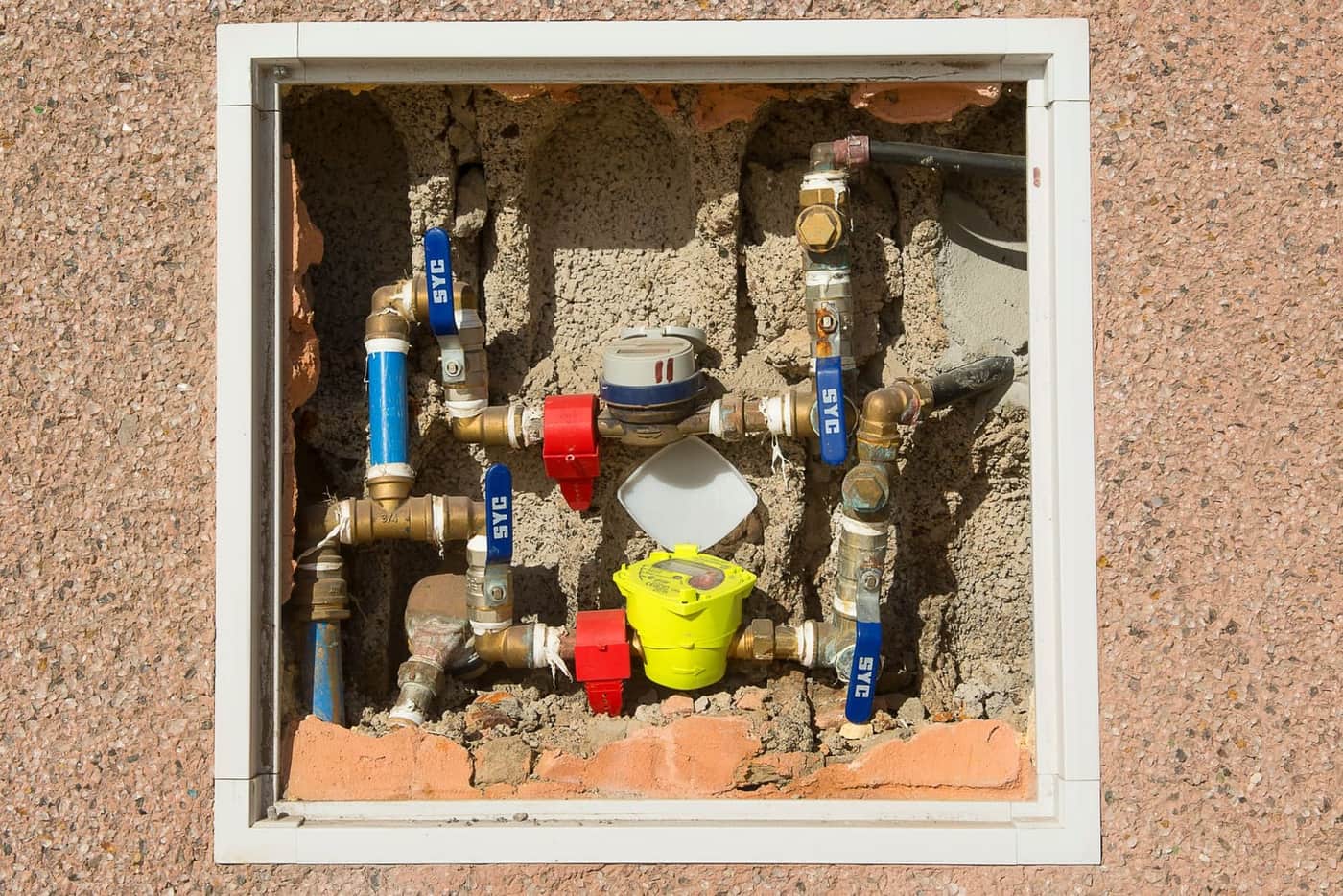
- Find your water meter - usually in a box near the street or the front curb - and lift the lid.
- Look for the leak indicator: a small triangle, star or dial that spins at low flow. If it is moving with everything off, water is leaving the system somewhere.
- If there is no indicator, write down the exact reading, wait thirty to sixty minutes with no water use, and read it again. A changed number means flow.
- Now narrow it down: close the main shut-off valve at the house. If the meter stops, the leak is between the shut-off and your fixtures - inside the house or under the slab. If it keeps moving, the leak is on the service line between the meter and the house, or in the irrigation line if that is teed in ahead of the valve.
What a climbing bill with no visible leak usually means
Most hidden leaks in this region fall into a short list of categories, and a few symptoms point reliably at each. A slab leak - a supply line failing inside or under the concrete foundation - is the one DFW homeowners ask about most, because expansive Blackland Prairie clay swells and shrinks seasonally and the lines inside the slab take that movement for decades. Its signature is a warm patch on the floor, running water audible when everything is closed, or a strip of slab edge that never dries.
A service line leak sits between the meter and the house. It shows as a meter that keeps running even with the main valve at the house closed, sometimes a soft or unusually green strip across the yard, sometimes nothing visible at all because the water is following a utility trench. An irrigation leak behaves similarly but often only shows up in the billing cycles when the system is running, and a cracked above-ground backflow assembly after a freeze is a common cause.
Then there are the leaks that are not water at all. A gas leak is detected by smell, by a hissing at a connection, or by a licensed plumber with a combustible gas detector - and it is an emergency rather than an investigation. Our gas line repair page covers that. If you smell gas, leave and call your gas utility from outside before anything else.
- Warm spot on the floor, water audible with everything off - likely a slab leak
- Meter runs even with the main valve at the house closed - likely the service line
- Spikes only in irrigation months, or a cracked backflow assembly after a freeze - irrigation
- Ceiling or wall stain away from any fixture - a supply line or shower pan above it
- Pool losing more than evaporation explains - pool plumbing or shell, a specialist job
- Smell of gas or a hiss at a connection - leave the building and treat it as an emergency
How professional leak detection actually works
The goal of leak detection is to locate the leak precisely enough that the repair opens the smallest possible area of floor, wall or yard. A pro does that with a combination of methods rather than one magic device, choosing them based on what the symptoms suggest.
- Acoustic and electronic listening equipment, which amplifies the sound of water escaping under pressure through concrete, soil or wall cavities.
- Static and pressure testing, which isolates sections of the system and watches whether they hold pressure - the method that tells you which line is leaking rather than just that one is.
- Line and pipe locating, which traces where the plumbing actually runs before anyone cuts, so the search is aimed rather than exploratory.
- Thermal imaging, which reads the temperature difference a leak creates in a floor, wall or ceiling - especially effective on hot-water slab leaks.
- Tracer gas, where a safe gas is introduced into an isolated line and detected where it surfaces, used when a line is hard to hear through.
- Camera inspection, for drain and sewer lines, where the leak is not pressurised and the problem is a crack, a break, an offset joint or root intrusion.
Why DFW homes leak where they do
The geology of this metroplex sets the pattern. Most of Dallas and its suburbs sit on expansive clay that swells after a wet spring and shrinks hard through a triple-digit August, and almost all housing here is slab-on-grade. The slab flexes with the soil year after year, and the supply lines cast into or running beneath that concrete take every cycle. Older copper abrades where it passes through concrete; older joints open; newer PEX tolerates the movement better but fails at fittings.
Age of construction determines the rest. Pre-1970 neighborhoods in Dallas, Garland, Mesquite, Irving, Duncanville and Farmers Branch have cast-iron drain lines and sometimes galvanized supply pipe, both of which corrode from the inside until they narrow, crack or channel out. Post-1995 cities like Frisco, Allen and Prosper have PEX or CPVC and see fitting failures and UV-damaged line instead. Mid-century cities like Richardson sit between the two, and some 1970s-80s housing across the region has polybutylene supply line, which fails at its fittings with little warning.
Hard water runs underneath all of it. Dallas Water Utilities treats surface water from the Elm Fork of the Trinity River and six lakes; the North Texas Municipal Water District supplies much of Collin County from Lavon Lake and other sources and describes its treated water as moderately hard. Scale shortens the life of water heaters, relief valves, angle stops and connectors across the whole metroplex, and a weeping relief valve or a failed connector is a leak like any other.
What happens after the leak is located
Detection and repair are separate steps, and knowing that protects you. Once the leak is pinpointed, you should be told where it is, what is leaking, and what the repair options are - and for a slab leak there are usually several: a spot repair that opens the floor at the leak, a reroute that abandons the failed section and runs new line overhead or around, or a repipe when the rest of the system is in the same condition. Which one makes sense depends on access, depth, and the age and material of everything else.
Ask for the evidence. A reputable pro can show you the pressure test result, the thermal image, the camera footage or the located point, and can explain why they believe the leak is there. That matters because the repair is the expensive part, and you want it aimed at a leak that has actually been found rather than at a best guess.
It is also worth photographing everything and keeping the paperwork. If the leak has caused damage to flooring, drywall or cabinetry, your homeowner's insurance may cover the damage even where it does not cover the plumbing repair itself, and documentation of when the leak was found and what caused it is what makes that claim possible.
What drives the cost of leak detection
We do not quote prices - we are a free referral service, and the plumber you are matched with gives you the quote. But it helps to know what they will be pricing, because it is not a single flat task.
The biggest factor is how much of the system has to be isolated and tested to narrow the search. A leak that announces itself through a warm floor in one room is a short job; a bill that has doubled with no symptom at all may need the supply side, the service line, the irrigation system and the pool plumbing each ruled out in turn. Access is the second factor - a slab leak under tile in the middle of a finished room is harder to reach and harder to confirm than one at an exterior wall, and a service line under a driveway is different work from one under a lawn. The method matters too: listening equipment on an accessible line is quick, while tracer gas or a camera run through a sewer line takes longer and uses more equipment.
Two things reduce it. First, the meter test above: telling a plumber whether the meter stops when the main valve is closed eliminates an entire branch of the search before they arrive. Second, your own history of the house - its build year, pipe material if you know it, whether the foundation has been worked on, whether this has happened before. Detection is diagnosis, and diagnosis gets cheaper when you bring the history with you.
When it's an emergency
A leak that is actively flooding a floor, a water bill that has jumped dramatically, or a foundation that is visibly moving is not something to schedule for next week. Shut off the water at the main and get matched with a licensed pro now. If you smell gas, leave the building first and call your gas utility from outside.
See emergency plumbing helpLeak Detection by city
These pages cover the same job against one city's own housing stock, water supply and permit process - the local detail that decides the diagnosis:
Where we match leak detection pros
We connect homeowners with licensed local plumbers across the Dallas-Fort Worth metroplex, including:
- Dallas, TX
- Plano, TX
- Irving, TX
- Garland, TX
- Richardson, TX
- Carrollton, TX
- Mesquite, TX
- McKinney, TX
- Frisco, TX
- Rockwall, TX
- Allen, TX
- Lewisville, TX
- Rowlett, TX
- Grand Prairie, TX
- Flower Mound, TX
- Forney, TX
- Wylie, TX
- Little Elm, TX
- The Colony, TX
- Duncanville, TX
- Coppell, TX
- Cedar Hill, TX
- DeSoto, TX
- Prosper, TX
- Addison, TX
- Farmers Branch, TX
Related services
- Slab Leak Repair & Leak DetectionWarm spot on the floor or a spiking water bill? Get matched with a licensed local pro for accurate leak detection and slab leak repair - free quote, no pressure.
- Emergency PlumbingBurst pipe, no water, or sewage backing up? Shut off your water, then get matched with a licensed local emergency plumber - fast, free, no obligation.
- Sewer Line RepairMultiple drains backing up or roots in the line? Get matched with a licensed local sewer pro for camera inspection and trenchless options - free, no-obligation quote.
Frequently asked questions
How do I know if I have a hidden water leak?
Turn off every water-using fixture and appliance, then check your water meter. If the low-flow leak indicator is spinning, or the reading changes over thirty to sixty minutes with no water use, water is escaping somewhere. Then close the main shut-off at the house: if the meter stops, the leak is inside or under the house; if it keeps running, it is on the service line or irrigation ahead of that valve.
What is the difference between leak detection and slab leak repair?
Leak detection is finding the leak; slab leak repair is fixing one specific kind of leak once it has been found. Detection covers everything hidden - slab lines, wall and ceiling lines, the service line from the meter, irrigation, pool plumbing and drain lines - and uses acoustic equipment, pressure testing, line locating, thermal imaging, tracer gas and cameras. If the located leak turns out to be under your foundation, our slab leak repair page covers the repair options from there.
Can a plumber find a leak without breaking concrete?
That is the entire point of professional detection. Acoustic listening equipment, pressure and static testing, line locating and thermal imaging are all non-destructive - they narrow the leak to a point before anything is opened. Concrete only comes up for the repair, and only at the located spot. A plumber who wants to start opening floor to look for a leak has skipped the step you are paying for.
Why is my water bill high when I cannot find a leak?
Because the most expensive leaks are the invisible ones. A slab leak, a cracked service line between the meter and the house, a leaking irrigation line or a cracked backflow assembly after a freeze can all run continuously with nothing to see. So can a running toilet, which is worth ruling out first because it is the cheapest fix there is. The meter test tells you whether water is moving at all, which is where any real diagnosis starts.
Does homeowner's insurance cover a hidden leak?
Policies differ, so this is a question for your insurer rather than for us. As a general pattern, many policies treat sudden water damage to flooring, drywall and cabinetry differently from the cost of repairing the failed pipe itself, and long-term seepage differently again from a sudden break. Document everything - photos, the detection report, dates - because that documentation is what a claim rests on.
Do you find pool leaks and gas leaks too?
We match you with licensed local pros for plumbing leak detection, and some also handle pool plumbing - mention the pool in your request so we can match appropriately, since pool leaks can be in the shell rather than the plumbing. Gas is different: a suspected gas leak is an emergency, not an investigation. Leave the building, call your gas utility from outside, and see our gas line repair page for what happens next.
Need leak detection in Dallas or DFW?
Tell us what's happening and we'll match you with a licensed, insured local plumber. Free quote, no pressure.
Get a Free Quote