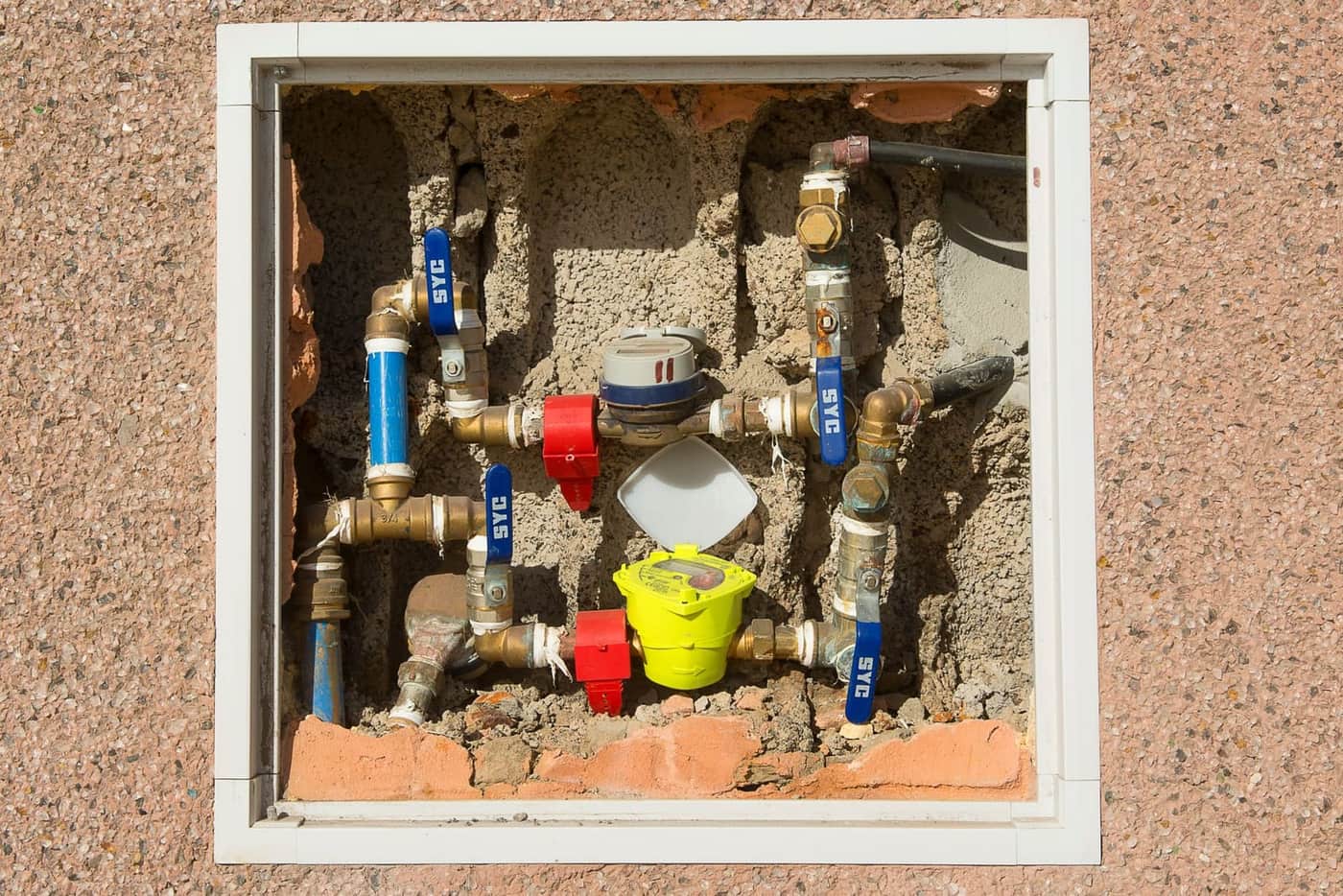
Plano, Texas - leak detection
Leak Detection in Plano, TX
Water bill climbing, a damp spot, or running water you cannot find in Plano? Get matched with a licensed, insured local plumber for leak detection.
Get a free quote in Plano
Matched with a licensed local pro - fast.
Leak detection is the step that decides how much the rest of the job costs. In a Plano home a water loss can be in a slab-run supply line, in an irrigation system that runs at four in the morning, in a toilet flapper that passes water silently, in a pool fill line, or above a first-floor ceiling in a two-story house. Those cost wildly different amounts to fix, and they all look the same on a water bill.
Dallas Best Plumber is a free referral service, not a plumbing company. Tell us what you are seeing - a bill that jumped, a damp patch, a meter that will not stop turning - and we match you with a licensed, insured local plumber who does electronic leak detection in Plano and calls you back with a free, no-obligation quote.
The sections below are specific to this city: what Plano's post-1980 construction means for where a leak hides, the irrigation systems and backflow assemblies nearly every home here has, the pressure problems that cause leaks in thirty-year-old builds, and how a detection visit actually proceeds.
Where a leak hides in a post-1980 Plano home
Much of Plano, especially West Plano and the neighborhoods around Legacy and Willow Bend, was built out from the 1980s into the 2000s. That means PEX and CPVC supply lines rather than aging galvanized pipe, sometimes on a manifold or home-run layout where each fixture has its own dedicated run back to a central point. A manifold is an advantage during detection - a plumber can isolate one line at a time instead of guessing - but only if they know the house has one, which is worth mentioning when you request a quote.
Those homes are now old enough to leak in predictable places. Angle stops and braided supply lines under sinks go brittle. Toilet fill valves and flappers wear. Water heater fittings weep. Pressure-reducing valves and thermal expansion tanks fail. None of those require detection equipment to find once you know to look, and together they account for a large share of the unexplained water losses in this city.
East Plano and the area around historic Downtown Plano include some of the city's older housing, closer in age and construction to neighboring Richardson. In those homes a slab-run copper line is a genuine candidate, and the detection has to include the concrete rather than stopping at the fixtures. Foundations across the whole city are slab-on-grade over expansive clay, so slab leaks are far from unheard of in the thirty-plus-year-old stock either.
- Angle stops, braided supply lines and fill valves - the common quiet leaks
- Manifold or home-run PEX layouts make isolation easier, if the plumber knows
- Older East Plano and Downtown housing: slab-run copper is in play
- Two-story homes: an upstairs leak often surfaces as a downstairs ceiling stain
Irrigation, backflow assemblies and pool fill lines
Plano's well-kept lawns mean nearly every home has an in-ground irrigation system, and that system is the single most common place a large water loss turns out to be. A cracked lateral, a valve that has failed open, or a head sheared off by a mower runs water into the ground without anything appearing inside the house. Because irrigation typically runs before dawn, nobody sees it.
Texas requires irrigation systems to have a backflow preventer so sprinkler water cannot siphon back into the drinking supply. The assembly sits above ground, which makes it vulnerable to freezing and cracking in a hard winter, and it needs periodic testing. A cracked backflow device can pass water continuously, and because it is outside and often behind shrubs it goes unnoticed for months. Checking it is a two-minute job during a detection visit.
Pool fill lines are the third candidate. An auto-fill valve that has stuck open keeps a pool at its line while the meter runs, and the loss reads exactly like a slab leak. If you have a pool and an unexplained bill, say so when you submit your request - it changes the order in which a plumber tests things.
Pressure, expansion tanks and the leaks they cause
Many newer Plano homes have a thermal expansion tank on the water heater and a pressure-reducing valve on the incoming main. Both wear out. When the pressure-reducing valve fails, static pressure climbs, and high pressure is a leak generator: it makes pipes bang, wears out fill valves and angle stops quickly, and pushes the water heater's relief valve into weeping water onto the floor - which many homeowners find and reasonably mistake for a tank leak.
When a pressure-reducing valve or a check valve turns the house into a closed system, thermal expansion has nowhere to go, and without a working expansion tank the pressure spikes every time the heater runs. That cycle is hard on everything downstream and it shortens the life of exactly the small parts most likely to produce a hidden drip inside a wall or cabinet.
This is why a thorough detection visit includes a pressure gauge, not just listening equipment. If the plumber finds high static pressure behind the leak they just located, correcting it is part of the fix rather than an upsell - otherwise you are likely to be calling about the next failed part within a year.
- Hammering pipes when a valve or washing machine closes - check pressure
- A relief valve weeping at the water heater - pressure or expansion, not always the tank
- Repeatedly replacing angle stops or fill valves - a pressure symptom
- A gauge on the hose bib is a cheap, fast test
Permits, licensing and what happens after detection
Detection itself is diagnostic work and does not require a permit. The repair it leads to may: the City of Plano requires permits for major plumbing work including repiping, water and sewer line work and yard-line replacements, and in Texas that work must be performed by a state-licensed plumber who pulls the permit so the work is inspected.
It is worth asking, before the visit, how the detection fee is handled if you proceed with the repair - some plumbers credit it, some do not, and knowing which is a fair question to ask on the phone. It is also worth asking what the plumber will give you at the end: a located leak, a photograph or marking, and a written explanation of the options is what you are paying for.
When you request a quote, include the age of the house, whether you have an irrigation system and a pool, whether the house is one or two stories, and what your recent bills have looked like. We do not set prices or perform the work - we put your request in front of licensed local plumbers who cover your part of Collin County, and the free quote is theirs.
How a leak detection visit actually works
The first step is confirming there is a leak at all. With every fixture and appliance off - including the ice maker and the irrigation controller - the meter's low-flow indicator should be still. If it is turning, water is leaving the system, and the rate tells the plumber roughly how big the loss is.
The second step is dividing the system. Closing the main at the house separates the buried yard line from everything inside; closing the irrigation isolation valve takes the sprinklers out of the picture; isolating the water heater separates hot from cold. By the end of that process, a plumber usually knows which part of the property the water is going out of - and in a good number of Plano cases that is where the job ends, because the answer is a toilet, a hose bib or a sprinkler valve.
Only when the loss is inside the house and not at a fixture does the electronic equipment come out: acoustic listening gear on the slab, pressure testing on individual lines, a thermal scan on a two-story ceiling, and sometimes tracer gas on a drained line. The output is a marked location, which is what lets a repair be a single opening instead of an exploration.
- Meter test to confirm and size the loss
- Isolate: yard line, irrigation, hot side, cold side
- Fixture checks - toilets, hose bibs, water heater, appliance connections
- Electronic detection last, to pinpoint what the isolation narrowed down
What to check yourself before you book anything
Dye-test every toilet in the house: a few drops of food coloring in the tank, twenty minutes without flushing, and color in the bowl means the flapper is leaking. Walk the yard and look for a patch of grass that is greener, softer or growing faster than everything around it. Check each hose bib for a slow weep, and look at the backflow assembly on the irrigation system for cracking or dripping. Check the water heater's pan and the floor around it.
Then do the meter test and write the numbers down, including the time. If you have more than one bill showing the increase, keep them together. Detection is faster and cheaper when the plumber starts with evidence rather than with a description, and in some cases your own test finds the leak outright.
One thing to avoid: do not run the irrigation system to see whether it leaks and then leave it running. If you suspect the sprinkler side, shut the system off at its isolation valve and watch the meter instead. And if a damp spot is spreading inside the house rather than sitting still, treat it as an emergency plumbing call - close the main and get matched rather than scheduling a detection visit for next week.
How we match you with a Plano plumber
Dallas Best Plumber is a free referral service, not a plumbing company. We do not perform the work, set prices, or promise an arrival window on another business's behalf. What we do is put your request in front of licensed, insured plumbers who work in Plano, with the details they need to call you back quickly. The form takes about two minutes, and the quote is theirs and free.
1. Tell us the problem
Share what's happening, your ZIP code, and how urgent it is. It takes about two minutes — no phone tag.
2. We match you with a licensed local pro
We connect you with a licensed, insured plumber who serves your area and handles your type of job.
3. They call you back with a free quote
Your matched pro reaches out with a free, no-obligation quote. You decide whether to move forward.
Other Plano services covered in depth
Related
- Plumbers in Plano, TXThe full Plano page - water supply, housing stock, local problems and permits.
- Leak Detection across Dallas & DFWA bill that keeps climbing, a meter that never stops, a damp spot with no source - get matched with a licensed local pro who finds the leak before anything gets opened up.
- Water Heater Repair in Plano, TXCold shower, rumbling tank, or a tankless unit throwing error codes in Plano? Get matched with a licensed, insured local plumber - free quote.
- Drain Cleaning in Plano, TXOne slow drain or the whole house backing up in Plano? Get matched with a licensed, insured local plumber - free, no-obligation quote.
- Emergency plumber in PlanoWhat to do in the first ten minutes, and where the shut-off usually is in a Plano home.
Frequently asked questions
My Plano water bill doubled but I cannot see a leak. Where should I start?
With the meter. Shut off every fixture and appliance, including the ice maker and the irrigation controller, and look at the meter's low-flow indicator - if it is turning, water is leaving the system. Then dye-test the toilets with food coloring and check the irrigation system and hose bibs. Those three checks find a large share of Plano's unexplained water losses, and none of them require equipment.
Is a high bill in Plano usually the slab or the sprinklers?
In this city, the irrigation system is the more common answer - nearly every home has one, it runs before dawn, and a cracked lateral or a valve stuck open loses water with nothing visible indoors. The above-ground backflow assembly that Texas requires can also crack in a hard freeze and pass water continuously. Slab leaks are real in Plano's thirty-plus-year-old homes and in the older East Plano stock, but the outside lines should be ruled out first because it is quick and free to do so.
Does leak detection damage anything?
No. Detection is non-invasive by design: a meter test, isolating valves, listening equipment on the floor, pressure tests on individual lines, sometimes a thermal scan or tracer gas. The whole point is to find the leak before anything is opened, so the repair is one deliberate opening rather than several exploratory ones. Anyone proposing to break concrete before a leak has been located is working in the wrong order.
How much does leak detection cost in Plano?
We are a free referral service and do not set prices, so the quote comes from the licensed plumber you are matched with. What affects it: how much of the property has to be tested, whether the loss is inside or in a buried yard line, whether a two-story ceiling or a slab is involved, and whether pool and irrigation systems need isolating. Ask whether the detection fee is credited toward the repair if you proceed - practice varies.
Do Plano homes with PEX still get hidden leaks?
Yes, just in different places. PEX does not corrode like galvanized steel, so the slow pressure loss common in pre-1960 housing is rare here. What fails instead is fittings and crimps, brass and plastic valve bodies, angle stops, braided supply lines and fill valves - small parts that cause real damage when they sit inside a wall or above a ceiling. If your home has a manifold or home-run layout, mention it: it makes isolating the leaking line much faster.
Need leak detection in Plano?
Tell us what's happening and we'll match you with a licensed, insured local plumber. Free quote, no pressure.
Get a Free Quote