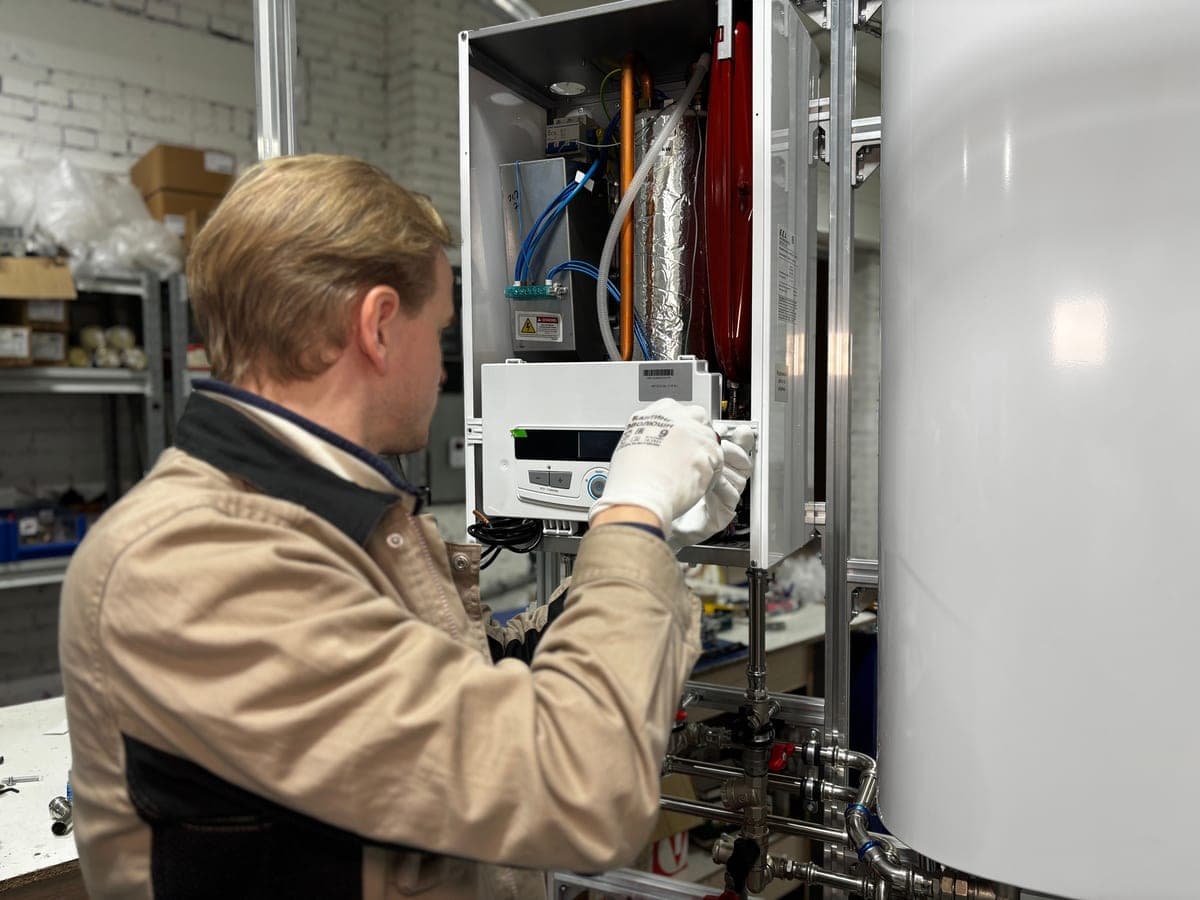
Plano, Texas - water heater repair
Water Heater Repair in Plano, TX
Cold shower, rumbling tank, or a tankless unit throwing error codes in Plano? Get matched with a licensed, insured local plumber - free quote.
Get a free quote in Plano
Matched with a licensed local pro - fast.
Water heater repair in Plano has a particular shape, and it comes from when the city was built. Much of Plano - especially West Plano and the neighborhoods around Legacy and Willow Bend - went up from the 1980s into the 2000s, which means a large share of the city's heaters reached the end of their service life at roughly the same time. If your neighbors have been replacing heaters, that is not a coincidence.
Dallas Best Plumber is a free referral service, not a plumbing company. Tell us what the unit is doing, whether it is tank or tankless, and where in Plano you are, and we match you with a licensed, insured local plumber who works your part of Collin County and calls you back with a free, no-obligation quote.
The sections below are about Plano specifically: the hard North Texas Municipal Water District water that shortens every heater's life here, the larger West Plano homes that were built with two units, the pressure-reducing valves and expansion tanks that are quietly behind a lot of heater symptoms, and how the city handles permits on a replacement.
NTMWD water and what it does to a Plano heater
Plano is a member city of the North Texas Municipal Water District, which supplies treated surface water to much of Collin County rather than each city treating its own. NTMWD describes its treated water as moderately hard, primarily because of the minerals in Lavon Lake, and notes those minerals leave scale on fixtures while posing no risk to health. Harmless to drink is not the same as harmless to appliances.
Inside a tank heater, those minerals drop out of solution as the water is heated and settle on the bottom, over the burner in a gas unit and around the element in an electric one. The layer insulates the heat source from the water, so the unit runs longer to deliver the same shower. The sequence homeowners actually notice is: popping and rumbling first, then hot water running out sooner, then a utility bill creeping up, then a failure earlier than expected.
Tankless units are common in Plano's newer construction and they are not exempt - the same minerals narrow the heat exchanger instead of settling in a tank. A tankless heater that is short-cycling or throwing error codes is usually telling you it needs descaling, and most manufacturers make periodic descaling a condition of the warranty. A licensed plumber can descale it, replace a failed flow sensor or igniter, or tell you honestly when the unit is past economic repair.
- NTMWD treated water is moderately hard, primarily from Lavon Lake minerals
- Tank symptom: popping, rumbling, less usable hot water, early failure
- Tankless symptom: short-cycling and error codes between descalings
- Scale also crusts aerators, shower cartridges and toilet fill valves citywide
Plano's build eras, and the thirty-year wear list
West Plano - Legacy West, Willow Bend, Deerfield, Preston Meadow - is largely 1990s and 2000s housing, often two stories with multiple full baths. Many of those larger homes were built with two water heaters, which matters twice: there are two units to age out, and a household losing hot water in half the house is often looking at one failed unit rather than a whole-system problem. If you have two, tell the plumber which one serves the affected fixtures.
Around Los Rios and Hunters Glen the stock leans 1970s and 1980s, and East Plano and the area near historic Downtown Plano include the city's oldest housing - closer in age and construction to neighboring Richardson, with the heater more likely in an interior closet and a gas connection as old as the house. Prestonwood, Russell Creek and the newer developments off the Sam Rayburn Tollway fill in the middle.
Across all of it, a Plano house built in the 1990s is now on the thirty-year wear list, and a water heater is only the most visible item on it. Angle stops and braided supply lines go brittle. Toilet fill valves scale shut. The pressure-reducing valve on the incoming main wears out. These fail in clusters because they were all installed in the same week, which is why a plumber here will often look at more than the one thing that brought them out.
- West Plano: 1990s-2000s two-story homes, frequently with two water heaters
- Los Rios and Hunters Glen: 1970s-80s stock
- East Plano and Downtown Plano: the city's oldest housing
- Everywhere: original angle stops, supply lines, fill valves and PRVs aging together
Pressure, expansion tanks, and a relief valve that weeps
This is the Plano-specific diagnosis most often missed, and it is worth understanding before you pay for a part. Many newer Plano homes have a pressure-reducing valve on the incoming water main and a thermal expansion tank on the water heater. The PRV protects the whole house from high incoming pressure; it also makes the plumbing a closed system, which is why the expansion tank exists - heated water expands and needs somewhere to go.
When either part fails, the water heater is where you see it. A failed expansion tank means every heating cycle pushes pressure against the tank and the temperature and pressure relief valve, and the symptom is a relief valve weeping water onto the floor. Replace the relief valve and it will weep again, because the valve was doing its job. A failed PRV sends high pressure through the whole house: pipes bang when a faucet or the washing machine shuts off, faucets drip no matter how many cartridges you fit, and fixtures wear out faster than they should.
Both are inexpensive parts for a licensed plumber to replace, and both are easy to miss if the call is framed as water heater repair and nobody puts a gauge on the incoming line. If your Plano home drips at the relief valve, hammers when a valve closes, or eats angle stops, ask the plumber to check the pressure and the expansion tank while they are there.
Permits and licensing for Plano water heater work
The City of Plano requires permits for major plumbing work including water heater replacement, repiping, sewer and gas line work, and yard-line replacements. In Texas that work must be performed by a state-licensed plumber, who pulls the permit so the installation is inspected. It is worth confirming permits are handled on any quote you accept - it is a straightforward signal that the work is being done to code.
The inspection matters most on a replacement in a two-story Plano home, because that is where the code items carry real weight: a thermal expansion tank where the house is a closed system, a drain pan and a piped drain under an attic unit, a relief valve discharge run to a proper termination, and venting that suits the appliance being installed rather than the one it replaced. Those are also the items most often absent from a cheaper quote.
When you request a quote, mention the home's age, whether you are on a tank or tankless unit, whether there are two heaters, whether the unit is in the garage or the attic, and whether the home has a pressure-reducing valve. The more a plumber knows about a modern Plano home up front, the tighter the estimate. We do not set prices or do the work - we get your request in front of a licensed local pro.
Repair or replace, and what each symptom usually means
Most water heater calls resolve to a handful of parts. No hot water on an electric unit is often a failed heating element or thermostat and usually a repair. No hot water on a gas unit is frequently a thermocouple, a pilot assembly or a gas control valve, also usually a repair. Not enough hot water, or hot water that runs out quickly, points at sediment, a failing element, or - in a larger West Plano home - a unit that was undersized for how the household actually uses it.
Age sets the frame around all of that. A tank heater in water this hard generally runs eight to twelve years, so under about eight years a single failed part is worth repairing. Past about ten years, or after repeated failures, new parts are going into a tank that is already corroding and replacement usually wins. One finding is decisive: water coming from the tank body itself, rather than from a valve or a fitting, means the tank has corroded through and cannot be patched.
On a tankless unit the calculation differs. Error codes, short-cycling and inconsistent temperature are frequently scale, and descaling is maintenance rather than repair. Failed igniters, flow sensors and control boards are genuine repairs, and because a tankless unit typically has a longer service life than a tank, repairing one at ten years old is often sound where replacing a tank at ten would not be.
- No hot water, electric: element or thermostat - usually a repair
- No hot water, gas: thermocouple, pilot or gas control valve - usually a repair
- Runs out fast: sediment, a weak element, or an undersized unit
- Relief valve weeping: check pressure and the expansion tank, not just the valve
- Water from the tank body: replacement, not repair
- Tankless error codes: descaling first, then components
What to check yourself, and where to stop
Before anyone comes out, three checks are safe and sometimes decisive. Look at the breaker for an electric unit - a failed element can trip it, and a breaker that resets and holds is useful information. Check the thermostat setting. On a gas unit with a standing pilot, see whether the pilot is lit and whether the gas valve has been knocked closed.
Then gather the information that makes a quote accurate: the make, model and date from the label on the unit, whether the house has one heater or two, where it sits, whether the problem came on suddenly or gradually, and whether the relief valve has ever dripped. Sudden failures point at components; gradual decline points at scale, which is the Plano default.
Stop there. Do not attempt to replace a heating element, open a gas control valve, or test the relief valve by lifting it - a relief valve on an older unit sometimes does not reseat. If you find water spreading from the base of the tank, close the cold-water valve on top of the unit, kill power at the breaker on an electric heater or close the gas valve on a gas one, and get matched right away - especially if the unit is in an attic.
How we match you with a Plano plumber
Dallas Best Plumber is a free referral service, not a plumbing company. We do not perform the work, set prices, or promise an arrival window on another business's behalf. What we do is put your request in front of licensed, insured plumbers who work in Plano, with the details they need to call you back quickly. The form takes about two minutes, and the quote is theirs and free.
1. Tell us the problem
Share what's happening, your ZIP code, and how urgent it is. It takes about two minutes — no phone tag.
2. We match you with a licensed local pro
We connect you with a licensed, insured plumber who serves your area and handles your type of job.
3. They call you back with a free quote
Your matched pro reaches out with a free, no-obligation quote. You decide whether to move forward.
Other Plano services covered in depth
Related
- Plumbers in Plano, TXThe full Plano page - water supply, housing stock, local problems and permits.
- Water Heater Repair & Replacement across Dallas & DFWNo hot water or a leaking tank? Get matched with a licensed local pro who can tell you honestly whether to repair or replace - free, no-obligation quote.
- Drain Cleaning in Plano, TXOne slow drain or the whole house backing up in Plano? Get matched with a licensed, insured local plumber - free, no-obligation quote.
- Slab Leak Repair in Plano, TXA warm patch on the floor, a bill that keeps climbing, or running water you can hear with everything off? Get matched with a licensed Plano pro - free quote.
- Emergency plumber in PlanoWhat to do in the first ten minutes, and where the shut-off usually is in a Plano home.
Frequently asked questions
Why is my Plano water heater failing before its warranty is up?
Hard water. Plano is a member city of the North Texas Municipal Water District, and NTMWD describes its treated water as moderately hard, primarily because of minerals from Lavon Lake. Those minerals settle in the bottom of a tank and insulate the burner or element from the water, so the unit works harder, rumbles, delivers less hot water and fails earlier - typically in the eight-to-twelve-year range. Annual flushing helps a tank; descaling is essential on a tankless unit.
My water heater's relief valve is dripping - do I need a new valve?
Probably not, and this is the most commonly misdiagnosed symptom in Plano. Many newer Plano homes have a pressure-reducing valve on the incoming main, which makes the plumbing a closed system, and a thermal expansion tank to absorb the expansion when water is heated. If that expansion tank has failed, every heating cycle pushes pressure against the relief valve and it weeps - the valve is doing its job. Have a plumber check the incoming pressure and the expansion tank before replacing the valve.
Can a tankless water heater be repaired, or does it get replaced?
Usually repaired. Tankless units typically have a longer service life than tanks, so repairing one at ten years old often makes sense where replacing a tank at ten would not. The most common complaints in Plano - error codes, short-cycling, inconsistent temperature - are frequently scale narrowing the heat exchanger, which is descaling rather than repair. Failed igniters, flow sensors and control boards are genuine repairs. A licensed plumber can tell you which you have.
My house has two water heaters - does that change anything?
Yes, and it helps to say so when you request a quote. Many larger West Plano homes around Legacy, Willow Bend, Deerfield and Preston Meadow were built with two units serving different parts of the house. If you have lost hot water in only part of the home, that usually points at one failed unit rather than a system-wide problem. It also means two units aging on the same timeline, so when one fails it is worth asking the plumber to assess the other while they are there.
Do I need a permit to replace a water heater in Plano?
Yes - the City of Plano requires permits for major plumbing work including water heater replacement, and in Texas the work must be performed by a state-licensed plumber who pulls the permit so it is inspected. Confirm the permit is in any quote you accept. The inspection covers the items that protect you: expansion tank where the home is a closed system, pan and drain under an attic unit, a correctly piped relief discharge, and venting suited to the appliance installed.
Nearby
Water Heater Repair in other Dallas-area cities
Need water heater repair in Plano?
Tell us what's happening and we'll match you with a licensed, insured local plumber. Free quote, no pressure.
Get a Free Quote