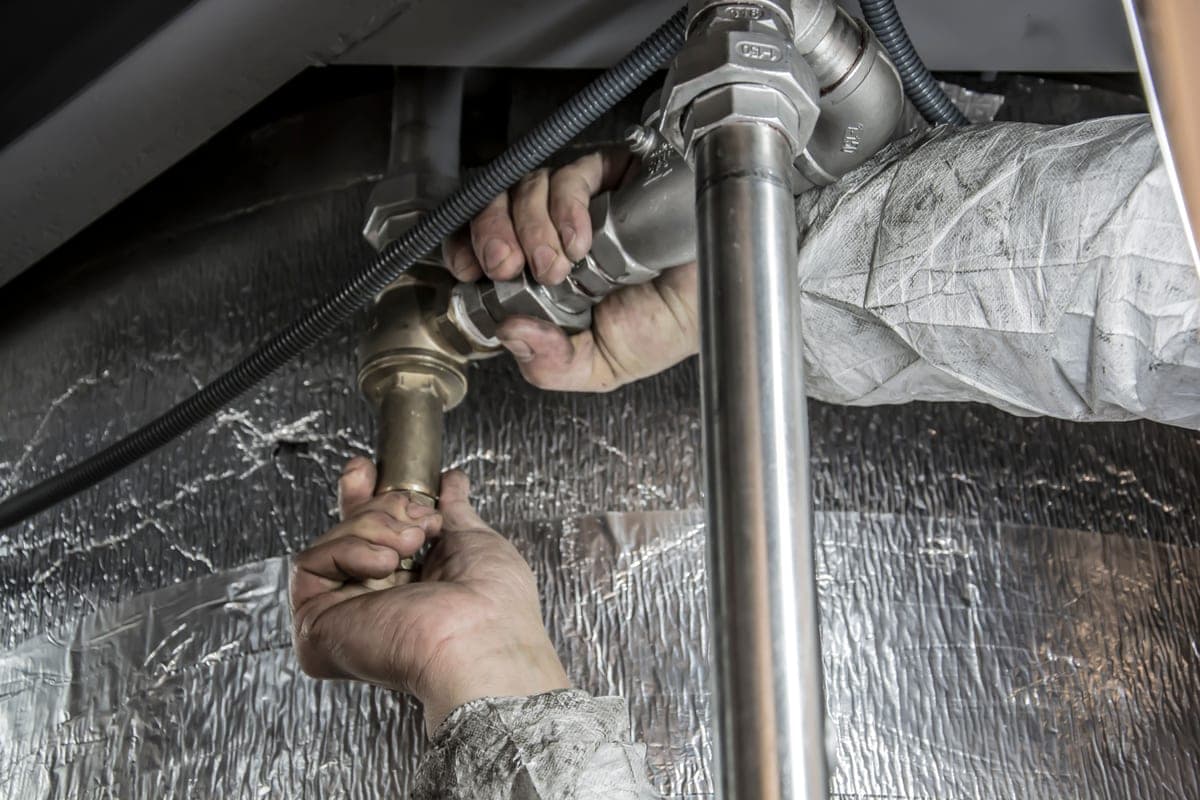
Plano, Texas - slab leak repair
Slab Leak Repair in Plano, TX
A warm patch on the floor, a bill that keeps climbing, or running water you can hear with everything off? Get matched with a licensed Plano pro - free quote.
Get a free quote in Plano
Matched with a licensed local pro - fast.
Slab leaks are less of an epidemic in Plano than in the oldest Dallas neighborhoods, and that fact misleads people. Plano's foundations are slab-on-grade poured over the same expansive clay that moves under the rest of North Texas, and the homes now thirty-plus years old are exactly the ones starting to show leaks. A slab leak in a 1992 house is not unusual - it is on schedule.
Dallas Best Plumber is a free referral service, not a plumbing company. Tell us what you are seeing - the warm spot, the bill, the sound, the damp flooring - and we match you with a licensed, insured local plumber who does electronic leak detection and slab leak repair in Plano and calls you back with a free, no-obligation quote.
Below: why Plano's soil and build era produce the leaks they do, how the city's PEX and manifold plumbing changes both the risk and the detection, the meter test you can run yourself before anyone opens concrete, and the repair options once the leak is located.
Slab-on-grade over Collin County clay
Foundations in Plano are slab-on-grade poured over the expansive clay of the Blackland Prairie - the same soil that moves under neighboring Frisco and McKinney. It swells when it takes on water through a wet spring and shrinks hard through a triple-digit August, and the slab flexes with it. Water supply lines running inside or beneath that concrete move with the slab, and over enough cycles that movement abrades pipe and stresses joints.
Plano's advantage is its materials. Because so much of the city was built after 1980, a lot of homes here run flexible PEX or CPVC supply lines rather than rigid copper, and flexible pipe tolerates slab movement considerably better than copper does. That is genuinely why slab leaks are less common here than in 1960s Dallas or Richardson housing, where copper embedded in a slab that has flexed for fifty years develops pinholes.
What that advantage does not do is eliminate the problem, and the thirty-year mark is where it stops being theoretical. Homes from the late 1980s and 1990s have now been through three decades of wet-dry cycling, and the failures that do occur cluster at fittings and at points where a line bears against something. A licensed plumber can also confirm whether a mystery water bill points at the slab at all, or at something simpler like a running toilet - which is worth ruling out first because it is free to check.
- Slab-on-grade over expansive Blackland Prairie clay, swelling and shrinking seasonally
- Post-1980 Plano housing largely uses PEX or CPVC, which tolerates movement better than copper
- Homes now thirty-plus years old are the ones beginning to show leaks
- Failures cluster at fittings and bearing points rather than along a whole run
The signs of a Plano slab leak, in the order you notice them
The classic tells are consistent across North Texas and worth knowing precisely, because recognizing them early is most of the saving. A warm spot on a tile or wood floor is the most specific: it means the leak is on the hot-water side, and it is the one sign that is hard to explain any other way. An unexplained rise in the water bill that then stays high is the most common. The sound of running water with every fixture closed is the most unnerving and the most useful.
Then the slower signals: a drop in water pressure throughout the house, flooring that stays damp or starts to lift, a musty smell with no visible source, new hairline cracks in tile grout or drywall after a wet spring, or a section of foundation outside that stays damp when the rest has dried. Any one of those on its own has other explanations; two or three together point at the slab.
There is one thing to do immediately and one thing to avoid. Do run the meter test below, because it costs nothing and tells you a great deal. Do not let it run while you decide: a pressurized leak under a slab is metered and billed continuously, and it is saturating the soil directly under your foundation the whole time - which is a foundation problem as well as a plumbing one.
- A warm patch on a tile or wood floor - a hot-side slab leak
- A water bill that stepped up and stayed up
- Running water audible with every fixture closed
- Pressure dropping throughout the house
- Damp or lifting flooring, a musty smell, new cracks in tile or drywall
PEX manifolds, and the Plano-specific diagnostic advantage
Because so much of Plano was built after 1980, a lot of homes here use PEX or CPVC, and the newest builds may use a manifold system where each fixture has its own dedicated run back to a central point. That layout is convenient in an emergency - you can isolate one fixture without shutting off the whole house - and it is genuinely useful during leak detection, because isolating individual runs at the manifold can narrow down which line is losing water before anybody touches concrete.
It also means a plumber needs to understand your specific system before diagnosing a pressure or leak problem. A home-run manifold layout, a trunk-and-branch PEX system, and a copper system in an older east Plano house behave differently under a pressure test. If you know you have a manifold - usually in a utility closet or the garage, often with ports labeled by fixture group - say so when you request the quote, and photograph the labels while you are there.
The corollary is that not every mystery leak in a Plano home is under the slab. The city's many two-story homes hide upstairs leaks as first-floor ceiling stains, sometimes a room away from the source. Plano's irrigation systems are another candidate: Texas requires in-ground systems to have a backflow preventer, those assemblies sit above ground where a hard freeze can crack them, and a cracked one can run water continuously. A good plumber rules out the cheap explanations before quoting concrete work.
Detection, repair options and the Plano permit
The non-negotiable first step is locating the leak before anyone opens concrete. Electronic leak detection - acoustic listening equipment, pressure testing of isolated lines, and tracer methods where appropriate - is what tells a plumber where the leak is, and that is the difference between one tidy repair and a chopped-up floor. A quote that proposes opening the slab without locating the leak first is not a quote you should accept.
Once it is located there are generally three paths, and which one is right depends on the pipe, the house and where the leak sits. A spot repair opens the slab at the leak, repairs that section and closes it - the least disruptive option when the pipe is otherwise sound and the location is accessible. A reroute abandons the failed section and runs a new line through walls or the attic instead, which avoids concrete work entirely and is frequently the better answer where the leak is under a kitchen island or finished flooring you do not want to lose. A repipe replaces the system where the material itself is at the end of its life, which is more common in older east Plano copper than in newer PEX.
On paperwork: the City of Plano requires permits for major plumbing work, including repiping, and in Texas that work must be performed by a state-licensed plumber who pulls the permit so it is inspected. Confirm the permit is included in any quote you accept. And when you request the quote, mention the age of the home, whether you are on PEX or copper, whether there is a manifold, and whether the foundation has ever been worked on - that history is part of the diagnosis.
- Electronic leak detection before any concrete is opened - always
- Spot repair: open at the leak, repair, close - least disruptive where accessible
- Reroute: abandon the failed line and run new pipe through wall or attic
- Repipe: where the material itself is at the end of its life
- Permit pulled by a licensed plumber on repipe work
The meter test: confirm it yourself in twenty minutes
Before you call anyone, you can establish whether water is being lost and roughly where, and it costs nothing. Turn off every fixture and appliance that uses water, including ice makers and the irrigation controller. Find your meter in its box near the street, lift the lid, and look at the small leak indicator on the face - a triangle, a star or a small dial that turns whenever water moves through. With the whole house shut off it should be completely still. If it is turning, water is going somewhere.
Then close the main shut-off at the house, which in a Plano home is usually where the line enters - in the garage, a utility area, or on an exterior wall - and look again. If the indicator stops, the leak is downstream of that valve: inside the house or under the slab, which is this page. If it keeps turning with the house valve closed, the leak is in the buried water line between the meter and the house, which is a different and often cheaper repair.
Rule out the free explanations while you are at it. A running toilet is the single most common cause of a mysteriously high bill - put a few drops of food coloring in the tank, wait twenty minutes without flushing, and if color appears in the bowl that flapper is your leak. An irrigation zone stuck partly open, or a cracked backflow assembly after a freeze, is the other. None of that requires a plumber, and finding it saves you a service call.
- Shut off every water-using fixture and appliance, including ice makers and irrigation
- Open the meter box and watch the small leak indicator on the meter face
- If it moves with everything off, water is being lost somewhere
- Close the main shut-off at the house and watch the indicator again
- Indicator stops - the leak is inside the house or under the slab
- Indicator keeps moving - the leak is in the buried line between meter and house
- Separately: dye-test every toilet tank and check the irrigation backflow assembly
What a slab leak is not
Three other problems get called slab leaks and are not, and telling them apart saves real money. A water line leak is in the buried service line between your meter and your house - it is on the pressurized side and registers on the meter like a slab leak does, but it surfaces in the yard rather than inside, and it is generally a less invasive repair.
A sewer line problem is on the drain side, which is not pressurized - so it does not register on your water meter and it does not raise your bill at all. It announces itself through drainage instead: several fixtures slowing together, a gurgling toilet, a backup at the lowest drain in the house, or a sewer smell. If your bill is flat and your drains are slow, you are looking at a drain problem, which is the cheaper conclusion.
And in a two-story Plano home, a first-floor ceiling stain is far more likely to be an upstairs supply line, a shower pan or a wax ring than anything to do with the slab. Water travels along framing before it becomes visible, so the stain is often a room away from the source. Electronic leak detection locates all of these; the point of naming them is that you should expect a plumber to rule them out before quoting concrete work.
How we match you with a Plano plumber
Dallas Best Plumber is a free referral service, not a plumbing company. We do not perform the work, set prices, or promise an arrival window on another business's behalf. What we do is put your request in front of licensed, insured plumbers who work in Plano, with the details they need to call you back quickly. The form takes about two minutes, and the quote is theirs and free.
1. Tell us the problem
Share what's happening, your ZIP code, and how urgent it is. It takes about two minutes — no phone tag.
2. We match you with a licensed local pro
We connect you with a licensed, insured plumber who serves your area and handles your type of job.
3. They call you back with a free quote
Your matched pro reaches out with a free, no-obligation quote. You decide whether to move forward.
Other Plano services covered in depth
Related
- Plumbers in Plano, TXThe full Plano page - water supply, housing stock, local problems and permits.
- Slab Leak Repair & Leak Detection across Dallas & DFWWarm spot on the floor or a spiking water bill? Get matched with a licensed local pro for accurate leak detection and slab leak repair - free quote, no pressure.
- Water Heater Repair in Plano, TXCold shower, rumbling tank, or a tankless unit throwing error codes in Plano? Get matched with a licensed, insured local plumber - free quote.
- Drain Cleaning in Plano, TXOne slow drain or the whole house backing up in Plano? Get matched with a licensed, insured local plumber - free, no-obligation quote.
- Emergency plumber in PlanoWhat to do in the first ten minutes, and where the shut-off usually is in a Plano home.
Frequently asked questions
Do Plano homes really get slab leaks?
Yes, though less often than the oldest Dallas and Richardson housing. Plano's foundations are slab-on-grade over expansive Blackland Prairie clay that swells and shrinks seasonally, and the slab flexes with it. The city's advantage is materials: much of Plano was built after 1980 with flexible PEX or CPVC, which tolerates that movement better than the rigid copper embedded in 1960s slabs. But homes now thirty-plus years old are exactly the ones beginning to show leaks, and a slab leak in a 1992 house is on schedule rather than unusual.
What does a slab leak feel and sound like?
The most specific sign is a warm patch on a tile or wood floor, which means the leak is on the hot-water side. The most common is a water bill that stepped up and stayed high. The most useful is the sound of running water with every fixture in the house closed. Slower signals: pressure dropping throughout the house, flooring that stays damp or lifts, a musty smell with no source, and new hairline cracks in tile grout or drywall after a wet spring.
Can you find a slab leak without breaking the floor?
Finding it, yes - that is the entire point of electronic leak detection. Acoustic listening equipment, pressure testing of isolated lines and tracer methods locate the leak before any concrete is opened, which is the difference between one tidy repair and a chopped-up floor. In many Plano homes a PEX manifold helps further, because isolating individual runs narrows down which line is losing water. A quote that proposes opening the slab without locating the leak first is not one to accept.
Is a slab leak repaired through the floor, or can the line be rerouted?
Both are normal and the right choice depends on the pipe, the house and where the leak is. A spot repair opens the slab at the located leak, repairs that section and closes it - the least disruptive option where the pipe is sound and the spot is accessible. A reroute abandons the failed section and runs new line through walls or the attic, avoiding concrete work entirely, which is often better where the leak sits under an island or flooring you do not want to lose. A repipe is for when the material itself is at the end of its life.
My water bill is high but I see nothing - is it the slab?
Maybe, and the cheap checks come first. Dye-test every toilet tank: a few drops of food coloring, twenty minutes without flushing, and color appearing in the bowl means that flapper is your leak. Check the irrigation system, including the above-ground backflow assembly that Texas requires, which can crack in a hard freeze and run continuously. Then run the meter test - shut the house down, watch the meter's leak indicator, then close the main at the house to see whether the loss is inside or in the buried yard line.
Nearby
Slab Leak Repair in other Dallas-area cities
Need slab leak repair in Plano?
Tell us what's happening and we'll match you with a licensed, insured local plumber. Free quote, no pressure.
Get a Free Quote