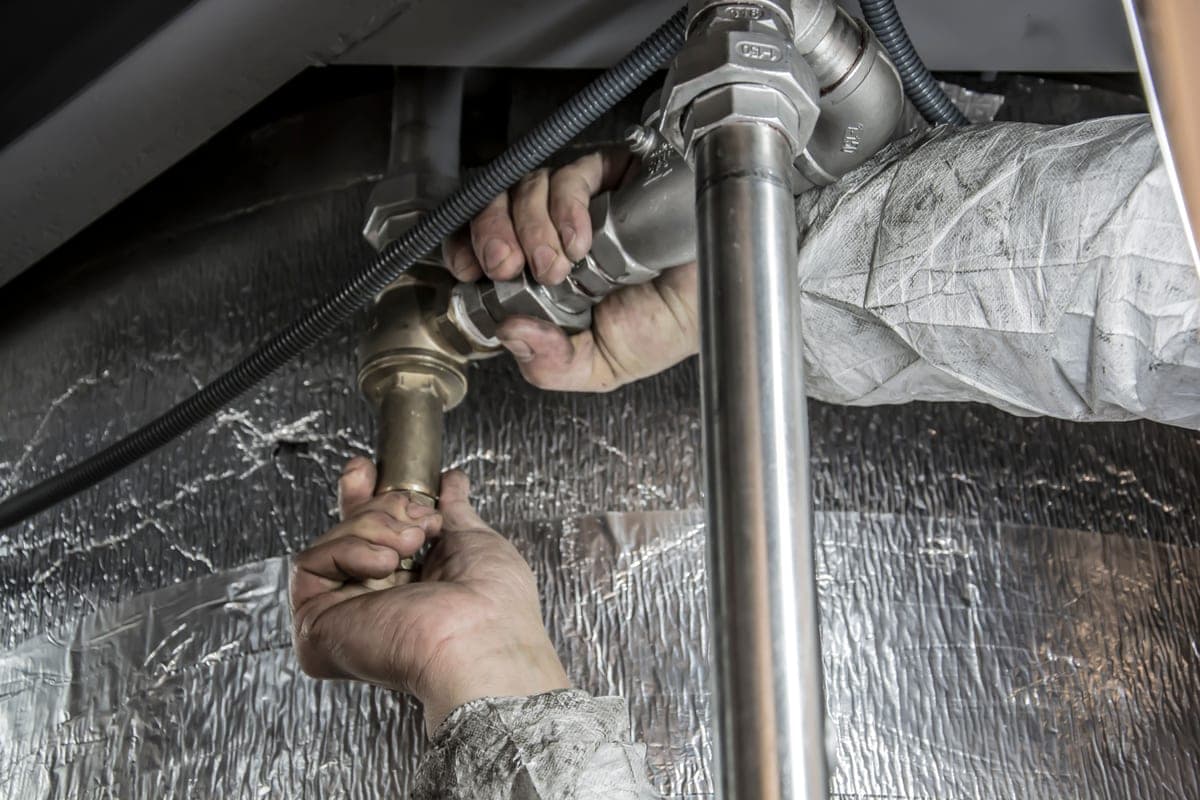
McKinney, Texas - slab leak repair
Slab Leak Repair in McKinney, TX
Warm patch on the floor, a bill that jumped, or water you can hear with everything off in McKinney? Get matched with a licensed, insured local plumber.
Get a free quote in McKinney
Matched with a licensed local pro - fast.
A slab leak in McKinney is a soil problem before it is a plumbing problem. Nearly all of the city's post-war housing sits on slab-on-grade foundations poured over the expansive clay of the Blackland Prairie - soil that swells when it takes on water and shrinks hard through a North Texas drought. The slab flexes with the ground, and the water lines running inside or beneath that concrete take the strain.
Dallas Best Plumber is a free referral service, not a plumbing company. Tell us what you are seeing - a warm spot on the floor, a water bill with no explanation, running water you can hear with the house shut off - and we match you with a licensed, insured local plumber who does electronic leak detection and slab repair in McKinney and calls you back with a free, no-obligation quote.
The sections below are specific to this city: the Blackland Prairie clay under your foundation, how the symptoms differ between the historic core and the boom-era subdivisions, why detection has to come before anyone opens concrete, and how permitted repairs are handled in McKinney.
Blackland Prairie clay and what it does to a McKinney slab
The soils under McKinney are the heavy, dark clays of the Blackland Prairie. They are productive farmland and difficult foundation ground for the same reason: the clay minerals take on water and expand, then give it up in a dry spell and contract. A slab poured on that ground does not sit still. It lifts slightly at the wet edges, settles in the dry center, and the whole plate works a fraction of an inch at a time, season after season.
Water supply lines run inside or beneath that concrete. Rigid copper bearing against a moving slab abrades at the contact point, and older joints get flexed until one opens. What you get is rarely dramatic - not a burst, but a pinhole feeding water into the soil under your floor continuously, often for weeks before anything surfaces.
The second-order problem is why a slab leak is urgent even when the water damage looks minor. Water escaping under a foundation washes out and softens the soil that supports it, which is the mechanism behind foundation movement that starts after a plumbing leak rather than before it. Fixing the leak is the cheap half of that story.
- A warm or unusually damp spot on the floor slab
- An unexplained jump in the water bill
- Running-water sound with all fixtures off
- Hairline cracks appearing in tile or drywall after a wet spring
- Pressure that has dropped throughout the house
The historic core and the boom-era subdivisions leak differently
McKinney holds two distinct generations of plumbing, and a slab leak presents differently in each. Around the historic courthouse square, pre-1970 homes may still have galvanized steel supply pipe, which corrodes inward over the decades. In those houses, weak pressure that has gotten worse year after year is usually the pipe closing up rather than a leak at all - and a licensed plumber needs to separate the two before recommending anything.
The subdivisions built during McKinney's 1995-to-2015 boom are a different case. The U.S. Census Bureau named the city the nation's fastest-growing among places over 50,000 for 2000 through 2003 and again in 2006, and its population went from 131,117 in 2010 to 195,308 in 2020. Those homes are now twenty to thirty years old, which is early for a slab leak but no longer unusual - and because many are two-story, a leak above the slab can mimic one in it, showing up as a first-floor ceiling stain a room away from the source.
That is why a plumber working a McKinney leak starts by placing it rather than by pricing a repair. A hot-water slab leak, a cold-water slab leak, a failed upstairs supply line and an irrigation line running underground all produce overlapping symptoms and completely different invoices.
Detection comes first - and often rules out the slab entirely
The sequence a licensed plumber follows is worth knowing, because it protects your floor. First, confirm the loss: shut off every fixture and appliance, including the ice maker and the irrigation controller, and watch the water meter. A moving low-flow indicator proves water is leaving the system. Second, isolate: separate the irrigation system, the hose bibs and any pool fill from the house supply, which in a city with lawns like McKinney's is where a surprising share of mystery leaks turn out to be.
Third, pinpoint. Acoustic listening equipment picks up the sound of pressurized water escaping under concrete, pressure testing separates the hot side from the cold, and on a drained line a tracer gas can be used to find the exact point. Only then is there a reason to open a floor - and the opening is a hole, not an exploration.
Done in that order, detection regularly ends with good news: a running toilet, a hose bib weeping into a flower bed, an irrigation valve that has failed open. Those cost a fraction of a slab repair and they look identical on a water bill. Skipping detection is how a homeowner ends up paying to break concrete over a sprinkler problem.
- Meter test first - it proves whether water is leaving the system at all
- Irrigation, hose bibs and pool fill isolated before anyone looks at the slab
- Acoustic detection and pressure testing to find the exact spot
- A located leak means one hole in the floor instead of several
Permits and licensing for McKinney slab work
In Texas, most plumbing work done for hire must be performed by a state-licensed plumber - a Responsible Master Plumber, or a licensed journeyman working under one - and only a Responsible Master Plumber is authorized to pull plumbing permits. Permitted work in McKinney, including repiping and water line repair or replacement, is inspected by the city's building inspections staff. On a slab repair that inspection is the independent check that the materials, the connection and the pressure test were all handled properly before the concrete was closed.
It is also worth asking how the floor gets put back. A slab repair leaves a patch, and whether the plumber patches the concrete and leaves the flooring to you, or coordinates the finish work, is a real difference between two quotes that otherwise look similar. Get that in writing.
When you send your request, tell us roughly when the house was built, whether the foundation has been worked on before, whether you have an irrigation system and a pool, and what you are actually seeing. Every one of those changes where a plumber looks first. We do not set prices, promise arrival windows or perform the work - we get your problem in front of a licensed local pro who quotes it free.
Repair, tunnel or reroute - how the choice gets made
Once the leak is located, there are three honest ways to fix it, and the right one depends on the pipe and the floor above it. Opening the slab from inside is the most direct: cut the flooring and the concrete over the leak, repair the pipe, pressure test it, patch the slab. It is usually the cheapest option and it means dust, noise and flooring to replace.
Tunneling reaches the pipe from outside the foundation and works underneath the slab. Nothing inside the house is touched, which is the argument for it when the leak sits under tile you cannot match or a wood floor you just put in. It costs more in excavation labor, and the yard needs restoring afterward.
Rerouting abandons the run inside the slab and brings new pipe overhead through the attic and down the walls. In a McKinney home where the same line has already failed once, or where the slab-run section is long and old, that is often the better value - the new line is accessible for the rest of the house's life, and the slab stops being part of the plumbing system. A plumber worth hiring will price the realistic options and tell you which they would choose on their own house.
- Open the slab from inside: direct, usually cheapest, flooring repair follows
- Tunnel from outside: no interior demolition, higher excavation cost
- Reroute overhead: best where the line has failed before or the run is long
- Ask who is responsible for the floor finish once the plumbing is done
What to do tonight if you think you have one
If the floor is warm in one spot and you can hear water with the house quiet, the useful first step is the meter test described above - it turns a suspicion into a fact. Write down the reading, keep the water off for an hour, and read it again. Photograph the warm spot and anything visible, and note when you first noticed it. That record is worth having for both the plumber and, if it comes to it, an insurance claim.
You do not need to shut off the main for a slow slab leak, and leaving the house without water overnight has its own costs. If the leak is bad enough to be pushing water up through the floor or into a wall, then yes - close the main and get matched, because at that point it is an emergency plumbing call rather than a scheduled repair.
What not to do: do not break concrete yourself or let anyone do it without a located leak, do not assume a high bill is the slab before the irrigation side has been ruled out, and do not wait out a warm floor spot to see whether it resolves. Water under a slab is working on the soil that holds your house up.
How we match you with a McKinney plumber
Dallas Best Plumber is a free referral service, not a plumbing company. We do not perform the work, set prices, or promise an arrival window on another business's behalf. What we do is put your request in front of licensed, insured plumbers who work in McKinney, with the details they need to call you back quickly. The form takes about two minutes, and the quote is theirs and free.
1. Tell us the problem
Share what's happening, your ZIP code, and how urgent it is. It takes about two minutes — no phone tag.
2. We match you with a licensed local pro
We connect you with a licensed, insured plumber who serves your area and handles your type of job.
3. They call you back with a free quote
Your matched pro reaches out with a free, no-obligation quote. You decide whether to move forward.
Other McKinney services covered in depth
Related
- Plumbers in McKinney, TXThe full McKinney page - water supply, housing stock, local problems and permits.
- Slab Leak Repair & Leak Detection across Dallas & DFWWarm spot on the floor or a spiking water bill? Get matched with a licensed local pro for accurate leak detection and slab leak repair - free quote, no pressure.
- Water Heater Repair in McKinney, TXRumbling tank, no hot water, or rust in the hot line? Get matched with a licensed, insured McKinney-area plumber - free, no-obligation quote.
- Drain Cleaning in McKinney, TXSlow drain, gurgling toilet, or a backup in McKinney? Get matched with a licensed, insured local plumber - free, no-obligation quote.
- Emergency plumber in McKinneyWhat to do in the first ten minutes, and where the shut-off usually is in a McKinney home.
Frequently asked questions
Why are slab leaks so common in McKinney?
McKinney sits on the expansive clay of the Blackland Prairie, which swells when wet and shrinks in drought, and almost all of the city's post-war housing is slab-on-grade. That ground movement flexes the foundation and abrades the copper supply lines run inside it until a pinhole opens. The leak is usually slow and hidden rather than dramatic, which is why it is so often found on a water bill.
How do I know whether it is the slab or my sprinklers?
You get it tested. Shut off every fixture and appliance in the house, including the ice maker and the irrigation controller, and watch the water meter - a moving indicator proves water is leaving somewhere. A licensed plumber then isolates the irrigation system, hose bibs and pool fill from the house supply. In a city with lawns like McKinney's, that step regularly finds the problem outside the house, with no concrete involved.
Can a slab leak damage my foundation?
That is the real reason to act on it. Water escaping under a slab washes out and softens the soil supporting it, and on Blackland Prairie clay that soil is already moving seasonally. Foundation movement that starts after a plumbing leak is a well-known sequence. Repairing the leak promptly is far less expensive than dealing with the consequences of leaving it running for months.
What does slab leak repair cost in McKinney?
We are a free referral service and do not set prices, so the number comes from the licensed plumber you are matched with, free and with no obligation. What drives it: how hard the leak is to locate, whether it is on the hot or cold side, the access method - opening the slab from inside, tunneling from outside, or rerouting overhead - the flooring above it, and whether the repair triggers a permit and inspection. Ask for more than one option to be priced.
Do I need a permit for slab leak repair in McKinney?
For pipe repair, replacement or a repipe, generally yes, and the work is inspected by the city's building inspections staff. Under Texas law only a Responsible Master Plumber can pull a plumbing permit, so this is licensed-plumber work. The inspection is the independent confirmation that the repair and its pressure test were done correctly before the concrete was closed back up.
Nearby
Slab Leak Repair in other Dallas-area cities
Need slab leak repair in McKinney?
Tell us what's happening and we'll match you with a licensed, insured local plumber. Free quote, no pressure.
Get a Free Quote