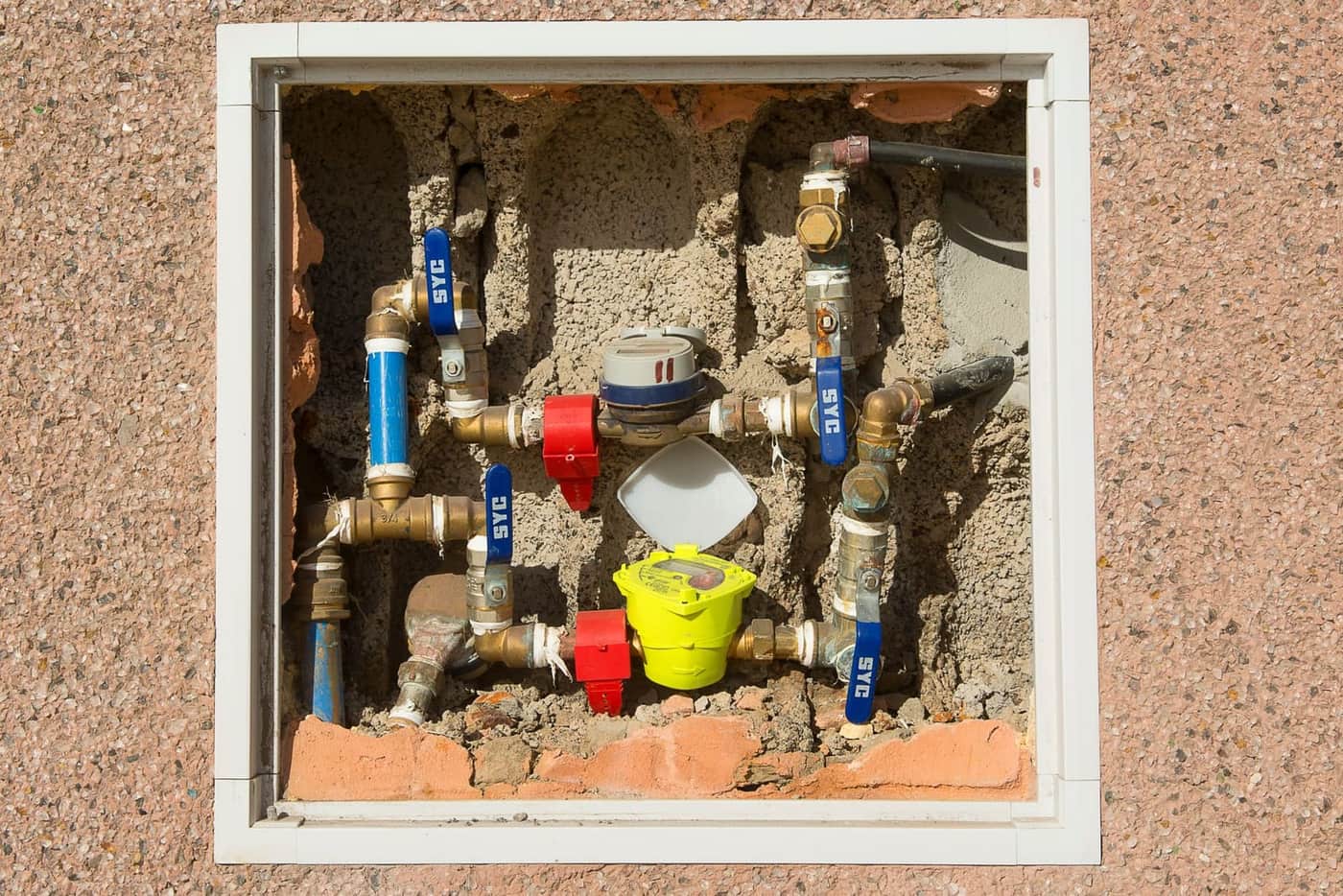
McKinney, Texas - leak detection
Leak Detection in McKinney, TX
Bill climbing, a damp patch, or water running with the house shut off in McKinney? Get matched with a licensed, insured local plumber for leak detection.
Get a free quote in McKinney
Matched with a licensed local pro - fast.
Finding the leak is a separate job from fixing it, and in McKinney it is the one that saves the money. The same symptom - a bill that climbed, a sound of water with the house quiet - can be a supply line in the slab, a galvanized pipe weeping behind a wall in an older home near the square, an irrigation valve stuck open, a toilet flapper, or an upstairs line in a two-story build. Detection is how you find out before anyone opens a floor.
Dallas Best Plumber is a free referral service, not a plumbing company. Tell us what you are seeing and where in McKinney you are, and we match you with a licensed, insured local plumber who does electronic leak detection and calls you back with a free, no-obligation quote.
The sections below are specific to this city: what the historic core and the boom-era subdivisions each hide, the Blackland Prairie clay that drives slab leaks here, the irrigation systems that account for so many McKinney water losses, and how a detection visit is sequenced.
Two building eras, two sets of hiding places
McKinney is the seat of Collin County, and the blocks around the historic courthouse square hold some of the oldest housing in the county. In a pre-1970 home there, the supply pipe may be galvanized steel, which corrodes from the inside out. A galvanized line that has thinned can weep inside a wall for a long time before any stain appears, and the same corrosion explains pressure that has dropped gradually over years rather than suddenly.
The subdivisions from McKinney's growth boom are a different search. The U.S. Census Bureau named the city the nation's fastest-growing among places over 50,000 for 2000 through 2003 and again in 2006, and the population went from 131,117 in 2010 to 195,308 in 2020. Those homes are twenty to thirty years old now: the leaks are in angle stops, braided supply lines, toilet fill valves, water heater fittings, pressure-reducing valves and expansion tanks - small parts, in quantity, in houses with a lot of fixtures.
Many of those newer homes are also two-story, and that changes the search again. A failed upstairs supply line or a leaking shower pan often shows up first as a stain on a first-floor ceiling, sometimes a room away from the source, because water travels along framing before it finds a way down. A plumber scanning for that works from the ceiling and the fixture group above it, not from the slab.
- Historic core: galvanized supply pipe weeping inside walls, gradual pressure loss
- Boom-era subdivisions: angle stops, supply lines, fill valves, water heater fittings
- Two-story homes: upstairs leaks surfacing as downstairs ceiling stains
- Any era: a slab-run line on moving clay
Blackland Prairie clay and the slab leaks it produces
Nearly all of McKinney's post-war housing sits on slab-on-grade foundations poured over the expansive clay soils of the Blackland Prairie. Those soils swell when they take on water and shrink hard through a North Texas summer drought, and the slab flexes with them. Water supply lines run inside or beneath that concrete, so the movement abrades copper against the slab and can shear older joints.
A slab leak that results is usually slow. The signs are a warm patch on a tile or wood floor, a water bill that jumps with no change in habits, running water audible with every fixture closed, a section of foundation that stays damp, or hairline cracks appearing in tile or drywall after a wet spring. Any one of those justifies a detection visit - and none of them justifies breaking concrete before the leak has been located.
The reason to move on it rather than monitor it: water escaping under a foundation washes out and softens the soil supporting the slab. On ground that already moves seasonally, that is how a plumbing problem becomes a foundation problem. Detection is the cheap first step in preventing that.
Irrigation and pool lines - where McKinney losses often are
In a city with lawns like McKinney's, the irrigation system is the first thing a good plumber isolates. A cracked lateral, a valve that has failed open, or a head sheared off by a mower loses water steadily, and because systems typically run before dawn nobody sees it happen. Texas requires an irrigation system to have a backflow preventer so sprinkler water cannot siphon back into the drinking supply, and that assembly sits above ground where a hard freeze can crack it - after which it can pass water continuously behind a shrub for months.
Pool auto-fill valves are the other outdoor candidate. One that has stuck open keeps the pool at its line while the meter turns, which reads on a bill exactly like a slab leak. If you have a pool, say so when you submit your request; it changes the test order.
This is why detection regularly produces good news. A sprinkler valve, a hose bib, a toilet flapper and a slab leak all look identical on a water bill, and three of those four are inexpensive. Finding out which one you have is the entire value of the visit.
- Irrigation laterals, valves and sheared heads - the most common large loss
- A cracked above-ground backflow assembly after a freeze
- Pool auto-fill valves stuck open
- Toilet flappers passing water silently - free to test with food coloring
Permits, licensing and what comes after the diagnosis
Detection is diagnostic and does not require a permit. The repair might. In Texas, most plumbing work done for hire must be performed by a state-licensed plumber - a Responsible Master Plumber, or a licensed journeyman working under one - and only a Responsible Master Plumber is authorized to pull plumbing permits. Permitted work in McKinney, including repiping and water line repair or replacement, is inspected by the city's building inspections staff.
Ask two questions before the visit: whether the detection fee is credited toward the repair if you go ahead, and what you receive at the end. A marked location, a photograph, and a written explanation of the repair options - including whether a spot repair or a reroute is the better value on your pipe - is what a good detection visit delivers.
When you send your request, include the age of the house, whether it is one or two stories, whether you have an irrigation system and a pool, whether the foundation has ever been worked on, and what your recent bills show. Every one of those narrows the search. We do not set prices, promise arrival windows or perform the work - we get your request in front of a licensed local pro who quotes it free.
The order a plumber works in - and why it matters
Confirm, isolate, pinpoint. Confirming means shutting the house down completely - every fixture, the ice maker, the irrigation controller - and watching the meter's low-flow indicator. If it turns, water is leaving the system, and how fast it turns tells the plumber how big the loss is.
Isolating means dividing the property until the loss is on one side of a valve. Closing the main at the house separates the buried yard line from the house. Closing the irrigation isolation valve removes the sprinklers. Isolating the water heater separates hot from cold, which on a slab leak is a useful clue in itself, because hot-water lines fail more often and give the warm-floor symptom.
Pinpointing is the part that needs equipment: acoustic listening gear on the slab, pressure testing individual lines, a thermal scan on a ceiling or wall, tracer gas on a drained line. By then the plumber is confirming a location rather than searching a house, which is why the repair that follows is a single deliberate opening.
- Confirm at the meter, with everything in the house shut off
- Isolate the yard line, the irrigation system, and the hot side
- Check the obvious fixtures before assuming the slab
- Pinpoint with acoustic, pressure and thermal methods - then repair once
Checks you can run tonight, and when not to wait
Dye-test every toilet: a few drops of food coloring in the tank, twenty minutes without flushing, color in the bowl means a leaking flapper. Walk the yard looking for a patch that is greener, softer or growing faster than the rest. Feel each hose bib for a weep, and look over the irrigation backflow assembly for cracks or dripping. Check the pan under the water heater and the floor around it. Then do the meter test and write down the readings with the times.
If you have the previous bills showing the increase, keep them together with those numbers. A plumber starting from evidence works faster than one starting from a description, and in a fair number of McKinney cases your own checks find the leak without anyone being dispatched.
Do not wait on this if the signs have changed from slow to active: water coming up through a floor, a wall that is wet rather than stained, or a damp area that is visibly spreading. At that point close the main, get matched, and treat it as an emergency plumbing call. Detection is for finding a hidden leak, not for managing one that is already doing damage.
How we match you with a McKinney plumber
Dallas Best Plumber is a free referral service, not a plumbing company. We do not perform the work, set prices, or promise an arrival window on another business's behalf. What we do is put your request in front of licensed, insured plumbers who work in McKinney, with the details they need to call you back quickly. The form takes about two minutes, and the quote is theirs and free.
1. Tell us the problem
Share what's happening, your ZIP code, and how urgent it is. It takes about two minutes — no phone tag.
2. We match you with a licensed local pro
We connect you with a licensed, insured plumber who serves your area and handles your type of job.
3. They call you back with a free quote
Your matched pro reaches out with a free, no-obligation quote. You decide whether to move forward.
Other McKinney services covered in depth
Related
- Plumbers in McKinney, TXThe full McKinney page - water supply, housing stock, local problems and permits.
- Leak Detection across Dallas & DFWA bill that keeps climbing, a meter that never stops, a damp spot with no source - get matched with a licensed local pro who finds the leak before anything gets opened up.
- Water Heater Repair in McKinney, TXRumbling tank, no hot water, or rust in the hot line? Get matched with a licensed, insured McKinney-area plumber - free, no-obligation quote.
- Drain Cleaning in McKinney, TXSlow drain, gurgling toilet, or a backup in McKinney? Get matched with a licensed, insured local plumber - free, no-obligation quote.
- Emergency plumber in McKinneyWhat to do in the first ten minutes, and where the shut-off usually is in a McKinney home.
Frequently asked questions
What is the first thing I should do about an unexplained McKinney water bill?
The meter test. Shut off every fixture and appliance including the ice maker and the irrigation controller, then watch the meter's low-flow indicator - if it moves, water is leaving the system somewhere. Next, dye-test the toilets with food coloring and look over the irrigation system, the backflow assembly and the hose bibs. Those checks cost nothing and they identify a large share of hidden losses.
Is it a slab leak or the sprinklers?
That is exactly what detection answers, and in McKinney the sprinkler side is a frequent culprit - systems run before dawn, and a cracked lateral or a valve stuck open loses water with nothing visible indoors. A licensed plumber isolates the irrigation system, the hose bibs and any pool fill from the house supply before looking at the slab, because that step is quick and it regularly ends the search outside the house.
Can leak detection find a leak in a wall or a ceiling?
Yes. In McKinney's two-story homes an upstairs supply line or a shower pan often shows up first as a first-floor ceiling stain, sometimes a room away from the actual source. A plumber uses pressure testing to confirm which line is losing water and a thermal scan or acoustic equipment to localize it, which is how the drywall gets opened once in the right place rather than three times.
Does detection cost extra on top of the repair?
It is separate work, and practice on crediting it varies by plumber - ask on the phone whether the detection fee comes off the repair if you proceed. What should not vary is what you get for it: a located leak, marked or photographed, and an explanation of the repair options. We are a free referral service and do not set prices; the licensed local pro you are matched with gives you the free quote.
Why not just open the floor where the warm spot is?
Because the warm spot is where the heat surfaced, not necessarily where the pipe failed - water travels along the underside of a slab and heat spreads through concrete. Opening a floor on a hunch is how a homeowner ends up with several holes and a floor to replace. Acoustic detection and pressure testing narrow it to a small area first, so the repair is one opening in the right place.
Need leak detection in McKinney?
Tell us what's happening and we'll match you with a licensed, insured local plumber. Free quote, no pressure.
Get a Free Quote