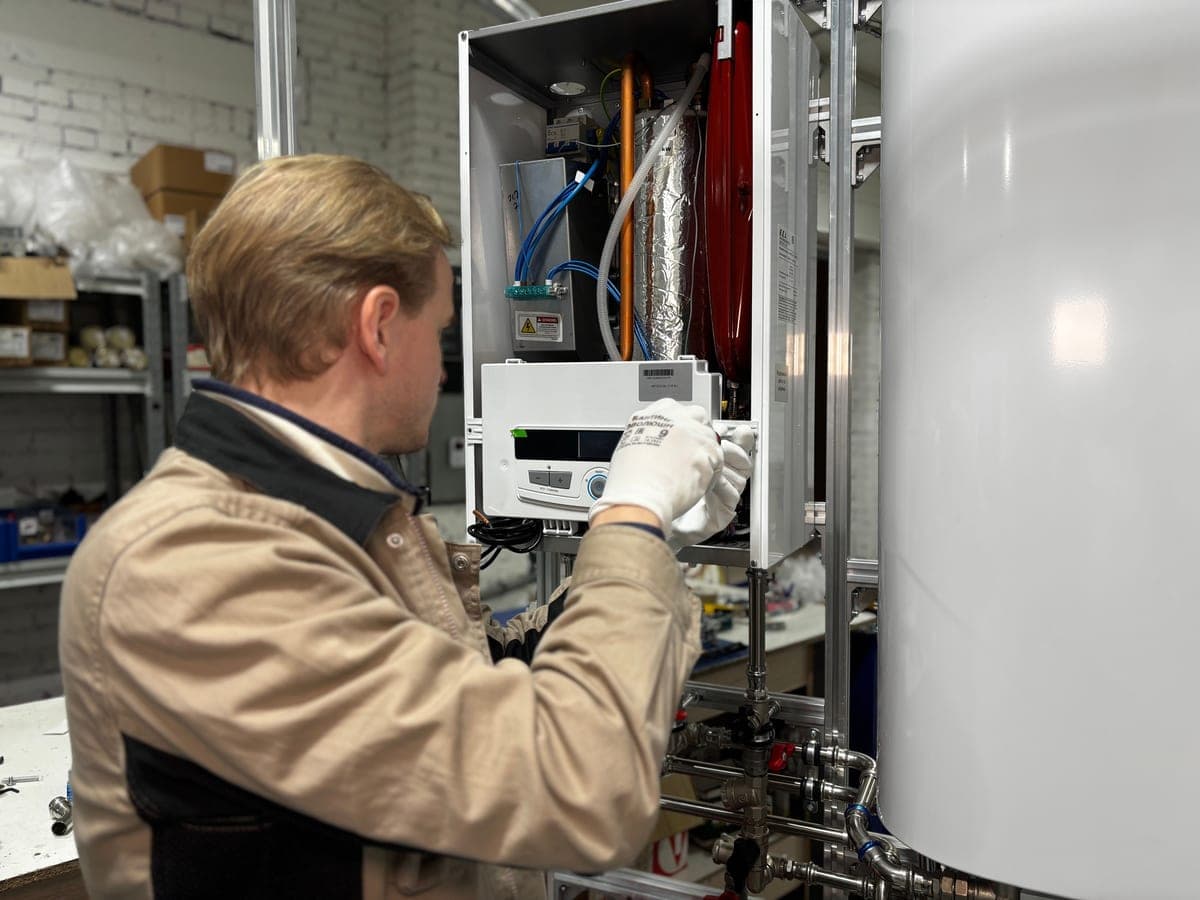
Fixr.com puts water heater repair at $150 to $750 nationally with a $450 average, and This Old House lists the same $150 to $750 band. The part decides where you land: a thermostat or pilot light sits near the bottom, a heating element or gas valve near the top. A rusted-through tank is not a repair at all, and that is the number that matters most.
Published Water Heater Repair Figures (With Sources)
Dallas Best Plumber is a free referral service, not a plumbing company. We do not set prices, we do not perform work, and nothing below is our quote. What follows is what two independent publishers report nationally, named and dated so you can check them yourself. Two sources are shown rather than one because agreement between them tells you more than any single number.
Read the table as a shopping list, not a total. A plumber diagnoses one failure and replaces one part. The reason the overall range looks wide is that the cheapest common repair and the most expensive common repair are roughly ten times apart.
| Service | Published national figure |
|---|---|
| Water heater repair - overallFixr.com, Water Heater Repair Cost, updated August 29, 2025; national average given as $450, with a $75 low end and a $2,000 high end. This Old House, Plumbing Cost Guide, updated June 6, 2026, lists the same $150 to $750 band | $150 - $750 |
| Thermostat - repairFixr.com, updated August 29, 2025 | $75 - $150 |
| Thermostat - replacementFixr.com, updated August 29, 2025 | $100 - $250 |
| Heating element - replacementFixr.com, updated August 29, 2025; electric units only | $200 - $750 |
| Thermocouple - replacementFixr.com, updated August 29, 2025; gas units only | $150 - $325 |
| Gas valve - replacementFixr.com, updated August 29, 2025 | $150 - $300 |
| Anode rod - replacementFixr.com, updated August 29, 2025 | $125 - $300 |
| Pressure relief (T&P) valve - replacementFixr.com, updated August 29, 2025 | $100 - $250 |
| Dip tube - replacementFixr.com, updated August 29, 2025 | $100 - $250 |
| Pilot light - repairFixr.com, updated August 29, 2025; replacement given as $75 to $150 | $75 - $175 |
| Any valve - general repairFixr.com, updated August 29, 2025 | $75 - $150 |
| Inspection, flush and cleaning (maintenance)Fixr.com, updated August 29, 2025 | $100 - $250 |
| Plumber labor - hourlyFixr.com, updated August 29, 2025. This Old House, updated June 6, 2026, gives $25 to $200 per hour overall, around $100 per hour on average, $50 to $100 for a journeyman and $75 to $200 for a master plumber | $50 - $150 / hour |
| Call-out / diagnostic feeFixr.com, updated August 29, 2025; the page notes it may be waived if you hire the same plumber for the repair | About $50 |
| Emergency / after-hours surchargeFixr.com, updated August 29, 2025 | $100 - $200 |
| New water heater installed (for comparison)This Old House, Plumbing Cost Guide, updated June 6, 2026, water heater installation line | $800 - $2,000 |
These are national figures published by Fixr.com and This Old House on the dates shown. They are not Dallas Best Plumber's prices, not a quote, and not specific to Dallas-Fort Worth. Labor rates, parts availability and after-hours premiums all move locally. We are a free referral service: we do not set prices and we do not perform work. Get a written quote from a licensed plumber before approving anything.
Sources: Fixr.com - Water Heater Repair Cost (updated August 29, 2025); This Old House - Plumbing Cost Guide (updated June 6, 2026)
What Actually Breaks, and What It Costs to Fix
A tank water heater is a simple machine: a steel vessel, a heat source, a thermostat telling the heat source when to fire, and a few safety valves. Almost every service call traces back to one of those four. Knowing which one you are dealing with turns a vague quote into a checkable one.
On an electric unit, the two failures that dominate are the thermostat and the heating element. A dead upper element usually means no hot water at all; a dead lower element usually means a short burst of hot water and then cold. The element is the pricier of the two in the published figures because draining the tank is part of the job.
On a gas unit, the pilot assembly and the thermocouple do most of the failing. A thermocouple is a small safety sensor that shuts the gas off when it stops detecting a flame; when it goes weak, the burner lights and then dies a minute later. It is an inexpensive part and a short job, which is why it sits near the bottom of the published range.
The valves are the third group. The temperature-and-pressure relief valve is the safety device that dumps water if the tank overheats or over-pressurizes, and a dripping one is either doing its job because something else is wrong or has simply worn out. The drain valve at the base is the other common culprit.
- No hot water at all on an electric unit: usually the upper thermostat or the upper element, or a tripped high-limit reset.
- Hot water that runs out fast: often a failed lower element on electric, or a broken dip tube letting cold water short-circuit to the outlet.
- Burner lights then goes out on a gas unit: usually the thermocouple or a dirty pilot assembly.
- Water dripping from the discharge tube: the T&P valve, which can mean a worn valve or genuine over-pressure that needs diagnosing first.
- Rumbling, popping or a sand-like sediment smell: scale on the tank bottom, addressed by a flush rather than a part.
- Water seeping from the body or base of the tank: not a repair. The inner tank has corroded through and the unit needs replacing.
Why the Dallas Area Pushes Repairs Earlier
Nothing in the published tables is Dallas-specific, but two local conditions change how often you see these line items. The first is water hardness. North Texas surface water carries a meaningful mineral load, and every heating cycle leaves some of it behind as scale on the tank floor and on the element.
That scale does two things. It insulates the heating surface, so the burner or element runs longer for the same hot water, and it traps heat against the steel, which accelerates the corrosion that eventually ends the tank's life. The practical effect is that the anode rod and the flush line items matter more here than the national average suggests, and that elements fail sooner.
The second is the garage install. A very large share of Dallas-area homes put the water heater in an attached garage, an interior closet or the attic rather than a basement, because most homes here sit on a slab and have no basement. That matters for cost in a way the tables do not capture: a leak in a garage reaches finished flooring and drywall, and an attic install turns a simple part swap into an access problem that adds labor hours.
If your unit is in the attic, mention that when you request a quote. It changes the labor estimate, and a plumber who learns it on arrival is more likely to revise the number upward.
Repair or Replace: Where the Math Flips
The honest version of this decision has three inputs: what the repair costs, what a replacement costs, and how many years the unit has left. Using the published figures above, a new tank installed runs $800 to $2,000 at This Old House's numbers, against $150 to $750 for most repairs. A single part swap on a young heater is clearly worth it.
It stops being clear around year eight to ten. Most tank water heaters last 8 to 12 years, and hard water pushes that toward the lower end. Spending several hundred dollars on an element in a nine-year-old tank buys you an unknown amount of time, and when the tank itself fails you pay the full replacement anyway.
A useful rule is to compare the repair against the remaining life rather than against the replacement price. A thermocouple in a six-year-old gas heater is good value. The same part in an eleven-year-old heater that has already needed two repairs is money spent twice.
- Repair without hesitating: a unit under about six years old with a single failed part and no sign of tank corrosion.
- Repair, but plan ahead: a unit seven to ten years old with one inexpensive failure. Fix it and start budgeting for the replacement.
- Lean toward replacement: a unit past ten years, a second or third repair on the same unit, or any repair quote approaching half the installed cost of a new heater.
- Replace, no decision to make: water seeping from the tank body or base, which cannot be reliably repaired at any price.
- Worth pricing both ways: if you were already considering tankless, a dead tank is the cheapest moment to switch, because the labor to remove the old unit is being paid either way.
How to Keep a Quote Honest
A water heater repair is one of the easier plumbing quotes to sanity-check, because the parts are standard and the diagnosis is usually a single answer. The published figures above give you the frame. These questions give you the detail.
- Ask which specific part failed and how it was tested. A thermostat and an element are checked with a multimeter, and a plumber who found the fault can tell you the reading.
- Ask for the unit's age off the data plate. The serial number encodes the manufacture date, and this single fact drives the repair-or-replace call more than anything else.
- Ask whether the quote is a flat rate or hourly plus parts, and whether the diagnostic fee is credited if you proceed.
- Ask whether a flush is included or extra. On a hard-water tank it is often worth doing while the unit is already drained.
- Ask what the warranty covers on the part and the labor, and get it in writing on the invoice rather than agreed verbally.
- If the recommendation is replacement rather than repair, ask what specifically rules out repair. A corroded tank is a visible, describable finding.
Get Matched With a Licensed Dallas-Area Plumber
Dallas Best Plumber is a free referral service. Tell us the symptom, the approximate age of the unit and where it sits in the house, and we match you with a licensed, insured plumber who serves your ZIP. They call you back with a free, no-obligation quote. There is no charge to you and no obligation to hire.
Because no figure on this page comes from us, the useful thing you can do with it is compare. If a quote lands far outside the published bands and the plumber cannot explain why in terms of access, parts or after-hours timing, that is worth a second opinion.
If you have no hot water right now, or you can see water pooling under the tank, deal with the safety steps first and request the match second. Our guides on a leaking water heater and on no hot water both open with the shut-off sequence.
Still stuck? Get matched with a licensed local pro
We'll connect you with a licensed, insured plumber in the Dallas-Fort Worth area for a free, no-obligation quote.
Related guides
- Water Heater Replacement Cost in Dallas-Fort Worth (2026)Typical 2026 DFW ranges by tank size and tankless, plus the repair-vs-replace call.
- Why Is My Water Heater Making Noise?Popping and rumbling is almost always sediment. Screeching is a valve. Here is how to tell them apart before you spend anything.
- No Hot Water? Troubleshooting Gas and Electric Water HeatersA gas and electric troubleshooting checklist to get your hot water back, plus when to call a pro.
- How Long Do Water Heaters Last?Typical service life, what shortens it in North Texas, and the signs that mean you are shopping rather than repairing.
- Why Is My Water Heater Leaking (and What to Do)?From the top or the bottom, here is what a leak means and the first moves to make.
Frequently asked questions
How much does water heater repair cost?
Fixr.com puts it at $150 to $750 nationally with a $450 average, and This Old House lists the same $150 to $750 band. Within that, a pilot light or thermostat repair sits near $75 to $175 and a heating element replacement near $200 to $750. Those are published national figures, not our prices and not a quote.
Is it cheaper to repair or replace a water heater?
A single repair is almost always cheaper than replacement: Fixr puts most repairs at $150 to $750 against $800 to $2,000 for a new unit installed at This Old House's figures. The decision turns on age. Past about ten years, or on a second repair, replacement is usually the better value because the tank itself is near the end of its life.
What is the most common water heater repair?
On electric units it is the thermostat or a heating element. On gas units it is the thermocouple or pilot assembly, which stops the burner staying lit. Valve work and sediment flushes make up most of the rest. A leak from the tank body is not a repair at all.
Does a water heater repair need a permit in Texas?
A straightforward part replacement generally does not, while a full water heater replacement usually does, and permitting is handled by your city rather than the state. Ask the plumber to confirm what your city requires and to pull the permit if one is needed. Plumbing work in Texas must be performed by a licensed plumber, and you can verify any license through the Texas State Board of Plumbing Examiners public license search.
Why is my water heater repair quote higher than the published range?
The usual reasons are access, timing and scope. An attic or tight-closet install adds labor hours, after-hours calls carry a premium that Fixr puts at $100 to $200, and a quote that bundles a flush, an expansion tank or a new shut-off valve is covering more than one line item. Ask for the quote broken out by part and labor so you can see which it is.
How long should a water heater repair last?
A correctly diagnosed part replacement should last for the remaining service life of the tank, which for most units is 8 to 12 years from manufacture. If the same symptom returns within months, the original diagnosis was probably incomplete, which is a good reason to ask for the part and labor warranty in writing up front.