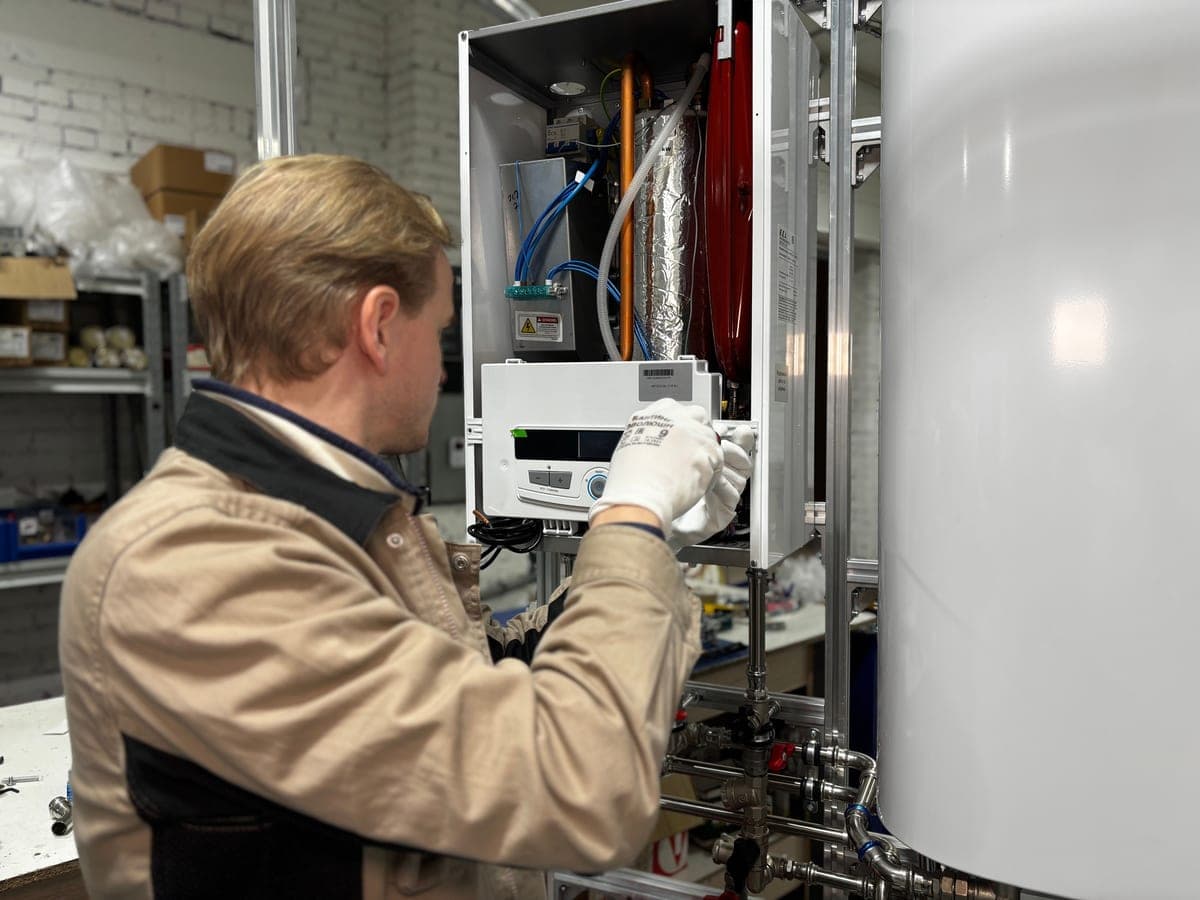
In the Dallas-Fort Worth market, a new water heater installed typically costs about $1,300 to $2,000 for a 40-gallon tank and $1,500 to $2,400 for a 50-gallon tank. Tankless units typically run about $3,000 to $6,000 installed. Prices include labor and usually a permit, and are typical market ranges, not a quote.
Typical Water Heater Replacement Cost in DFW (2026)
The biggest cost drivers for a new water heater are the type (tank or tankless), the size, the fuel (gas or electric), and how much the install has to change to meet current code. The table below shows typical Dallas-Fort Worth market ranges, installed. Use them to plan, not as a quote.
| Service | Typical DFW market range |
|---|---|
| 40-gallon tank (gas or electric), installedCommon for smaller households; standard swap | $1,300 - $2,000 |
| 50-gallon tank (gas or electric), installedCommon for 3-4 bedroom DFW homes | $1,500 - $2,400 |
| Tankless (gas), installedHigher with gas-line, venting, or electrical upgrades | $3,000 - $6,000 |
| Labor only (swap-out)Included in the installed prices above; higher for tight or attic locations | $400 - $900 |
| Permit (typical DFW municipality)Required for a replacement; varies by city | $50 - $200 |
These are typical DFW market ranges for planning only, not a quote from Dallas Best Plumber. Your matched licensed local plumber provides the actual free, no-obligation price after assessing your home and current setup.
What Is Included in a Replacement (and What Adds Cost)
A basic like-for-like swap (same size, same fuel, same location) sits at the lower end of the ranges. Costs climb when the new unit or current code requires extra work. Here is what is usually included and what commonly adds to the bill.
- Included: removal and disposal of the old unit, the new heater, standard connections, a new temperature-and-pressure valve and discharge line, and basic testing.
- Adds cost: upsizing the tank, switching fuel type, or moving the unit's location.
- Adds cost: code-required upgrades such as a drip pan and drain, an expansion tank, updated venting, seismic or safety strapping where required, or bringing the gas line and shutoff up to current code.
- Adds cost: difficult access, including attic or closet installs, tight spaces, or hauling a unit up stairs.
- Adds cost: permit and inspection fees, which vary by DFW municipality.
- Adds cost: emergency or after-hours replacement versus a scheduled appointment.
- DFW hard water can justify adding a sediment filter or scale protection, which extends the life of the new unit but adds a little up front.
Tank vs Tankless: Which Costs More to Own
A standard tank heater is cheaper to buy and install, which is why it is the default in most DFW homes. A tankless (on-demand) unit costs more up front, often two to three times as much once gas, venting, and sometimes electrical are upgraded, but heats water only when you use it, lasts longer, and never runs out during back-to-back showers.
The right choice depends on how long you will stay in the home, your hot-water demand, and whether your gas and venting can support tankless without major upgrades. Hard water matters here too: DFW's mineral content scales tankless heat exchangers, so a tankless unit needs periodic descaling to hit its long lifespan.
- Tank: lower purchase and install cost, simpler replacement, typical life about 8 to 12 years.
- Tankless: higher install cost, lower standby energy loss, endless hot water, typical life about 15 to 20 years with maintenance.
- Either way, DFW hard water shortens life without maintenance: flush a tank yearly and descale a tankless per the manufacturer.
Repair or Replace? How to Decide
Not every failing water heater needs replacing. A single bad part on a newer unit is usually worth repairing; an old tank with a leaking body is not. Weigh the age, the cost of the repair, and the type of failure.
- Repair if the unit is under about 8 years old and the problem is a fixable part, such as a thermostat, heating element, thermocouple, gas valve, or T&P valve. For planning only, DFW water heater repairs typically run about $150 to $650.
- Replace if the tank itself is leaking from the body or base, because the inner tank has corroded through and cannot be repaired.
- Replace if the unit is past about 10 to 12 years, especially with DFW hard water, since the next failure is close behind.
- Replace if repairs are recurring or a single repair approaches half the cost of a new unit.
Permits and Code in the DFW Area
Replacing a water heater is permitted work in most Dallas-Fort Worth municipalities, and for good reason: gas, water, and pressure-relief all have to be done right. A licensed plumber pulls the permit and the city inspects the install, which protects you and keeps the work insurable and sellable when you list the home.
Current code often requires items an older install may not have: a drip pan with a drain to the exterior, a thermal expansion tank (needed on closed systems with a pressure-reducing valve or check valve, common in DFW), proper venting and combustion air for gas units, a sediment trap on the gas line, and a correctly routed T&P discharge line. These are exactly the upgrades that push a replacement above a bare swap, but they are safety features, not upsells.
Be wary of anyone offering an unpermitted cash install to save a few dollars. It can void warranties, fail a future home inspection, and leave a dangerous gas or venting error in place. The permit is a small line item relative to the risk.
How to Get an Accurate Water Heater Quote
The installed ranges here are for planning. Your real price depends on the size and type you choose, your home's current setup, and which code upgrades your install needs, which is why an on-site assessment beats any phone estimate.
Dallas Best Plumber is a free referral service, so we match you with a licensed, insured local plumber who serves your ZIP and can size the right unit, handle the permit, and quote tank or tankless honestly. Tell us about your current heater in the quote form and a matched pro calls you back with a free, no-obligation quote. There is no cost to use the matching service.
If your old heater is actively leaking, keep the water and power off, see our guides on a leaking water heater and no hot water to pin down the cause, and get matched right away rather than waiting.
Still stuck? Get matched with a licensed local pro
We'll connect you with a licensed, insured plumber in the Dallas-Fort Worth area for a free, no-obligation quote.
Related guides
- Tankless Water Heater Installation CostPublished national ranges, cited - plus the gas, venting and electrical work that actually decides your number.
- How Long Do Water Heaters Last?Typical service life, what shortens it in North Texas, and the signs that mean you are shopping rather than repairing.
- Why Is My Water Heater Leaking (and What to Do)?From the top or the bottom, here is what a leak means and the first moves to make.
- No Hot Water? Troubleshooting Gas and Electric Water HeatersA gas and electric troubleshooting checklist to get your hot water back, plus when to call a pro.
- What Size Water Heater Do I Need?Tank size is the number on the sticker. First hour rating is the number that decides whether anyone runs out of hot water.
- Gas vs Electric Water HeaterFor most homeowners the choice is already made by what is in the wall. Here is how to tell, and when switching is worth the extra work.
- Water Heater Repair CostMost water heater repairs are a part, not a tank. Here is what independent cost publishers report for each one, and when the repair stops making sense.
- Why Is My Water Heater Making Noise?Popping and rumbling is almost always sediment. Screeching is a valve. Here is how to tell them apart before you spend anything.
Frequently asked questions
How much does it cost to replace a water heater in Dallas-Fort Worth?
For planning only, a 40-gallon tank typically runs about $1,300 to $2,000 installed in the DFW market, a 50-gallon tank about $1,500 to $2,400, and a tankless unit about $3,000 to $6,000. These include labor and usually a permit. They are typical market ranges, not a quote.
How much is a 50-gallon water heater installed?
In the Dallas-Fort Worth market, a 50-gallon tank water heater typically runs about $1,500 to $2,400 installed, including the unit, labor, and usually a permit. The final price depends on fuel type, access, and any code upgrades your install needs. This is a typical market range, not a quote.
Is a tankless water heater worth the extra cost?
It can be if you plan to stay in the home, want endless hot water, and your gas and venting can support it without major upgrades. Tankless costs more up front, about $3,000 to $6,000 installed in DFW, but lasts longer and uses less standby energy. It needs periodic descaling because of DFW hard water.
Should I repair or replace my water heater?
Repair a newer unit (under about 8 years) with a single failed part, such as a thermostat or element, typically $150 to $650 in DFW. Replace if the tank body is leaking, the unit is past 10 to 12 years, or repairs are recurring or near half the cost of a new heater.
Do I need a permit to replace a water heater in DFW?
Yes, most Dallas-Fort Worth municipalities require a permit and inspection for a water heater replacement. A licensed plumber pulls it as part of the job. The permit protects you, keeps the work insurable, and ensures gas, venting, and pressure-relief are done to current code. Avoid unpermitted cash installs.