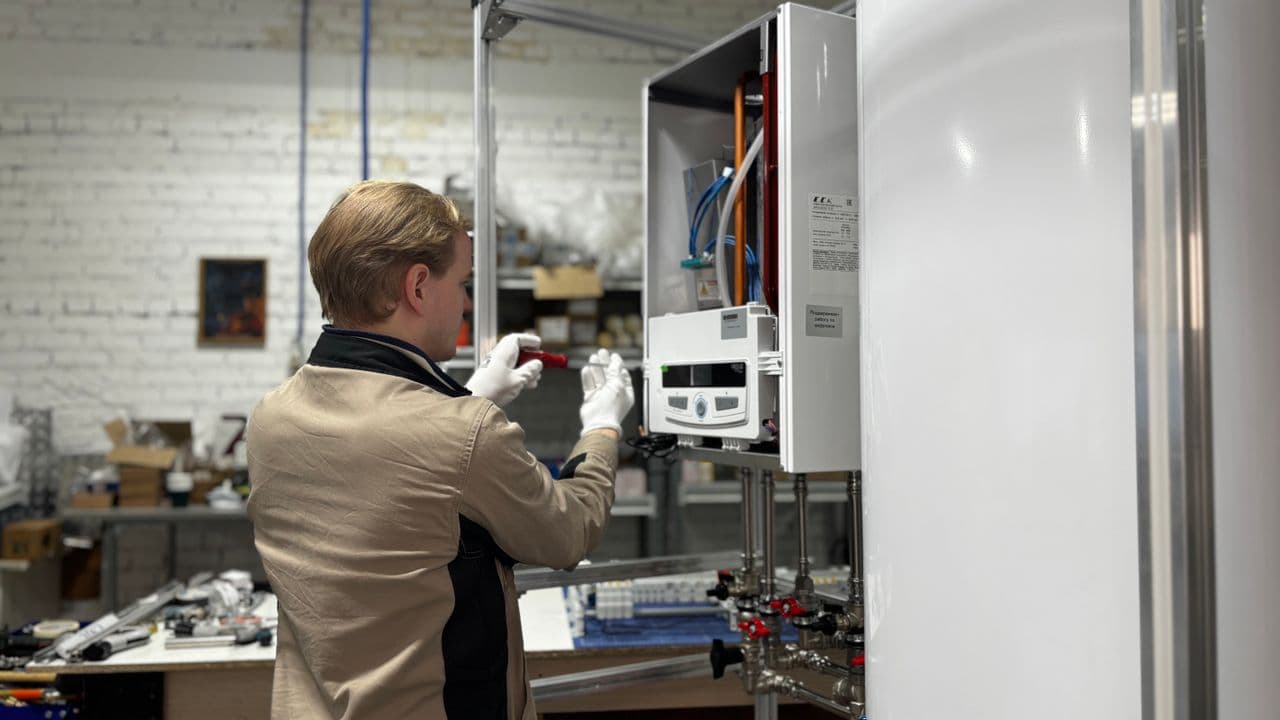
In practice the existing hookup decides it: switching fuel means adding a gas line and vent, or a 240-volt circuit and panel capacity, and that cost usually outweighs the difference between the units. Gas heats water faster, so a smaller gas tank serves the same household as a larger electric one. Electric units are simpler to install and site, and electric heat pump models are by far the most efficient option available.
Published Installation Figures (With Sources)
We are a free referral service, not a plumbing company - we do not set prices and we never publish a price as our own. These are published national figures from an independent cost-data publisher, named and linked with the date it was updated. Note how close the two fuel types are on installed cost: that is the point. The unit is not what makes this decision, the infrastructure is.
| Service | Published national figure |
|---|---|
| Electric water heater, installedFixr.com, Cost to Install a Water Heater, updated January 27, 2026 | $500 - $3,500 |
| Natural gas water heater, installedFixr.com, updated January 27, 2026 | $700 - $2,700 |
| Water heater installation - overallFixr.com, updated January 27, 2026; national average given as $1,400 | $900 - $3,000 |
| Tankless water heater, installedFixr.com, updated January 27, 2026; page notes tankless models typically cost nearly twice as much as tank models | $1,000 - $4,000 |
| Power venting, added to the totalFixr.com, updated January 27, 2026 | $300 - $1,000 |
| Roughing in utilities for a new (not replacement) installationFixr.com, updated January 27, 2026 | $400 - $1,800 |
| PermitFixr.com, updated January 27, 2026; higher where new gas lines, electrical work or major plumbing changes are required | $25 - $1,500 |
| Gas line installation, if one has to be runFixr.com, Cost to Install a Gas Line, updated August 29, 2025; national average given as $800 | $500 - $2,000 |
These are national figures published by third-party cost-data sites on the dates shown - not Dallas Best Plumber's prices, not a quote, and not specific to Dallas-Fort Worth. We are a free referral service, we do not set prices and we do not perform work. Your matched licensed local plumber gives you the actual free, no-obligation quote after seeing the space, the venting and the existing hookups.
Sources: Fixr.com - Cost to Install a Water Heater (updated January 27, 2026); Fixr.com - Cost to Install a Gas Line (updated August 29, 2025)
The Decision Is Usually Already Made
Most homeowners arrive at this question when a heater fails, and in that situation the honest answer is that you are probably replacing like for like. The reason is infrastructure, not preference.
Going from electric to gas means a gas line sized for the appliance's load, a vent path to the outside, and combustion air - and in a closet or an interior utility space, finding a legitimate vent route is often the hard part. Fixr puts gas line installation at a national average of $800 within a $500 to $2,000 range, and power venting at an additional $300 to $1,000 where a natural-draft flue is not available. Against installed unit costs of $500 to $3,500 electric and $700 to $2,700 gas, that added work is a large fraction of the whole project.
Going from gas to electric means a dedicated 240-volt circuit of adequate capacity, which means panel space and a run from the panel to the heater. Whether that is cheap or expensive depends entirely on where your panel is and how full it is. On the plus side, you delete the vent, which can free up a closet and remove a combustion appliance from the house.
So the practical framing is: replace in kind unless something else is driving the change. The cases where switching genuinely makes sense are when you are already remodeling and the walls are open, when the panel or the gas line is being upgraded anyway, when you are moving the heater to a different location, or when you specifically want a heat pump water heater - which only comes in electric and which changes the efficiency maths entirely.
Recovery Rate: Why A 40-Gallon Gas Tank Equals A 50-Gallon Electric
The single most practical difference between the two is how fast they reheat. A gas burner puts far more energy into the tank per hour than a pair of electric resistance elements, so a gas heater recovers faster after a heavy draw. That is why a household that runs out of hot water on an electric 50-gallon tank will often be comfortable on a gas 40.
The number that captures this is the first hour rating, and it is the figure to compare rather than tank size. ENERGY STAR defines first hour rating as an estimate of the maximum volume of hot water in gallons that a storage water heater can supply within an hour, starting from a fully heated unit and measured at a 125 degree Fahrenheit outlet temperature. For its own certification, ENERGY STAR requires a first hour rating of at least 51 gallons per hour for qualifying gas-fired storage water heaters and at least 45 gallons per hour for qualifying electric heat pump water heaters.
What this means in a real house: if three people shower in succession every morning, a faster-recovering unit matters more than a bigger one, and gas gives you that. If your hot water use is spread through the day, recovery rate matters less and tank size matters more. And if nobody has ever run out of hot water on your current electric unit, recovery rate is not a reason to switch.
Tankless changes the question again - a demand heater has no tank and no recovery rate, only a flow rate, and ENERGY STAR's criteria for gas-fired instantaneous units require a maximum flow of at least 2.8 gallons per minute over a 67 degree temperature rise. Whether 2.8 gallons per minute is enough depends on how many fixtures you expect to run at once.
Efficiency: The Rating To Compare
Both fuel types are rated on the same scale, Uniform Energy Factor, and comparing UEF between a gas and an electric unit is comparing energy used at the appliance rather than money spent - which is why the ratings alone do not settle the running-cost question.
ENERGY STAR's published criteria give a useful sense of where the efficient end of each category sits. For gas-fired storage water heaters it requires UEF of at least 0.81 on a medium draw pattern or at least 0.86 on a high draw pattern for tanks over 20 and up to 55 gallons, and at least 0.86 for tanks over 55 gallons. For gas-fired instantaneous units it requires UEF of at least 0.95. For electric heat pump water heaters the thresholds are far higher: at least 3.30 for an integrated unit, or at least 2.20 for a 120-volt integrated unit or a split system.
That gap is not a measurement quirk. A conventional electric resistance heater converts electricity to heat at close to one-for-one, so its UEF sits just below 1. A heat pump water heater moves heat rather than creating it, which is how it exceeds 3. If efficiency is the thing you care about most, the choice is not gas versus electric - it is heat pump versus everything else.
The caveat with a heat pump water heater is physical: it needs air volume and it produces cool, dehumidified air and condensate. In a garage - where a large share of water heaters in this market live - that is usually workable and the dehumidification is welcome. In a small interior closet it often is not, without ducting. It is also taller than a conventional tank of the same capacity, which matters in a pan under a low ceiling.
What none of these ratings tell you is your bill, because that depends on local gas and electricity prices and on how much hot water you actually use. If running cost is your deciding factor, do that comparison against your own utility rates rather than a national rule of thumb.
The Practical Trade-Offs, Side By Side
Stripped of the marketing, here is what each fuel type actually gives you and costs you.
- Gas - faster recovery, so a smaller tank serves the same household. Keeps working in a power outage on a standing-pilot unit, though most modern units need power for ignition and controls. Needs a gas line sized for the load, a vent and combustion air. Fixr puts gas units installed at $700 to $2,700.
- Electric resistance - simplest to install and site, no vent, no combustion air, no flue to inspect. Can go in places a gas unit cannot. Slower recovery, so usually a larger tank for the same household. Fixr puts electric units installed at $500 to $3,500.
- Electric heat pump - by far the most efficient option, with ENERGY STAR thresholds of UEF 3.30 for integrated units against 0.86 for the best gas storage tanks. Needs air volume, produces cool air and condensate that has to drain, and is physically taller. Best suited to a garage.
- Gas tankless - endless hot water within its flow rate, small footprint, but typically close to twice the installed cost of a tank per Fixr, and frequently needs a larger gas line and a new vent. Scale from hard water makes periodic descaling a real maintenance item here.
- Venting is the hidden gas cost. Where a natural-draft flue is not available, Fixr puts power venting at an extra $300 to $1,000.
- Permits apply either way. Fixr lists $25 to $1,500, with the higher end where new gas lines, electrical work or major plumbing changes are involved.
- Location constrains everything. A garage installation opens up heat pump and gas options; a second-floor interior closet closes most of them.
What To Confirm Before You Decide
This is a decision best made with a plumber standing in front of the existing heater, because three or four of the inputs are things you cannot see from a catalog. These are the questions to settle.
- What is there now - fuel, capacity, first hour rating if the label is legible, age, and whether anyone has ever run out of hot water.
- Where it lives, and whether that space has the air volume and the drainage a heat pump unit would need.
- If gas is on the table: does the existing gas line have capacity for the unit's load, and is there a legitimate vent path, or does it need power venting.
- If electric is on the table: is there panel capacity and space for a dedicated 240-volt circuit, and how far is the run.
- The expansion tank, the pan and the drain - North Texas municipalities inspect water heater replacements, and a code-compliant install includes these.
- The permit, the inspection and whether both are in the quoted price.
- The real first hour rating of the unit being proposed, compared against your household's peak hour - not just the gallon capacity on the sticker.
- Warranty on tank, parts and labor separately, because they differ.
A North Texas Footnote
Two local conditions deserve weighting in this decision. The first is hard water. The North Texas Municipal Water District describes its treated water as moderately hard, and the City of Mesquite publishes an average of 93 to 134 milligrams per liter for its own supply, which it converts to roughly 5.44 to 7.84 grains per gallon. Minerals come out of solution when water is heated, so scale accumulates inside every water heater in this market. In a tank it settles as sediment and shortens life; in a tankless unit it coats the heat exchanger and demands periodic descaling. That is an argument for annual flushing whichever fuel you pick, and part of the reason softeners come up so often here.
The second is where water heaters sit. A large share of homes across Dallas, Plano, Garland, Richardson, Mesquite, Carrollton and the Collin County suburbs put the heater in the garage or an attic. An attic installation is the one that changes the calculus most: a leak there damages the ceiling below, which is why the pan and the drain line matter, and a heat pump unit in an attic is working in an unconditioned space that gets extremely hot in summer and cold in a freeze.
Dallas Best Plumber is a free referral service, not a plumbing company. Tell us what you have now, where it is, and whether you have ever run short of hot water, and we put your request in front of licensed, insured local plumbers who install both gas and electric units, with a free, no-obligation quote. The recommendation and the price are theirs - we never set either and we never perform the work.
Still stuck? Get matched with a licensed local pro
We'll connect you with a licensed, insured plumber in the Dallas-Fort Worth area for a free, no-obligation quote.
Related guides
- What Size Water Heater Do I Need?Tank size is the number on the sticker. First hour rating is the number that decides whether anyone runs out of hot water.
- Tankless vs Tank Water Heater: How To ChooseTwo different products solving the same problem. Here is the honest comparison, including the hard-water catch.
- Water Heater Replacement Cost in Dallas-Fort Worth (2026)Typical 2026 DFW ranges by tank size and tankless, plus the repair-vs-replace call.
Frequently asked questions
Is a gas or electric water heater cheaper to run?
It depends on your local gas and electricity rates and your hot water use, so compare against your own bills rather than a rule of thumb. What the ratings do show is the efficiency gap: ENERGY STAR requires UEF of at least 0.86 for its best gas storage tanks but at least 3.30 for an integrated electric heat pump water heater, because a heat pump moves heat rather than generating it. If running cost dominates, that is the option to price.
Can I switch from an electric to a gas water heater?
Yes, but you are adding a gas line sized for the load, a vent path and combustion air, and that work often costs as much as the heater. Fixr puts gas line installation at a $500 to $2,000 national range with a $800 average, plus $300 to $1,000 for power venting where a natural-draft flue is not available. It makes sense when walls are already open or the heater is moving, less so as a straight swap.
Does a gas water heater work in a power outage?
An older standing-pilot gas unit generally keeps heating water without electricity. Most modern gas heaters, however, use electronic ignition and powered controls, and power-vented models need the fan, so they stop when the power does. If outage performance matters to you, ask specifically about the ignition and venting type of the unit being quoted rather than assuming gas means independent.
Do I need a bigger tank if I choose electric?
Usually, yes - because electric resistance elements reheat the tank more slowly than a gas burner. The figure to compare is first hour rating, not gallons. ENERGY STAR defines it as the maximum volume of hot water in gallons a storage heater can supply within an hour starting fully heated, and its own thresholds are at least 51 gallons per hour for qualifying gas storage units and at least 45 for qualifying electric heat pump units.
Is a heat pump water heater a good choice in Dallas?
It can be an excellent one, provided it has somewhere suitable to go. It needs air volume, and it discharges cool dehumidified air plus condensate that has to drain - which is why a garage, where many heaters in this market already live, usually suits it and a small interior closet usually does not. It is also taller than a conventional tank of the same capacity, so check the clearance above the pan.