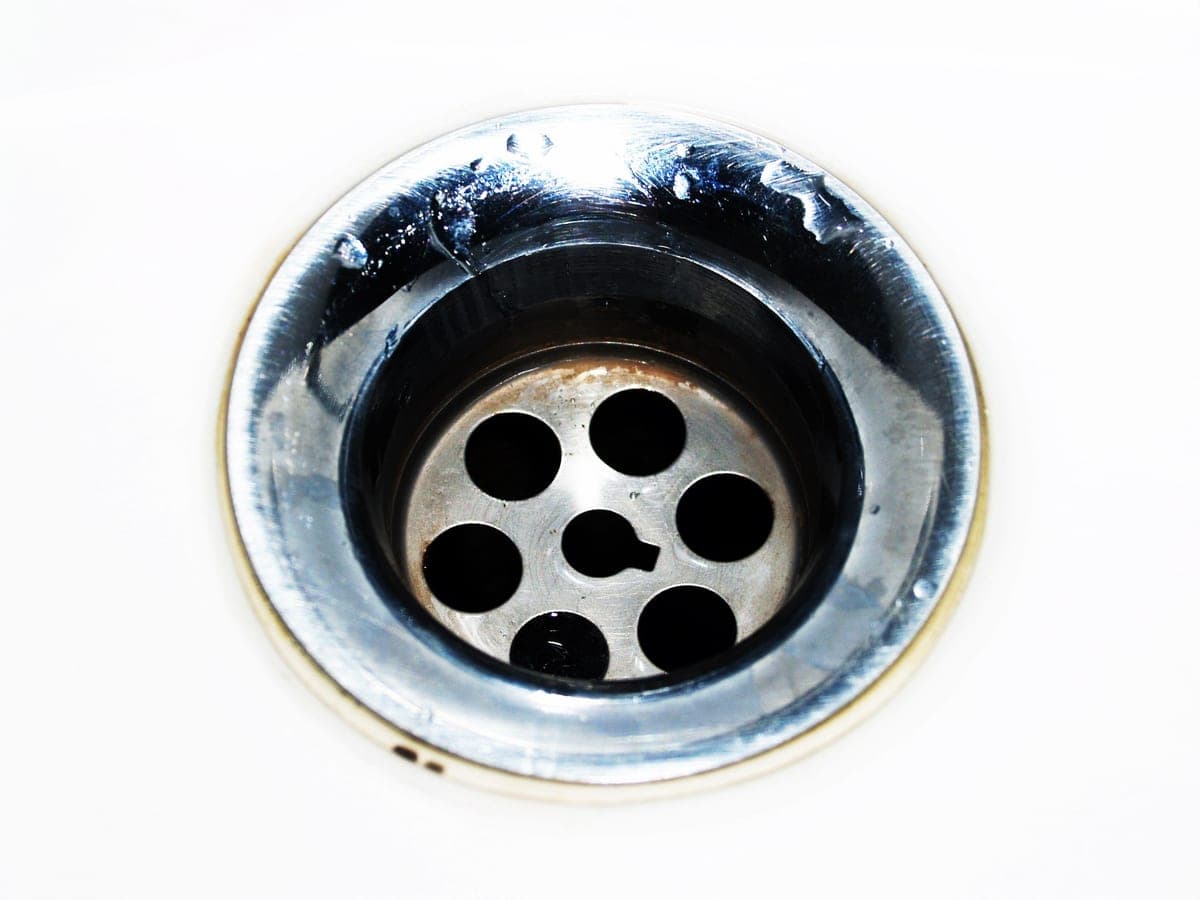
A disposal that hums is jammed; one that is completely silent has lost power or tripped its internal reset; one that drains slowly has a clog downstream rather than a motor fault. Switch the unit off, press the red reset button underneath, and never put your hand inside the chamber.
Before Anything Else: Make It Safe
Every safe disposal repair starts the same way, because the risk here is not water - it is a motor that can restart while your hand is in the grinding chamber. Do these three things first, every time, no exceptions.
- Turn the disposal switch OFF. If it has been humming, leave it off - running a jammed motor cooks the windings.
- Kill the power at the source. Unplug the unit under the sink if it is plugged into an outlet, or switch off its breaker at the panel if it is hard-wired.
- Never put your hand into the chamber. Use tongs, pliers or a wooden spoon handle to retrieve anything you can see, and keep your fingers above the splash guard.
- Clear the cabinet under the sink so you can see the unit, the drain connections and the dishwasher hose.
- Put a flashlight on it and look into the chamber from above before you touch anything - a spoon, a bottle cap or a peach pit is often visible straight away.
It Hums But Does Not Turn: A Jam
A hum with no rotation means the motor has power but the impeller plate cannot move. Something hard is wedged between the plate and the grind ring - usually silverware, a bottle cap, a fruit pit, glass, or a build-up of fibrous material like celery or artichoke.
With the power off, most disposals can be freed from below with a hex wrench in the socket at the center of the base, or from above with the long-handled tool the unit shipped with. Work it back and forth both directions until the plate spins freely by hand pressure, remove whatever comes loose, then restore power and press the reset button underneath before testing it.
- With power off, insert the hex wrench into the socket in the center of the unit's underside.
- Turn it firmly back and forth in both directions until the plate rotates freely through a full turn.
- Look into the chamber and remove the object with tongs or pliers, never by hand.
- Press the red reset button on the bottom of the unit until it clicks.
- Restore power, run cold water, and switch the disposal on in short bursts.
It Is Completely Silent: Power Or Reset
No hum, no click, nothing at all usually means the unit is not getting power or has protected itself. Disposals have a thermal overload cut-out with a red reset button on the underside, and it trips after a jam or a long grind. That button is the first thing to check and it solves this complaint more often than anything else.
If reset does not do it, work outward: the breaker at the panel, the wall switch, and the outlet under the sink - which on many kitchen installs is switched, and on some is shared with the dishwasher. A plug-in unit is easy to test by plugging a lamp into the same outlet. If the outlet is dead with the breaker on, that is an electrical problem rather than a plumbing one.
A disposal that clicks and stops, or trips the breaker every time it starts, is usually telling you the motor or its capacitor has failed. At twelve or fifteen years old, replacement is the normal answer; these are not rebuildable appliances.
- Red reset button underneath - press it first, it fixes this most often
- Breaker at the panel, then the wall switch, then the outlet under the sink
- Clicks or trips the breaker on start - likely a failed motor or capacitor
- Burning smell - stop, cut power, and plan on a replacement
It Runs But Will Not Drain
If the motor spins freely and water backs up in the sink, the disposal is working and the problem is downstream. The usual spot is the P-trap directly below or the horizontal run behind it, packed with ground food and grease - and in a kitchen island, that horizontal run is long and unforgiving.
Do not reach for chemical drain cleaner. It is ineffective against a packed food-and-grease plug, it sits in the chamber and the trap while it waits, and it makes the whole assembly hazardous for whoever opens it next - which may be you in ten minutes. Clearing the trap into a bucket is the mechanical fix, and it is within reach of most homeowners.
One more check specific to disposals: if your dishwasher backs up or drains poorly at the same time, the dishwasher drain hose connects to the disposal and the plug in that inlet may still be in place after a recent install, or the hose may be clogged where it joins.
- Water backing up with the motor running freely - a clog downstream, not the disposal
- Check the P-trap first; island sinks add a long horizontal run
- Dishwasher backing up too - check the disposal's dishwasher inlet and hose
- Skip chemical drain cleaner entirely on a disposal
Leaks, And What They Mean
Where a disposal leaks tells you whether it is worth fixing. A leak at the top, where the unit meets the sink flange, is usually the plumber's putty or the mounting assembly and is repairable. A leak at the side, where the drain or dishwasher hose connects, is usually a gasket or a loose connection and is repairable. A leak from the bottom of the housing means the internal seal has failed and water is inside the motor - that unit is finished.
Dry everything, put paper towels under each of the three locations, run water briefly, and see which one is wet first. That takes five minutes and decides whether you are buying a gasket or an appliance.
When To Stop And Get Matched With A Licensed Plumber
Stop if the unit leaks from the bottom of the housing, if it trips the breaker repeatedly, if there is a burning smell, if the sink backs up after the trap has been cleared, or if the disposal is hard-wired and the electrical side is in question. Stop as well if more than one fixture in the house is draining slowly - that is a main-line symptom and the disposal is a bystander.
Dallas Best Plumber is a free referral service, not a plumbing company. Tell us what the disposal is doing - humming, silent, leaking, draining badly - and we match you with a licensed, insured local plumber who repairs or replaces disposals and clears the drain behind them, with a free, no-obligation quote. There is no cost to use the matching service.
Still stuck? Get matched with a licensed local pro
We'll connect you with a licensed, insured plumber in the Dallas-Fort Worth area for a free, no-obligation quote.
Related guides
- Shower Drain Clogged? Clear It In This OrderMost shower clogs sit in the first few inches. Start there, skip the chemicals, and know the signs that mean something bigger.
- Drain Cleaning Cost in Dallas-Fort Worth (2026 Guide)Typical 2026 DFW market ranges by job type, and exactly what drives the price.
- Kitchen Sink Clogged? Do These Things FirstMost kitchen clogs sit within a few feet of the basket strainer. Here is how to clear one safely - and how to tell when it is not the sink at all.
Frequently asked questions
Why is my garbage disposal humming but not spinning?
It is jammed: the motor has power but the impeller plate cannot turn, usually because of silverware, a bottle cap, a fruit pit, glass or fibrous scraps. Switch it off and cut the power, then free the plate with the hex wrench in the socket underneath, working it both directions. Remove the object with tongs - never your hand - press the reset button, and test in short bursts.
Where is the reset button on a garbage disposal?
On the bottom of the unit, in the center or near the edge - a small red or black button you press until it clicks. It is a thermal overload cut-out that trips after a jam or a long grind, and pressing it is the single most common fix for a disposal that is completely silent. Cut the power before you reach under the sink to find it.
Can I use drain cleaner in a garbage disposal?
No. Caustic drain cleaner does not clear a packed food-and-grease plug, it sits in the chamber and trap while it waits, and it makes the assembly dangerous for whoever opens it next. It is also hard on the rubber splash guard and the trap seals. Clear the trap mechanically, or have a licensed plumber clear the line.
Is a leaking garbage disposal worth repairing?
It depends where it leaks. At the sink flange on top, or at the drain or dishwasher connection on the side, it is usually a gasket, putty or a loose fitting and well worth repairing. From the bottom of the housing it means the internal seal has failed and water is in the motor, and that unit needs replacing. Paper towels at each spot will tell you which you have in five minutes.
How long should a garbage disposal last?
Most residential units give roughly eight to fifteen years depending on how hard they are used. They are not rebuildable appliances, so a failed motor, a seized bearing or a housing leak generally means replacement rather than repair. If yours is in that age range and failing in more than one way, replacing it is usually the better spend than chasing parts.