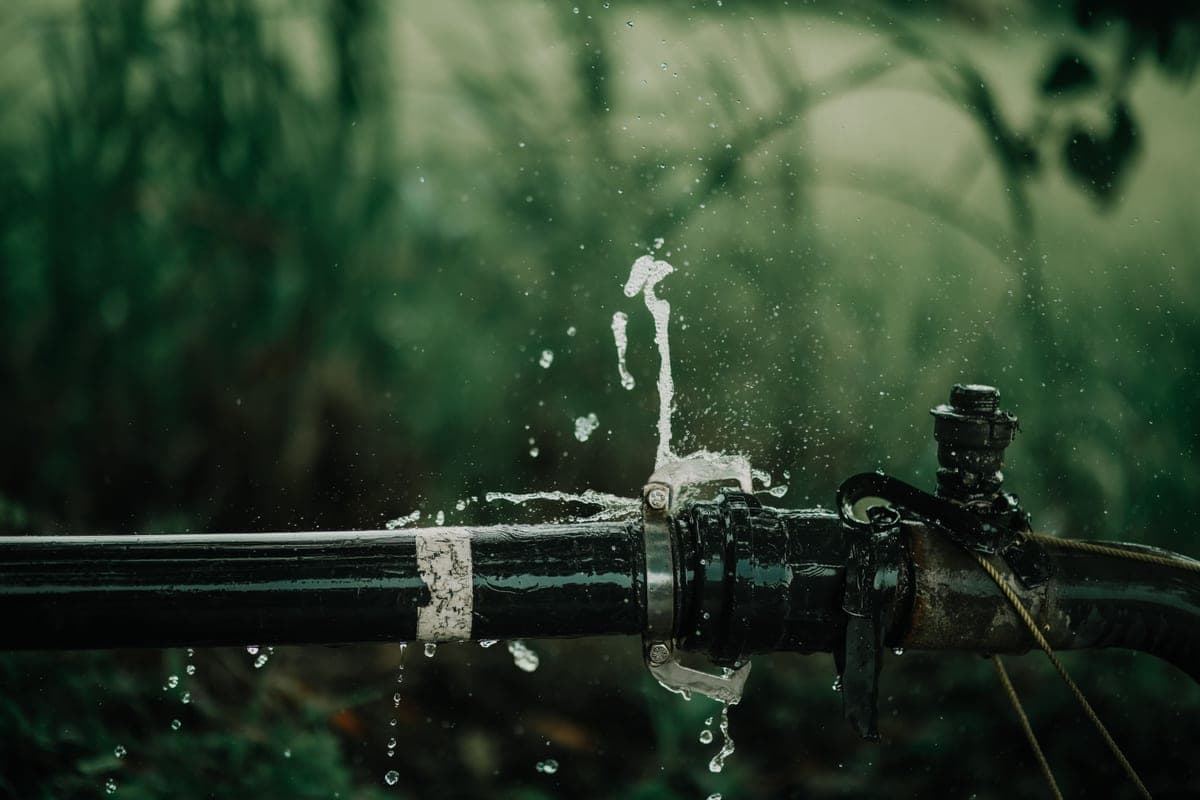
Open the affected faucet first, both handles, so meltwater and pressure have somewhere to escape. Then warm the pipe starting at the faucet end and working back toward the ice, using a hair dryer, a heat gun on low, warm towels or a space heater at a safe distance. Never use an open flame. If you cannot reach the frozen section, or water appears when it thaws, shut off the main and get a licensed plumber.
The First Ten Minutes
If a faucet gives little or nothing while the rest of the house works normally, you have a frozen section and you know roughly where it is. Do these things in this order - the order matters more than the speed.
- Open the affected faucet, both hot and cold handles, and leave it open. This is the step people skip and it is the most important one on this page. An ice plug is not the danger; the pressure building between the plug and a closed faucet is. An open faucet gives that pressure somewhere to go and gives meltwater a path out as the plug releases.
- Go and find your main water shut-off and confirm it turns. Do this now, while nothing has burst, not later while water is running. In most Dallas-area homes it is at the meter box near the street, sometimes in a box on an exterior wall or in the garage.
- Check every other fixture in the house. Knowing which ones work tells you whether you have one frozen branch or several, and whether the problem is on the hot side, the cold side or both. If nothing anywhere has water, the freeze is upstream of the whole house - possibly at the meter or the service line.
- Open the cabinet doors under any sink on an exterior wall, and raise the thermostat. You are trying to get room air to the pipe runs rather than just the thermostat.
- Work out where the pipe most likely runs. In older Dallas, Garland, Richardson and Mesquite homes the vulnerable sections are in exterior walls, unheated attics and crawl spaces. In newer two-story Plano, Frisco, McKinney, Prosper and Allen builds they are attic lines above the second floor and pipes in garage walls. Exterior hose bibs freeze first everywhere.
- Then begin thawing, following the section below. If the frozen section is inside a wall or you cannot locate it at all, skip to the section on when to stop.
How To Thaw It Safely
The technique has one rule that explains everything else: warm the pipe from the faucet end and work back toward the ice. If you heat the middle of a frozen section first, you create meltwater trapped between two plugs with nowhere to go, and that is a pressure situation you have made worse rather than better.
With the faucet open, apply gentle, broad heat to the accessible pipe nearest the faucet and move slowly along it. You will usually hear it before you see it - a trickle that becomes a dribble, then normal flow. Keep the heat on until flow is fully restored, because a partially cleared plug refreezes quickly.
- A hair dryer on a low or medium setting, moved constantly along the pipe. The best all-round tool: hot enough to work, not hot enough to damage anything.
- A heat gun on its lowest setting, kept moving. Effective but easy to overdo, and it will damage PEX or CPVC if you hold it still.
- Towels soaked in hot water and wrapped around the pipe, replaced as they cool. Slow but completely safe, and the right choice in a tight space where you cannot aim a dryer.
- A space heater or heat lamp aimed at the general area from a safe distance, to warm the whole cavity rather than the pipe. Good for an accessible attic or garage run. Keep it clear of insulation and anything combustible, and do not leave it unattended.
- Electrical heat tape, if you already have it installed and it is rated for the application. Not something to buy and fit mid-emergency.
- Patience. A pipe that has been frozen for hours takes a while, and the temptation to escalate the heat is where the damage happens.
What Never To Use
The ways people make this worse are consistent, and almost all of them are about applying too much heat too fast in a place that cannot take it.
- No open flame. No propane torch, no blowtorch, no candle. It is a fire risk in a wall or attic cavity full of insulation and framing, it can anneal or damage copper, and on PEX or CPVC it destroys the pipe outright. House fires every winter come from exactly this.
- No charcoal or propane heater indoors, and nothing that burns fuel in an enclosed space. Carbon monoxide is a greater risk than the plumbing.
- Do not close the faucet to stop the dripping while you work. The open faucet is your pressure relief.
- Do not pour boiling water on a frozen pipe in a cold space. Thermal shock on a cold pipe, and the water refreezes on the floor around you.
- Do not leave a space heater running unattended against insulation or stored material in an attic or garage.
- Do not keep heating if you hear water running inside a wall or ceiling. That means it has already split - close the main.
- Do not go into an attic or crawl space alone in a freeze without telling someone, and do not stand in water near any electrical equipment.
When To Stop And Close The Main
Thawing a reachable pipe is reasonable homeowner work. The cases below are not, and continuing with them is how a frozen pipe becomes a water damage claim.
Close the main water shut-off and stop if any of these are true. There is no harm in having the water off for a few hours while you get help - there is a great deal of harm in the alternative.
- The frozen section is inside a wall or a ceiling and you cannot reach it.
- You hear water running when there should be none, or you see a damp patch or a ceiling stain appear as things warm up.
- The pipe is visibly split, bulged or deformed.
- No fixture in the house has water, which suggests the freeze is at the meter or on the service line.
- There is water anywhere near electrical equipment, a panel, or a gas appliance. Cut power to that circuit at the breaker if it is safe to reach, and treat it as a safety situation before a plumbing one.
- The affected line serves a water heater, a boiler or anything you cannot isolate.
- You have been at it for a while, the heat is not working, and the temperature is still falling.
- The frozen fixture is an exterior hose bib with a hose attached - disconnect the hose, and expect a split behind the wall.
If It Has Already Burst
The damage from a frozen pipe almost never happens while it is frozen. It happens when it thaws and the water starts moving through a crack that ice made hours or days earlier. That is why the first warm afternoon after a hard North Texas freeze is when the calls come in.
Close the main immediately - the whole reason to have found it is this moment. Cut power at the breaker to any circuit near standing water. Open faucets to drain the remaining pressure out of the system. Move what you can out of the water, and get towels down. Photograph everything before you start cleaning up, because it helps the plumber understand what happened and it supports an insurance claim.
On the insurance question, the distinction that matters is sudden versus gradual. The Insurance Information Institute states that the HO-3 homeowners form covers accidental discharge of water from a plumbing system, and its list of covered perils includes freezing of a plumbing, heating, air conditioning or automatic fire-protective sprinkler system - while water seepage is excluded under the HO-3 and seepage is viewed as a maintenance issue and is not covered by insurance. A burst from a freeze is the sudden kind. Document it as such, and read your own policy.
Then get matched, and do it early. After a regional freeze every licensed plumber in North Texas is working through a long backlog of burst-pipe calls, and the order in which requests arrive matters. Dallas Best Plumber is a free referral service, not a plumbing company - tell us what happened and where you are, and we put your request in front of licensed, insured local plumbers who handle emergency work, with a free, no-obligation quote. We do not perform the work and we do not promise an arrival window on anyone else's behalf.
What Emergency And After-Hours Work Typically Costs
We do not set prices and we never publish a price as our own. The figures below are published national ranges from independent cost-data publishers, named and linked with their dates, so you know what the after-hours premium generally looks like before you are on the phone at midnight.
| Service | Published national figure |
|---|---|
| Emergency plumber - standard hourly rateFixr.com, Cost to Hire a Plumber, updated January 30, 2025 | $150 / hour |
| Flat call-out feeFixr.com, updated January 30, 2025 | $200 - $300 |
| Transportation feeFixr.com, updated January 30, 2025 | $50 - $200 |
| Off-hours emergency premium, added to the hourly rateInch Calculator, Cost to Hire a Plumber - 2026 Price Guide | $50 - $100 / hour |
| Evening, weekend or holiday premium on the hourly rateFixr.com, Cost to Unclog Main Sewer Line, updated January 31, 2025 | $45 - $200 |
| Leaking pipe repairFixr.com, Cost to Hire a Plumber, updated January 30, 2025 | $150 - $350 |
| Plumber hourly rate - typical range, normal hoursFixr.com, updated January 30, 2025; national average given as $90 per hour | $75 - $150 / hour |
These are national figures published by third-party cost-data sites on the dates shown - not Dallas Best Plumber's prices, not a quote, and not specific to Dallas-Fort Worth. After a regional freeze, demand across North Texas is far above normal and local pricing reflects that. We are a free referral service, we do not set prices and we do not perform work.
Sources: Fixr.com - Cost to Hire a Plumber (updated January 30, 2025); Fixr.com - Cost to Unclog Main Sewer Line (updated January 31, 2025); Inch Calculator - Cost to Hire a Plumber, 2026 Price Guide
After It Is Thawed
Once flow is restored, do not just move on. Run that fixture for several minutes and watch every accessible joint along the run you heated. Then check the ceiling below, the wall behind, and the floor nearby over the next day - a hairline split can weep for a while before it announces itself, and the time to find it is while you are still looking.
Keep the faucet dripping until the cold snap ends. The section that froze once is the section that will freeze again tonight, because nothing about its exposure has changed. Keep the under-sink cabinets open and the heat up.
Then, when the weather breaks, fix the cause rather than waiting for next winter. That means insulating the run that froze, sealing the draft that cooled it, covering hose bibs, and disconnecting hoses - our guide on how to prevent frozen pipes covers the full before-the-season checklist, and this is the one job best done in mild weather on a dry afternoon.
If a pipe froze in an attic or an exterior wall this year, it is worth asking a plumber whether that run should be rerouted or properly insulated rather than simply wrapped. Houses in this market were not built around sustained sub-freezing weather, and a line that freezes every hard winter is a design problem, not bad luck.
Still stuck? Get matched with a licensed local pro
We'll connect you with a licensed, insured plumber in the Dallas-Fort Worth area for a free, no-obligation quote.
Related guides
- How to Stop a Burst Pipe (Step by Step)Shut off the water fast, limit the damage, and know when it is an emergency.
- How To Prevent Frozen Pipes (and Thaw One Safely)North Texas does not freeze often, which is exactly why its pipes are exposed. Here is the work to do before the front arrives.
- How To Shut Off The Water To Your HouseThis is the one piece of plumbing knowledge that decides how bad a burst pipe gets. It takes ten minutes to learn and you only need it once.
- Water Pressure Regulator ReplacementA failed regulator is a quiet, expensive problem: it stresses every joint, valve and appliance in the house at once. Here is how to test for it.
- Repipe House CostThe pipe is the cheap part. Most of a repipe quote is labor, access and putting your walls back - which is why the published spread is so large.
- Polybutylene Pipe ReplacementGray, blue or black flexible plastic stamped PB2110. If that is what feeds your fixtures, the question is when to replace it, not whether.
Frequently asked questions
What should I do first if my pipes are frozen?
Open the affected faucet, both handles, and leave it open. The ice itself is not what splits a pipe - the pressure trapped between the plug and a closed faucet is, and an open faucet relieves it and gives meltwater a path out. Then locate your main shut-off and confirm it turns, before you apply any heat. Those two steps take two minutes and they decide how bad this gets.
How do I safely thaw a frozen pipe?
With the faucet open, warm the pipe starting at the faucet end and work back toward the ice, so meltwater can run out rather than being trapped between two plugs. A hair dryer on low, a heat gun on its lowest setting, hot towels wrapped around the pipe, or a space heater at a safe distance all work. Keep the heat moving and keep going until full flow returns.
Can I use a blowtorch or open flame on a frozen pipe?
No, never. It is a fire risk inside a wall or attic cavity full of insulation and framing, it can damage copper, and on PEX or CPVC it destroys the pipe outright. House fires happen every winter from exactly this. The same applies to any fuel-burning heater used indoors, where carbon monoxide becomes the bigger hazard. Stick to a hair dryer, hot towels or a space heater.
Why did my pipe burst after it thawed rather than while frozen?
Because the ice was holding the crack closed. Expanding ice splits the pipe during the freeze, but nothing escapes while the plug is still solid. When it thaws, water moves through the split and into the house - which is why the first warm afternoon after a hard North Texas freeze is when the burst-pipe calls come in. Watch the run you thawed for a full day afterward.
How do I know if a frozen pipe has already split?
Look for a visible bulge or crack in an accessible section, listen for water running when nothing is on, and watch for a damp patch or ceiling stain appearing as things warm. If any of those are present, or if the frozen section is somewhere you cannot see, close the main shut-off and get a licensed plumber rather than continuing to apply heat.