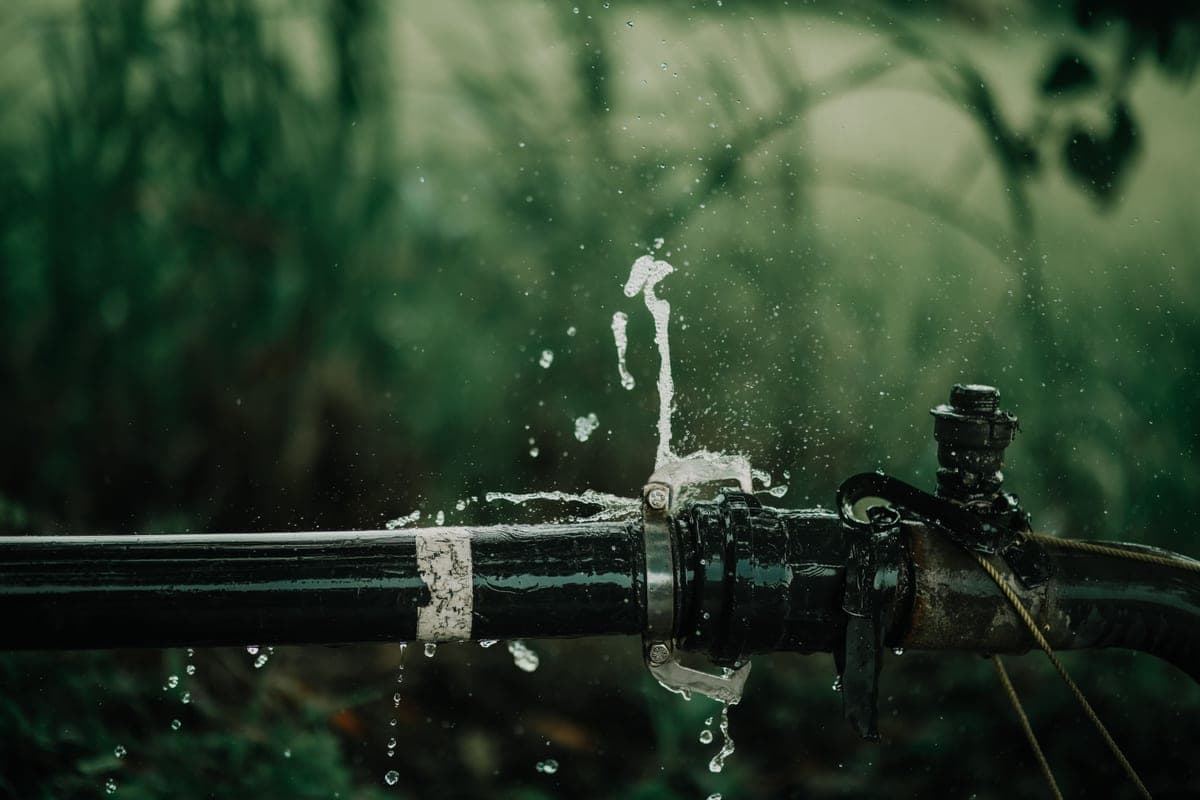
Most Dallas-area homes shut off at the meter box near the street: lift the lid and turn the valve beside the meter a quarter turn clockwise with a meter key or adjustable wrench. Many homes also have a house-side valve in the garage, in a utility area or on an exterior wall. For a single fixture, use the small stop valve behind the toilet or under the sink instead.
Find It Now, Not Later
Every plumbing emergency gets worse at a rate of several gallons a minute, and the thing that stops it is a valve. Homeowners who know where that valve is lose a wet floor. Homeowners who go looking for it during the emergency lose a ceiling, a floor and sometimes a wall. The difference is about ten minutes of work on a dry afternoon, and that is genuinely the whole point of this page.
Do not just locate it - operate it. A main shut-off that has not been turned in fifteen years can be seized, and the time to discover that is not while water is coming through a light fixture. Turn it off, confirm the water stops at a faucet, turn it back on slowly, and check for weeping afterward. Then show everybody in the house where it is, including the teenagers and anyone who stays there when you travel.
While you are there, note what tool it needs. Some valves take a meter key, some an adjustable wrench, some turn by hand. Put whatever it takes somewhere you will find it in the dark - the garage, not the garden shed - and consider a label.
Where It Usually Is In A Dallas-Area Home
Houses in this region are overwhelmingly slab-on-grade with no basement, which actually simplifies this: there are only a few places it can be. Check them in this order.
- The meter box near the street. This is the main one and nearly every home has it: a rectangular concrete or plastic lid in the parkway or just inside the property line, marked for water. Inside is the meter and, on the house side of it, a valve. This is the shut-off that works even when nothing else does.
- A house-side main valve, often in the garage near where the service line comes through the wall, in a utility closet, near the water heater, or in a box on an exterior wall. Many but not all homes have one. It is more convenient than the meter box and it is the one to use day to day.
- An exterior wall box, a small hinged cover on the side of the house, common in some newer Collin and Denton County subdivisions.
- Near the pressure reducing valve, if you have one. The PRV is a bell-shaped brass fitting where the service enters, and a shut-off is frequently right beside it.
- On the irrigation system, there is usually a separate valve and backflow assembly. That isolates sprinklers only - it is not your house shut-off, and confusing the two is common.
- At the water heater there is a valve on the cold inlet. That isolates the heater, not the house.
- In a crawl space, in the minority of older homes here built over one rather than on a slab.
How To Actually Turn It Off
There are two valve types and they behave differently. Identify which you have before you need it, because the wrong technique on an old gate valve is how people break them.
- Identify the valve type. A ball valve has a lever or a flat tab and needs only a quarter turn - lever across the pipe means closed. A gate valve has a round wheel handle and needs many full turns. Older homes in Dallas, Garland, Richardson and Mesquite often have gate valves; newer construction is usually ball valves.
- For a ball valve, turn it a quarter turn clockwise until the lever sits across the pipe and stops. Do not force it past the stop.
- For a gate valve, turn the wheel clockwise, steadily, until it meets resistance - then stop. Do not crank it hard against the seat; gate valves fail by having their stems snapped or their gates jammed by exactly that.
- At the meter box, lift the lid carefully - they are heavy, and in Texas they are a genuinely common place to find insects, spiders and occasionally a snake. Look before you reach in. The valve on the house side of the meter usually takes a meter key or an adjustable wrench and turns a quarter turn.
- Confirm it worked. Open the lowest faucet in the house and a faucet upstairs; flow should fall to nothing after the lines drain down. If water keeps running, the valve has not fully closed or you have closed the wrong one.
- Open a few faucets and leave them open to relieve the remaining pressure in the system. In a freeze, opening the lowest ones drains the system down.
- When you turn the water back on, do it slowly. Opening a main fast sends a pressure surge and a lot of air through the house, which can dislodge sediment and damage fixtures. Then walk the house and check every accessible joint, because a valve that has just been worked sometimes weeps afterward.
If It Will Not Turn
This is common, and it is the reason to test the valve in advance rather than trust it. An old gate valve that has sat open for two decades can be seized by mineral deposits, and in a hard-water region like this one - the North Texas Municipal Water District describes its treated water as moderately hard - that is the normal outcome rather than the exception.
If it resists, do not escalate to a cheater bar. A snapped valve stem or a cracked body turns a closed valve you cannot open into an open valve you cannot close, which is substantially worse than where you started. Try firm, steady pressure with a correctly sized wrench, and if it does not move, stop.
What to do instead depends on whether you are in an emergency. If water is running right now and the valve will not close, isolate what you can - the fixture stop, the water heater inlet - and call your city's water department, which can shut the service at the street; the utility has a key and the authority to do it. Dallas, Plano, Garland, Richardson, Irving, Mesquite, McKinney, Frisco and the other cities in this area all run their own water utility with an after-hours emergency line.
If you are not in an emergency and you have just discovered a seized valve, get it replaced. A main shut-off that does not work is a latent problem, and replacing one is routine work for a plumber - far cheaper than the flood it fails to stop. The same goes for a valve that closes but then weeps, or one that will not reopen fully.
- Do not force a seized gate valve with extra leverage - a snapped stem is worse than a stiff valve
- In an emergency, close what you can reach: the fixture stop, the toilet angle stop, the water heater inlet
- Call your city water department's emergency line - they can shut the service at the street
- Get a seized, weeping or partly-closing main shut-off replaced; it is routine work
- Have a meter key or the right wrench stored where you can find it in the dark
- Retest the valve once a year, and after any plumbing work
Shutting Off One Fixture Instead
Most leaks do not need the whole house off. A running toilet, a weeping supply line, a dripping faucet or a tank you want to work on can be isolated at the fixture, which leaves the rest of the house with water while you deal with it.
Behind every toilet there is an angle stop where the supply line comes out of the wall or floor. Under every sink there are two, one for hot and one for cold. A washing machine has two valves at the box behind it. A water heater has a valve on its cold inlet. Those are the ones to reach for first when the problem is clearly at one fixture.
Two cautions. Older multi-turn stops seize exactly like main valves do, and they are small, so they break more easily - gentle, steady pressure only. And a stop that closes but still lets a trickle past has not isolated anything; if you are about to take a supply line apart, confirm the flow has actually stopped before you loosen a nut.
If a fixture stop will not close and water is escaping there, that is when you go to the main. Which brings it back to the point of this page: the main is the valve that works when the small ones do not, and you want to have already found it.
Why This Matters More In North Texas
Two local realities make the main shut-off a bigger deal here than it is in a lot of the country. The first is freeze exposure. Hard freezes are infrequent in the Dallas area, which is precisely why the housing stock is not built for them: supply lines run through unheated attics, through exterior walls with modest insulation and across garages, and hose bibs are often plain spigots. When a multi-day freeze arrives, pipes split - and they split in places where a homeowner cannot reach the pipe but can reach a valve.
The second is that nearly every house here is slab-on-grade. There is no basement to catch water and no accessible underfloor space to work in, so a burst supply line upstairs or in an attic drains into ceilings and down walls, and a line under the slab cannot be isolated at all except at the main. The absence of a basement removes the buffer that homeowners elsewhere have.
Put together, the practical conclusion is simple: in this market the main shut-off is the single most valuable thing in the house to know about, and it is worth testing before each winter alongside disconnecting the hoses and covering the hose bibs.
Dallas Best Plumber is a free referral service, not a plumbing company. If your main shut-off is seized, weeping or missing, or if you cannot find one at all, tell us what you have found and we put your request in front of licensed, insured local plumbers who do valve and water line work, with a free, no-obligation quote. We do not perform the work ourselves.
Still stuck? Get matched with a licensed local pro
We'll connect you with a licensed, insured plumber in the Dallas-Fort Worth area for a free, no-obligation quote.
Related guides
- How to Stop a Burst Pipe (Step by Step)Shut off the water fast, limit the damage, and know when it is an emergency.
- Frozen Pipes: What To Do Right NowA frozen pipe is a pressurized pipe. Open the faucet first, warm it from the right end, and know the two signs that mean you should close the main instead.
- Low Water Pressure In The HouseOne fixture or the whole house, hot only or both - the answer to those two questions eliminates most of the possible causes immediately.
- Slab Leak Repair CostThe method decides the price, and the method is decided under your floor. Here is what independent publishers report for each one, and why the spread is so wide.
- Water Pressure Regulator ReplacementA failed regulator is a quiet, expensive problem: it stresses every joint, valve and appliance in the house at once. Here is how to test for it.
- How to Find a Water Leak in Your HouseYour water meter is a leak detector you already own. Twenty minutes with it will tell you whether you have a leak and roughly where to look.
- Signs of a Slab Leak (and How to Confirm One)A slab leak rarely announces itself. It shows up as a warm patch, a water bill that will not come back down, or the sound of water with the house silent.
Frequently asked questions
Where is the main water shut-off in a Dallas house?
Most commonly at the meter box near the street - a rectangular lid in the parkway, with the meter inside and a valve on the house side of it. Many homes also have a house-side valve in the garage where the service line enters, in a utility closet, near the water heater, or in a small hinged box on an exterior wall. Houses here are slab-on-grade, so there is no basement valve.
Which way do I turn the water shut-off valve?
Clockwise to close, both types. A ball valve has a lever or flat tab and needs only a quarter turn - lever across the pipe means closed, and you should not force it past its stop. A gate valve has a round wheel and needs many full turns; turn it steadily until it meets resistance and then stop rather than cranking it hard against the seat.
What if the main water shut-off will not turn?
Do not add leverage - a snapped stem turns a stiff valve into one that cannot be closed at all. Seized valves are common in hard-water areas like this one. In an emergency, isolate what you can at the fixture stops or the water heater inlet and call your city water department's emergency line, since the utility can shut the service at the street. Then have the valve replaced.
How do I turn off water to just one toilet or sink?
Use the stop valve at the fixture. Behind a toilet there is an angle stop where the supply enters the wall or floor; under a sink there are two, hot and cold; a washing machine has two at its box. Turn clockwise to close, gently - these are small and seize easily. Confirm flow has fully stopped, not just slowed, before you take any connection apart.
Should I turn the water off when I go away?
For anything more than a weekend it is sensible, and in freezing weather it is the single most effective protection for an empty house - close the main and drain the system down by opening the lowest faucets. It removes the pressure that bursts pipes. If you would rather not, at minimum keep the heat on and have someone check the house while you are gone.