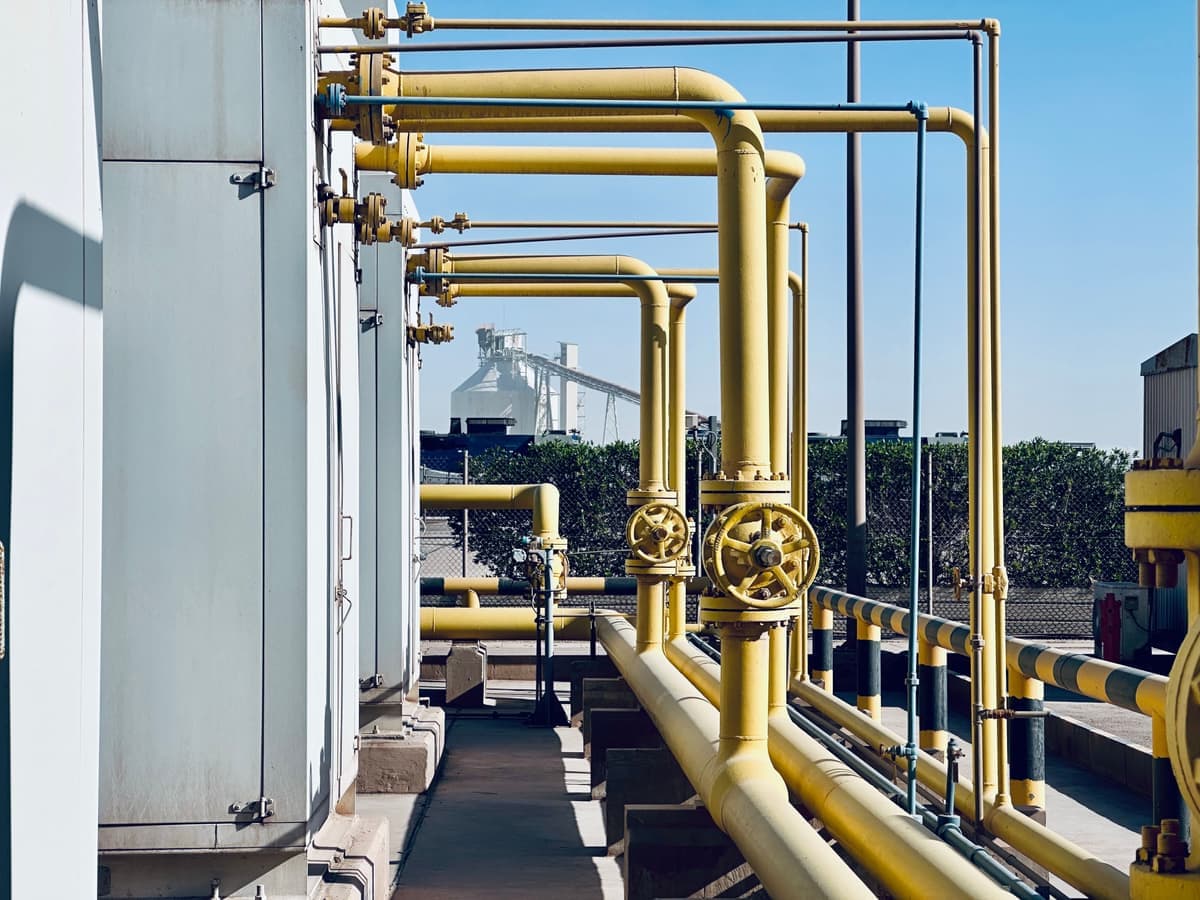
Fixr.com puts gas line installation at a national average of $800 with a national average range of $500 to $2,000, and breaks it down to $15 to $25 per linear foot for a new line and $23 to $35 per linear foot for a replacement, plus $50 to $300 for the permit. Distance from the meter, routing and the number of appliances drive almost all of the variation.
Published Gas Line Cost Figures (With Sources)
We are a free referral service, not a plumbing company - we do not set prices and we never publish a price as our own. What follows is what independent cost-data publishers report nationally, named and linked with the dates they were updated so you can check them yourself. Note that the per-foot and whole-job figures are two different ways of pricing the same work, and a short run to a nearby appliance will not land anywhere near the average.
| Service | Published national figure |
|---|---|
| Gas line installation - overall projectFixr.com, Cost to Install a Gas Line, updated August 29, 2025; national average given as $800 | $500 - $2,000 |
| New line, per linear foot (labor included)Fixr.com, updated August 29, 2025 | $15 - $25 |
| Replacement line, per linear footFixr.com, updated August 29, 2025 | $23 - $35 |
| Extending an existing line, per linear footFixr.com, updated August 29, 2025 | $10 - $20 |
| Relocating a line, per linear footFixr.com, updated August 29, 2025 | $15 - $25 |
| One appliance plus water heater, installedFixr.com, updated August 29, 2025 | $1,250 - $1,600 |
| Three appliances plus water heater, installedFixr.com, updated August 29, 2025 | $1,500 - $2,500 |
| Five appliances plus water heater, installedFixr.com, updated August 29, 2025 | $1,650 - $3,500 |
| PermitFixr.com, updated August 29, 2025 | $50 - $300 |
| Gas line installation (plumber cost guide figure)Fixr.com, Cost to Hire a Plumber, updated January 30, 2025 | $500 - $2,000 |
| Gas line repair on your propertyInch Calculator, Cost to Hire a Plumber - 2026 Price Guide | $300 - $750 |
These are national figures published by third-party cost-data sites on the dates shown - not Dallas Best Plumber's prices, not a quote, and not specific to Dallas-Fort Worth. We are a free referral service, we do not set prices and we do not perform work. Gas work in Texas must be done by a licensed plumber and inspected; your matched licensed local plumber gives you the actual free, no-obligation quote.
Sources: Fixr.com - Cost to Install a Gas Line (updated August 29, 2025); Fixr.com - Cost to Hire a Plumber (updated January 30, 2025); Inch Calculator - Cost to Hire a Plumber, 2026 Price Guide
Cost By Appliance, And Why It Varies So Much
Fixr also publishes per-linear-foot figures broken out by what the line is feeding, which is a useful way to think about it because different appliances need different pipe sizes and different amounts of gas. A gas range needs relatively little; a tankless water heater or a pool heater needs a lot, and sizing the pipe for the load is the part that is not negotiable.
| Service | Published figure, per linear foot |
|---|---|
| Stove / rangeFixr.com, updated August 29, 2025 | $10 - $15 |
| Water heaterFixr.com, updated August 29, 2025 | $10 - $15 |
| Clothes dryerFixr.com, updated August 29, 2025 | $10 - $20 |
| FireplaceFixr.com, updated August 29, 2025 | $10 - $20 |
| Outdoor grillFixr.com, updated August 29, 2025 | $10 - $20 |
| Fire pitFixr.com, updated August 29, 2025 | $15 - $25 |
| Pool heaterFixr.com, updated August 29, 2025 | $20 - $25 |
| Standby generatorFixr.com, updated August 29, 2025 | $20 - $25 |
Published national per-foot figures from Fixr.com on the date shown, not our prices and not DFW-specific. A per-foot figure only becomes a project cost once you know the actual run length, the routing and whether the existing system has capacity - which is what a site visit establishes.
Source: Fixr.com - Cost to Install a Gas Line (updated August 29, 2025)
What Actually Drives The Number At Your House
Two homeowners adding the same gas grill can get quotes that differ by a factor of three, and almost none of that is the plumber's margin. These are the variables that move it.
- Distance from the meter or the nearest point with spare capacity. This is the single largest factor, because the per-foot figures above multiply. A stove ten feet from an existing line and a fire pit sixty feet across a yard are different projects.
- Routing and what has to be opened up. A run through an accessible attic or along a garage wall is straightforward. A run that has to cross a finished ceiling, pass through a slab, or be trenched under a driveway or patio adds labor and restoration.
- Whether the existing system has capacity. Gas pipe is sized for the total load it carries. Adding a tankless water heater or a pool heater often means the existing trunk line is undersized for the new total, and then the upstream pipe has to be upsized too - which turns a short branch into a partial repipe.
- Pipe material. Black iron, CSST (the flexible yellow-jacketed tubing) and in some cases copper each have different labor profiles and different code requirements, including bonding requirements for CSST.
- Whether the meter itself is big enough. If the total connected load exceeds what the meter and regulator can deliver, that is a utility matter and it has its own timeline.
- The appliance connection and shut-off. Every appliance needs an accessible shut-off valve and a proper connector, and existing installations frequently do not have them.
- Permit, inspection and pressure test. Gas work is inspected work, and the test is part of the job rather than an optional extra.
- Whether anything else is open at the same time. If a plumber is already replacing a water heater or has the attic open, adding a line costs materially less in labor than a separate trip.
The Permit And Inspection Step - Not Optional In Texas
Gas piping is one of the few areas of residential plumbing where the paperwork genuinely protects you. In Texas, plumbing work including gas piping is performed by plumbers licensed by the Texas State Board of Plumbing Examiners, and new or altered gas piping is permitted and inspected by the city with jurisdiction - which in this area means Dallas, Plano, Garland, Richardson, Irving, McKinney, Frisco, Mesquite, Carrollton or whichever municipality you are in, each running its own building inspection department. Fixr puts the permit itself at $50 to $300 nationally.
The inspection exists because a gas leak is not a plumbing inconvenience. New piping is pressure tested before it is put into service, the test is witnessed or documented, and the inspector checks pipe sizing against the connected load, support, bonding where CSST is used, and the shut-off at each appliance. A homeowner cannot replicate that, and an uninspected gas line is a problem at resale as well as a safety matter.
The practical advice: when you collect quotes, confirm in writing that the price includes pulling the permit, the pressure test and the inspection, and that the work will be done by or under a licensed plumber. A quote that is noticeably cheaper than the others is often cheaper because one of those three is missing. Ask who schedules the inspection and whether the quote covers a re-inspection if something is corrected.
What To Ask For In A Quote
Gas quotes are hard to compare because contractors scope them differently. Asking every bidder for the same itemization fixes that, and it surfaces the capacity question that otherwise appears as a change order halfway through.
- The appliance list and the total connected load in BTU, including anything you plan to add later - sizing for the future run is far cheaper than redoing it.
- Whether the existing trunk line and the meter have capacity for that total, and what happens if they do not.
- The route, the measured length, the pipe material and the pipe size, plus what has to be opened and who patches it.
- The appliance shut-off valves and connectors, itemized.
- The permit, the pressure test, the inspection, and whether re-inspection is included.
- The warranty on labor as well as materials, and how long the price is held.
- Confirmation that the work is performed by or under a plumber licensed in Texas.
One Thing Not To Do
Do not treat this as a DIY project, and do not have it done by someone unlicensed because the number is better. Gas piping is the one part of a house where a small workmanship error - an unsupported run, a joint that was never pressure tested, an undersized line feeding an appliance that then runs rich - produces a hazard you cannot see or smell until it matters. It is also the work most likely to be caught at resale and most likely to void a homeowners claim if it was never permitted.
If you smell gas now, this is not a cost question. Leave the building, do not operate switches, phones or anything that could spark, and call the gas utility's emergency line and 911 from outside. Deal with the pricing afterward.
Dallas Best Plumber is a free referral service, not a plumbing company. Tell us what you want to run gas to, roughly how far it is from the meter, and whether you are adding to an existing system, and we put your request in front of licensed, insured local plumbers who do gas work, with a free, no-obligation quote. The price is theirs - we never set it and we never perform the work.
Still stuck? Get matched with a licensed local pro
We'll connect you with a licensed, insured plumber in the Dallas-Fort Worth area for a free, no-obligation quote.
Related guides
- How Much Does A Plumber Cost?Hourly rate, service call fee, flat rate - three different pricing models, and the one you are quoted changes what the number means.
- Gas vs Electric Water HeaterFor most homeowners the choice is already made by what is in the wall. Here is how to tell, and when switching is worth the extra work.
- Water Heater Replacement Cost in Dallas-Fort Worth (2026)Typical 2026 DFW ranges by tank size and tankless, plus the repair-vs-replace call.
Frequently asked questions
How much does it cost to install a gas line?
Fixr.com (updated August 29, 2025) gives a national average of $800 with a national average range of $500 to $2,000, and per-foot figures of $15 to $25 for a new line and $23 to $35 for a replacement, plus a $50 to $300 permit. Those are third-party national figures, not our prices and not DFW-specific. Distance from the meter is the biggest single variable.
Why is my gas line quote so much higher than the published average?
Usually one of two reasons. Either the run is long - the per-foot figures multiply quickly across a yard - or the existing system does not have capacity for the new load, which means the upstream trunk line has to be upsized as well. Adding a tankless water heater or a pool heater commonly triggers the second. Ask the bidder to show the load calculation.
Do I need a permit to run a new gas line in Texas?
Yes. New or altered gas piping is permitted and inspected by the city with jurisdiction, and the work is done by a plumber licensed by the Texas State Board of Plumbing Examiners. The line is pressure tested before being put into service, and the inspector checks sizing, support, bonding and appliance shut-offs. Fixr puts the permit at $50 to $300. Confirm your quote includes all three.
Can I install a gas line myself to save money?
No - and this is the clearest no in residential plumbing. Gas piping is licensed, permitted, inspected and pressure-tested work, because the failure mode is a leak you cannot see. Unpermitted gas work also turns up at resale and can complicate a homeowners insurance claim. If you smell gas right now, leave the building and call the gas utility's emergency line and 911 from outside.
Is it cheaper to add a gas line while other work is happening?
Materially, yes. Most of the cost is labor and access - getting into the attic, opening a wall, trenching a yard. If a plumber is already replacing your water heater or has the ceiling open, adding or extending a line in the same visit avoids a second mobilization. The same logic applies to sizing: running pipe once for everything you eventually want is cheaper than running it twice.