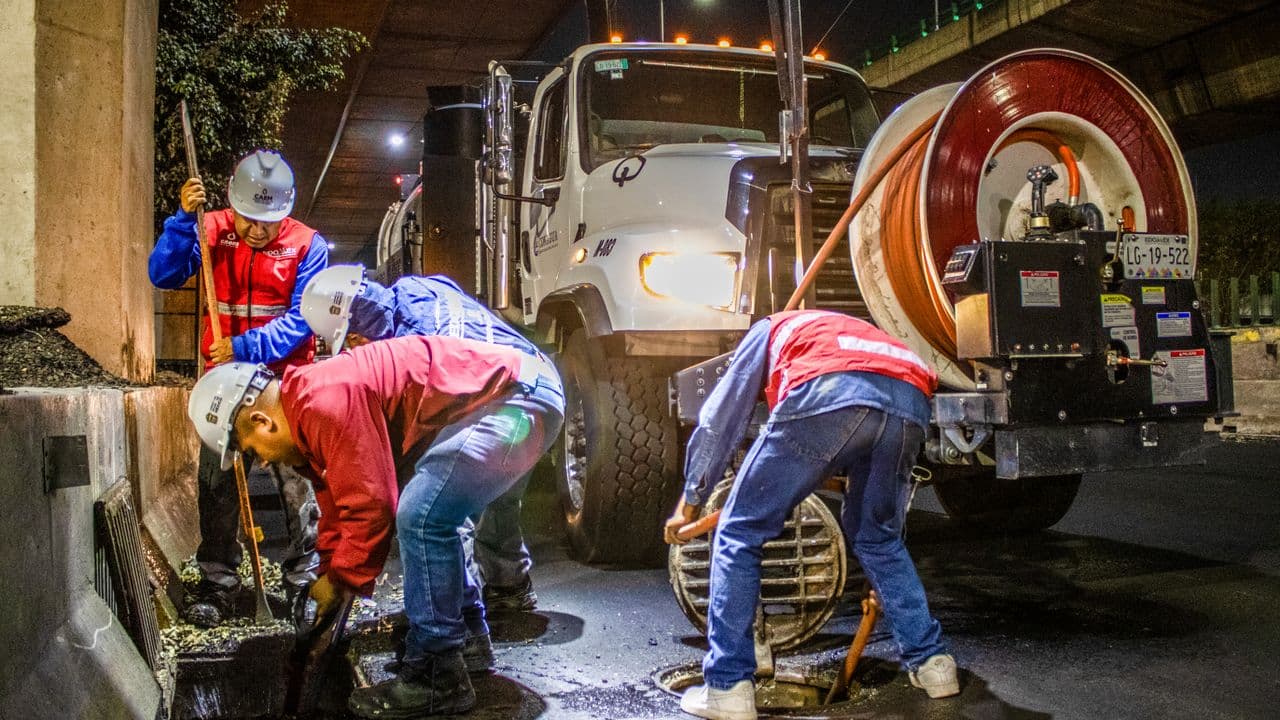
Fixr.com puts hydro jetting at $250 to $1,000 on its sewer cleaning guide and $350 to $600 on its main line unclogging guide, against $150 to $375 for conventional snaking. The spread reflects how much pipe is being cleaned, how severe the buildup is, and whether a camera inspection is included - which on an older line it should be.
Published Hydro Jetting Figures (With Sources)
We are a free referral service, not a plumbing company - we do not set prices and we never publish a price as our own. Below is what an independent cost-data publisher reports nationally, named and linked with the dates each page was updated. Note that its two relevant guides give different ranges for the same service; both are shown rather than averaged, because the difference tells you something real about how variable this job is.
| Service | Published national figure |
|---|---|
| Hydro jettingFixr.com, Cost to Clean Sewer Line, updated January 31, 2025; the page puts $1,000 at the high end for jetting a full blockage | $250 - $1,000 |
| Hydro jetting (main line guide)Fixr.com, Cost to Unclog Main Sewer Line, updated January 31, 2025 | $350 - $600 |
| Unclog a main sewer line - overallFixr.com, Cost to Unclog Main Sewer Line, updated January 31, 2025; national average given as $475 | $350 - $650 |
| Snaking / auger - the cheaper alternativeFixr.com, Cost to Clean Sewer Line, updated January 31, 2025; the main line guide gives $100 to $500 | $150 - $375 |
| RoddingFixr.com, Cost to Unclog Main Sewer Line, updated January 31, 2025 | $150 - $600 |
| Sewer line cleaning - overall rangeFixr.com, Cost to Clean Sewer Line, updated January 31, 2025; national average given as $250, with a $150 low end for light-duty snaking | $200 - $600 |
| Tree root removalFixr.com, Cost to Unclog Main Sewer Line, updated January 31, 2025 | $100 - $600 |
| Camera / video inspectionFixr.com, Cost to Unclog Main Sewer Line, updated January 31, 2025; up to $1,500 for an entire home sewer system. The sewer cleaning guide gives $300 to $600 | $100 - $800 |
| Installing a cleanoutFixr.com, Cost to Unclog Main Sewer Line, updated January 31, 2025 | $600 - $2,000 |
| After-hours emergency chargeFixr.com, Cost to Unclog Main Sewer Line, updated January 31, 2025; evening, weekend and holiday calls add a $45 to $200 premium to the hourly rate | $50 - $100 |
These are national figures published by Fixr.com on the dates shown - not Dallas Best Plumber's prices, not a quote, and not specific to Dallas-Fort Worth. Hydro jetting cleans a pipe; it does not repair one, and these figures do not include any repair the camera then reveals. We are a free referral service, we do not set prices and we do not perform work.
Sources: Fixr.com - Cost to Clean Sewer Line (updated January 31, 2025); Fixr.com - Cost to Unclog Main Sewer Line (updated January 31, 2025)
What You Are Actually Paying For
Hydro jetting and snaking are often presented as two prices for the same service. They are not the same service, and understanding the difference is what makes the price difference make sense.
A cable machine - a snake or auger - pushes a rotating steel cable down the pipe with a cutting head on the end. It punches a hole through the obstruction and cuts roots. That restores flow, which is usually what you called about. What it does not do is clean the pipe wall: the grease, soap scum, scale and sludge coating the inside of the line are still there, with a channel through the middle. That is why a snaked line often blocks again at the same place.
A jetter pushes a high-pressure hose down the line with a nozzle that fires water backward at the pipe wall. The reaction propels the hose forward, and the jets scour the full circumference as it goes. What comes out is the coating, not just the plug - so you get something closer to the original internal diameter back. On a grease-fouled kitchen line or a scaled older main, that is a materially different outcome, and it is the reason Fixr notes jetting costs more than standard snaking because of the equipment, while being gentler on drains.
So the honest framing is: snaking buys flow, jetting buys the pipe back. Which one is worth paying for depends entirely on why the line blocked, which is the next question.
What Moves The Price
Fixr's two guides give ranges of $250 to $1,000 and $350 to $600 for the same service, and the reason is that jetting is scoped by the job rather than sold as a single product. These are the variables.
- How much pipe is being cleaned. Jetting one fouled kitchen branch is a different job from jetting a full main line run from the house to the street tap.
- Severity. A light preventive clean of a line that still flows is quick. A line that is fully blocked has to be opened first and then cleaned, and Fixr puts $1,000 at the high end specifically for jetting a full blockage.
- Access. A proper cleanout at ground level makes this straightforward. No cleanout means working through a pulled toilet or a roof vent, which costs more and achieves less - and Fixr puts installing a cleanout at $600 to $2,000, which pays for itself across future visits.
- Whether a camera inspection is included, and in what order. Fixr prices inspection at $100 to $800 on one guide and $300 to $600 on the other. On an older line it should be part of the job, not an upsell afterward.
- Roots. Root cutting is often a separate line - Fixr puts tree root removal at $100 to $600 - and a root-infested line may need a cable cutter first and the jetter afterward.
- Pipe condition, which can rule the method out entirely. See the next section.
- When you call. Fixr lists a $50 to $100 after-hours emergency charge, with evening, weekend and holiday calls adding a $45 to $200 premium to the hourly rate.
- Whether it is remedial or scheduled maintenance. A planned annual clean on a commercial grease line or a known problem lateral is priced quite differently from a 9pm backup.
When Hydro Jetting Is The Wrong Choice
This is the part that gets left out of the sales conversation, and it matters more than the price. Jetting works by directing high-pressure water at the inside of your pipe. If that pipe is structurally compromised, high-pressure water is not a neutral act.
An old cast-iron line that has corroded and channeled until the wall is thin, a clay line with cracked or displaced joints, or a pipe with an existing break can be damaged by jetting - and all three are realistic in older Dallas, Garland, Richardson, Mesquite and Irving neighborhoods where clay and cast iron were standard. A responsible contractor runs a camera first and tells you if the line will not take it. One who proposes jetting an unknown older line sight unseen is taking a risk with your pipe, not theirs.
The other case where it is the wrong purchase is a line whose problem is not buildup at all. If the blockage is a belly - a sagging section that holds water because decades of expansive clay soil movement pulled the pipe out of grade, which is common across this region - then jetting cleans a pipe that will still not drain. You will have paid to clean a low spot, and it will block again when solids settle in it. The same applies to an offset joint, a crushed section, or roots that are structural rather than incidental: those are repairs, and cleaning defers them by a few months.
Where jetting genuinely earns its premium: grease and soap buildup in kitchen and restaurant lines, soft scale and sludge in older mains that are still sound, recurring blockages where the pipe checks out structurally, and preventive maintenance on a line with a known history. In those cases it does something no cable can.
- Right choice: grease, soap scum, sludge or soft scale in a structurally sound pipe
- Right choice: recurring blockages where the camera shows the pipe is sound
- Right choice: scheduled preventive maintenance on a known problem line
- Wrong choice: thin-walled corroded cast iron, cracked clay, or a line with a known break
- Wrong choice: a belly where the pipe has lost grade - that is a repair, not a cleaning
- Wrong choice: an offset or crushed section, or a collapsed line
- Always: a camera inspection before jetting an older line of unknown condition
What To Ask Before You Book It
Because the method can be inappropriate as well as expensive, the questions here are about suitability as much as price.
- Has a camera been in this line, and what did it show? If the answer is no, ask for the inspection first - Fixr puts it at $100 to $800, against a jetting cost of $350 to $600.
- Is the pipe material and condition suitable for jetting? Ask directly, and ask what they will do if the camera shows it is not.
- What exactly is being cleaned - which line, from where to where, and how many feet.
- Is the camera inspection included in the quoted price, or added afterward?
- Is there a cleanout, and if not, what does access cost and is installing one worth it at $600 to $2,000?
- Is a follow-up camera run after the jetting included, to show what the clean pipe looks like and whether anything was hiding under the buildup?
- Is root cutting separate? Fixr lists tree root removal at $100 to $600.
- What is the guarantee - if the line blocks again within a defined period, what happens?
Jetting Versus Fixing
The decision that actually saves money on a recurring sewer problem is not snaking versus jetting. It is cleaning versus repairing, and the camera is what decides it.
If the pipe is sound and the problem is buildup, cleaning is the right answer and jetting is the better cleaning. If the pipe has lost grade, cracked, offset or corroded through, cleaning is a holding action and the real question is a spot repair, a lining or a replacement. Published figures for those sit in a different bracket - Fixr's sewer cleaning guide puts section replacement at $1,000 to $20,000 - which is exactly why nobody should be choosing between them on a guess.
A reasonable way to think about it: a line that has blocked once gets cleared. A line that has blocked twice gets a camera. A line that blocks every few months with a clean bill of structural health is a maintenance candidate, and a scheduled clean before the season it usually fails is cheaper than an emergency call-out. A line that blocks every few months because of a belly or a collapsing joint needs the repair, and every clearing in the meantime is money toward nothing.
Dallas Best Plumber is a free referral service, not a plumbing company. Tell us what the line is doing, how often it has happened, whether you have a cleanout, and whether anyone has had a camera in it, and we put your request in front of licensed, insured local plumbers who do jetting and sewer work, with a free, no-obligation quote. The price and the recommendation are theirs - we never set either and we never perform the work.
Still stuck? Get matched with a licensed local pro
We'll connect you with a licensed, insured plumber in the Dallas-Fort Worth area for a free, no-obligation quote.
Related guides
- Main Sewer Line ClogOne slow drain is a fixture problem. Several at once, with gurgling, is the main line - and the first thing to do is stop running water.
- Drain Cleaning Cost in Dallas-Fort Worth (2026 Guide)Typical 2026 DFW market ranges by job type, and exactly what drives the price.
- Sewer Line Replacement CostThis is the plumbing job with the widest spread of any - and almost all of it comes down to length, depth, and what is on top of the pipe.
- Tree Roots in a Sewer Line: Signs, Fixes and CostsRoots do not break into a good pipe. They follow water out of a pipe that is already cracked - which is why cutting them is a trim, not a cure.
- Sewer Camera Inspection CostThe cheapest money you can spend on a sewer line, because it is the only thing that tells you whether the next quote should be a cleaning or a replacement.
Frequently asked questions
How much does hydro jetting cost?
Fixr.com gives two figures on two guides, both updated January 31, 2025: $250 to $1,000 on its sewer line cleaning page, with $1,000 at the high end for jetting a full blockage, and $350 to $600 on its main line unclogging page. These are third-party national figures, not our prices and not DFW-specific. How much pipe is being cleaned and how severe the buildup is account for most of the spread.
Is hydro jetting worth it compared to snaking?
It depends on why the line blocked. A cable punches a channel through the obstruction and restores flow; a jetter scours the pipe wall and takes the grease, scale and sludge out with it, so you get closer to the original diameter back. Fixr puts snaking at $150 to $375 against jetting at $250 to $1,000. For grease buildup or a recurring blockage in a sound pipe, jetting earns the difference.
Can hydro jetting damage my pipes?
It can, on the wrong pipe. Corroded thin-walled cast iron, cracked or displaced clay joints, and any line with an existing break are all at risk from high-pressure water - and all three are realistic in older Dallas-area neighborhoods. A responsible contractor runs a camera first and tells you if the line will not take it. Treat a proposal to jet an older line sight unseen with caution.
Do I need a camera inspection before hydro jetting?
On an older line of unknown condition, yes. It establishes whether the pipe can take the pressure and whether the problem is buildup at all - a sagging section that has lost grade will keep blocking no matter how clean it is. Fixr puts a camera inspection at $100 to $800 on its main line guide and $300 to $600 on its cleaning guide, against jetting at $350 to $600. It is the cheaper decision.
How often should a sewer line be hydro jetted?
There is no universal interval - it depends on what the line does and what it is made of. A restaurant grease line may need scheduled cleaning several times a year; a residential line with a known root or buildup history might warrant an annual clean before the season it normally fails. A line with no history does not need routine jetting at all. If yours keeps blocking, get the cause identified rather than setting a schedule.