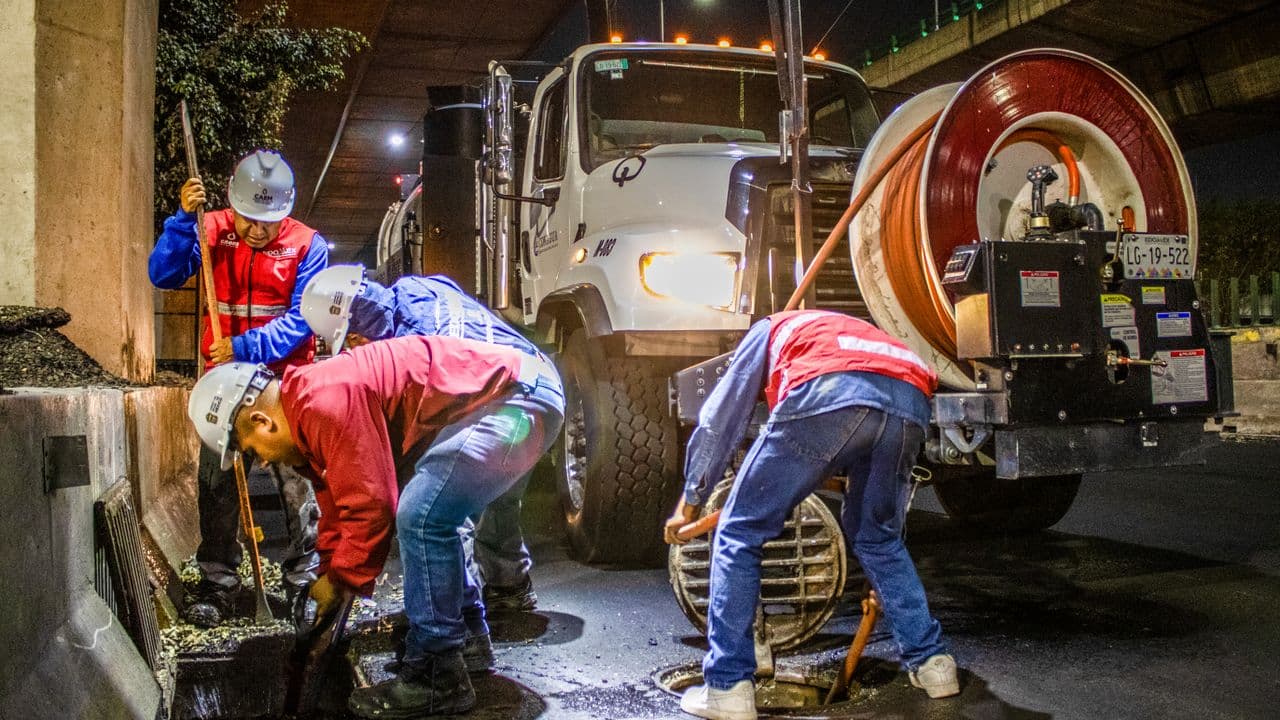
If more than one fixture backs up, drains gurgle when another one is used, or water appears at the lowest drain in the house, the blockage is in the main line rather than a fixture. Stop running water immediately - including the washing machine and dishwasher - because everything you send down has to go somewhere. Clearing a main line needs a machine on a cleanout, and usually a camera afterward.
Main Line Or Fixture? The Signs That Tell You
This distinction is the whole diagnosis, and you can make it yourself in a few minutes. A fixture clog is local: one sink, one shower, one toilet, with everything else in the house draining normally. A main line clog affects the shared pipe that everything empties into, so it shows up in several places at once and the symptoms move around.
Gurgling is the most reliable single sign, and it is worth understanding why. When a main line is restricted, water draining from one fixture cannot push air out ahead of it through the vent, so the air escapes through the nearest available water seal instead - another fixture's trap. The bubbling or gurgling you hear in a tub when the toilet flushes is air being forced through that trap. A single blocked sink does not do that.
The second reliable sign is that trouble appears at the lowest point. Water follows gravity, so a blocked main surcharges and comes up at whatever opening is lowest - a ground-floor shower pan, a tub, a floor drain in a garage or utility room, sometimes a cleanout in the yard. If a downstairs shower fills when someone upstairs flushes, you have a main line problem and not a shower problem.
- Two or more fixtures slow or backing up at the same time - main line
- A tub, shower or toilet gurgles when a different fixture drains - main line, air escaping through a trap
- Water rising in the lowest drain in the house - main line, surcharging
- The toilet level rises or falls on its own, or bubbles when the washing machine drains - main line
- Sewage smell indoors or at a yard cleanout alongside slow drains - main line
- One fixture slow, everything else fine, no gurgling anywhere - fixture or its branch, not the main
- Problem clears on its own then returns within days or weeks - a partial main line blockage, often roots or a belly
- Water appearing at a cleanout cap in the yard - the main line is blocked downstream of that point
What To Do Right Now
The instinct is to keep trying things. The correct first move is the opposite: stop adding water, because a blocked main has nowhere to put it and every gallon you send down comes back up somewhere in the house.
- Stop using water everywhere. That means no flushing, no showers, and particularly no washing machine or dishwasher - those discharge a large volume fast and they are the usual trigger for a backup becoming a flood. Tell everyone in the house.
- Do not flush a toilet to see if it is still blocked. That is the single most common way a slow main becomes sewage on a bathroom floor.
- Find your cleanout. It is usually a capped pipe at ground level outside, near the house along the sewer run, or sometimes in a garage or utility area. Knowing where it is saves time and money when a plumber arrives.
- If sewage has already come up, keep people and pets out of it, ventilate the area, and do not put the HVAC on recirculate through a contaminated space. Wear gloves. This is category three water and it is a health matter, not just a mess.
- Photograph everything before you clean up - the affected rooms, the water line on walls or cabinets, the fixtures involved.
- Do not pour chemical drain cleaner into a blocked main. It does not clear roots or a structural fault, it sits in standing water, and it makes the line hazardous for whoever opens it. Tell your plumber if someone already has.
- Check whether neighbors have the same problem. If several houses on the street are backing up at once, the city main may be the issue rather than your lateral - call your city water department.
- Then get a plumber with a drain machine on it. A main line is not a plunger job.
Why Main Lines Block In This Area
Knowing the likely cause matters because it determines whether clearing the line solves the problem or just defers it by a few months. There are four common causes in this market and they need different responses.
Tree roots are the leading cause in established neighborhoods. Roots seek moisture and find it at joints in older clay and cast-iron sewer laterals, then grow into the pipe and catch solids and paper. Older parts of Dallas, Garland, Richardson, Mesquite and Irving have both the mature trees and the vintage pipe, and the giveaway is a blockage that recurs on a seasonal rhythm. Cutting the roots restores flow; it does not stop them growing back, so the real decision is whether to line or replace that section.
A belly in the line is the second, and it is specifically a North Texas problem. The expansive clay soils across the Dallas area shrink in drought and swell with moisture, and decades of that movement pull a buried pipe out of grade. The pipe is intact but a section now holds water instead of draining, so solids settle in the low spot and block repeatedly. No amount of clearing fixes a belly - it has to be excavated and re-laid to proper fall.
Scale and deterioration in old cast iron is the third. Cast iron corrodes and channels internally over decades, leaving a rough, narrowed bore that catches everything. Hydro jetting can restore much of the diameter where the pipe is still structurally sound, which is why that method gets recommended for older lines.
The fourth is simply what went down the drain: wipes, paper towels, feminine products, grease, and the cat litter and construction debris that turn up more often than anyone expects. The Insurance Information Institute's guidance to homeowners is direct on both counts - keep paper towels, diapers, wipes and feminine products out of drains since they break down slowly and cause blockages, and pour cooking oil into a heat-resistant container rather than down the drain. Flushable wipes are the single biggest modern contributor and they do not break down.
What Clearing A Main Line Typically Costs
We are a free referral service, not a plumbing company - we do not set prices and we never publish a price as our own. The figures below are published national ranges from an independent cost-data publisher, named and linked with the date each was updated.
| Service | Published national figure |
|---|---|
| Unclog a main sewer line - typical rangeFixr.com, Cost to Unclog Main Sewer Line, updated January 31, 2025; national average given as $475 | $350 - $650 |
| Snake / augerFixr.com, updated January 31, 2025 | $100 - $500 |
| RoddingFixr.com, updated January 31, 2025 | $150 - $600 |
| Hydro jettingFixr.com, updated January 31, 2025 | $350 - $600 |
| Tree root removalFixr.com, updated January 31, 2025 | $100 - $600 |
| Camera / video inspectionFixr.com, updated January 31, 2025; up to $1,500 to inspect an entire home sewer system | $100 - $800 |
| Installing a cleanoutFixr.com, updated January 31, 2025 | $600 - $2,000 |
| After-hours emergency chargeFixr.com, updated January 31, 2025; evening, weekend and holiday calls add a $45 to $200 premium to the hourly rate | $50 - $100 |
| Clogged sewer lineFixr.com, Cost to Clean Sewer Line, updated January 31, 2025 | $250 - $800 |
These are national figures published by Fixr.com on the dates shown - not Dallas Best Plumber's prices, not a quote, and not specific to Dallas-Fort Worth. They cover clearing a blockage, not repairing or replacing the pipe that caused it. We are a free referral service, we do not set prices and we do not perform work. Your matched licensed local plumber gives you the actual free, no-obligation quote.
Sources: Fixr.com - Cost to Unclog Main Sewer Line (updated January 31, 2025); Fixr.com - Cost to Clean Sewer Line (updated January 31, 2025)
Insist On The Camera
Clearing the blockage and finding out why it blocked are two different services, and the second one is where the value is. A cable machine will restore flow in most cases within an hour. If nobody looks at the pipe afterward, you have bought time without learning whether you are dealing with a one-off obstruction, roots that will be back by spring, or a belly that will block every few weeks for as long as you own the house.
Fixr puts a camera inspection at $100 to $800 on its main line unclogging guide, and up to $1,500 to inspect an entire home sewer system - against a clearing cost of $350 to $650. On a line that has blocked once, it is optional. On a line that has blocked twice, it is the cheapest decision available, because the alternative is paying to clear it indefinitely.
Ask for the footage with distance markers, and ask the plumber to tell you three specific things: what caused the blockage, how far along the line it is, and whether the pipe is structurally sound at that point. Those three answers determine whether your next step is nothing, a periodic maintenance clearing, a spot repair, a lining or a replacement - and those differ by thousands of dollars.
If you do not have a cleanout, consider having one installed while someone is already there - Fixr puts that at $600 to $2,000. Every future clearing and every future camera run is cheaper and less invasive with proper access, and plumbers who have to pull a toilet to get into the line charge accordingly.
Keeping It Clear
Once the line is open, a few habits carry most of the benefit. Keep wipes out of the toilet regardless of what the packaging says - the Insurance Information Institute specifically names wipes, paper towels, diapers and feminine products as items that break down slowly and cause blockages. Pour cooking fat into a heat-resistant container and bin it once cool. Scrape plates rather than rinsing food through the disposal.
If roots are the known cause and the pipe is otherwise sound, a scheduled clearing before the season when it normally blocks is a legitimate maintenance strategy, and far cheaper than an emergency on a holiday weekend. The Insurance Information Institute also raises the longer-term options directly: have roots cut periodically if they keep causing problems, and consider replacing the line with new plastic pipe.
Two more worth knowing about. A backwater valve prevents a backup in the city main from coming into your house - the Institute describes it as a device that allows sewage to go out, but not to come back in, installed with a qualified plumber. And do not connect French drains, sump pumps and other flood control systems to your sanitary sewer: that guidance is explicit, and those connections surcharge the line in exactly the rainfall that is most likely to cause a backup anyway.
On insurance, check before you need to: the Institute states that sewer backups are not covered under a typical homeowners insurance policy, nor are they covered by flood insurance, and that coverage must be purchased either as a separate product or as an endorsement to a homeowners policy, usually at a nominal cost. If you have had one backup, that endorsement is worth a phone call to your agent.
Dallas Best Plumber is a free referral service, not a plumbing company. Tell us which fixtures are affected, whether anything gurgles, whether you have a cleanout, and whether this has happened before, and we put your request in front of licensed, insured local plumbers who do main line and sewer work, with a free, no-obligation quote. We do not perform the work and we do not promise an arrival window on anyone else's behalf.
Still stuck? Get matched with a licensed local pro
We'll connect you with a licensed, insured plumber in the Dallas-Fort Worth area for a free, no-obligation quote.
Related guides
- Hydro Jetting CostIt costs more than snaking because it does more - and on the wrong pipe it is the more expensive mistake. Here is how to tell which you have.
- Sewer Line Replacement CostThis is the plumbing job with the widest spread of any - and almost all of it comes down to length, depth, and what is on top of the pipe.
- Sewer Smell In The HouseSewer gas gets in through one of a short list of openings. Work through them in order and you will usually find it in an afternoon.
- Tree Roots in a Sewer Line: Signs, Fixes and CostsRoots do not break into a good pipe. They follow water out of a pipe that is already cracked - which is why cutting them is a trim, not a cure.
- Sewer Camera Inspection CostThe cheapest money you can spend on a sewer line, because it is the only thing that tells you whether the next quote should be a cleaning or a replacement.
- Cast Iron Pipe ReplacementCast iron rusts from the inside out, so the pipe looks fine until it does not. In a slab home, that is the whole problem.
Frequently asked questions
How do I know if my main sewer line is clogged?
Look for symptoms in more than one place. Two or more fixtures slow or backing up at once, a tub or shower that gurgles when a toilet flushes, and water rising in the lowest drain in the house all point at the main line rather than a fixture. A single slow sink with everything else draining normally and nothing gurgling is a fixture problem instead.
Why do my drains gurgle?
Because air cannot get out of the drain line the normal way, so it escapes through the nearest water seal instead - another fixture's trap. That is what you hear. It usually means the main line is restricted, since a single blocked fixture does not force air through a different trap. Gurgling plus any slow drain elsewhere is worth treating as a main line issue.
Can I clear a main sewer line myself?
Realistically, no. A main line needs a sectional or drum machine fed through a cleanout, and getting a cable to turn through fittings without damaging an old clay or cast-iron pipe takes practice. A plunger does nothing at that distance, and chemical drain cleaner clears neither roots nor a structural fault while making the line hazardous to open. The useful homeowner steps are to stop running water and find the cleanout.
Why does my main line keep clogging?
Repeat blockages mean something structural. In this area the usual answers are tree roots growing into joints in older clay or cast-iron laterals, a belly where expansive clay soil has pulled the pipe out of grade so a section holds water, or internal scale in old cast iron. Clearing addresses none of those. A camera inspection identifies which one you have, and that determines the fix.
Does insurance cover a sewer backup?
Not under a standard policy. The Insurance Information Institute states that sewer backups are not covered under a typical homeowners insurance policy, nor by flood insurance, and that coverage must be purchased either as a separate product or as an endorsement, usually at a nominal cost. If you have had one backup, call your agent about adding it - and read your own policy rather than assuming.